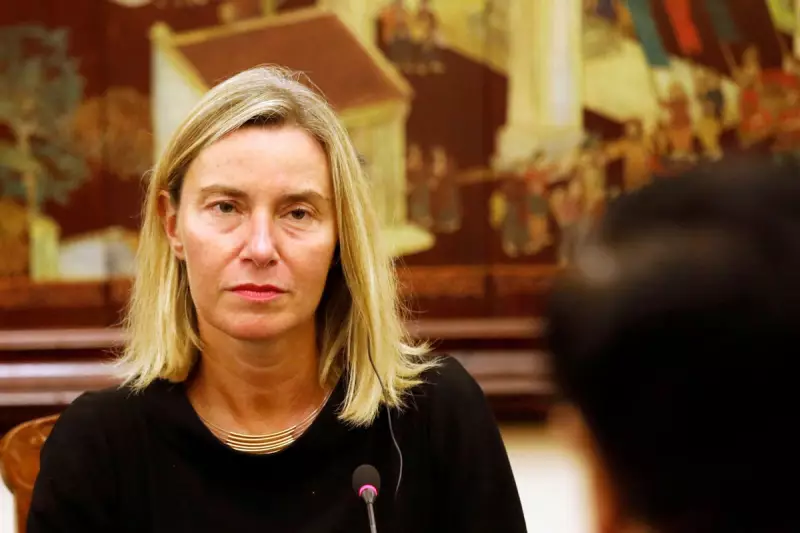
The European Public Prosecutor's Office (EPPO) has formally accused former EU foreign policy chief Federica Mogherini and two other senior figures of serious financial crimes, sending shockwaves through Brussels. The charges relate to a fraud investigation concerning EU-funded training for junior diplomats.
Detentions and Formal Accusations
Federica Mogherini, who served as the EU's High Representative for Foreign Affairs from 2014 to 2019, was detained on Tuesday alongside two others. The EPPO confirmed all three were released the same day while the probe continues. They face accusations of procurement fraud and corruption, conflict of interest, and violation of professional secrecy.
The investigation centres on suspected irregularities in the procedure to establish the European Union Diplomatic Academy. In a statement, Mogherini said she had clarified her position with investigators and expressed full confidence in the justice system, pledging her continued cooperation.

Key Figures and Raids
The other two suspects are a senior staff member at the prestigious College of Europe in Bruges and a senior European Commission official. Three sources identified one detainee as Stefano Sannino, a top EU diplomat. Sannino could not be reached for comment.
The detentions followed coordinated raids at the EU's diplomatic service headquarters in Brussels, the College of Europe – where Mogherini has been rector since 2020 – and at private residences. The EPPO emphasised that all persons are presumed innocent until proven guilty by the competent Belgian courts.
Reaction and Fallout in Brussels
The news has deeply unsettled the EU's political and diplomatic community. In a letter to staff seen by Reuters, the current EU foreign policy chief, Kaja Kallas, described the allegations as "deeply shocking" but urged that they should not tarnish the work of the diplomatic service.
Kallas reaffirmed the institution's full cooperation with the investigation and stressed the importance of transparency and the presumption of innocence. The case casts a spotlight on procurement and funding processes within the EU's elite training institutions and marks a significant test for the relatively new European Public Prosecutor's Office.