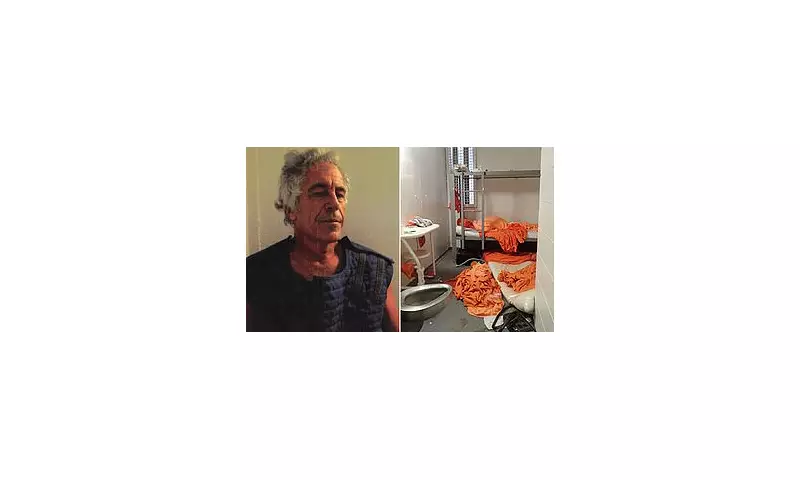
Freshly disclosed documents from the US Department of Justice paint a harrowing picture of Jeffrey Epstein's final weeks alive, spent in a state of profound fear and distress within his prison cell. The files not only chronicle his psychological torment but also reveal new questions surrounding the circumstances of his eventual death by suicide.
A State of Terror in the Special Housing Unit
The records provide a detailed account of Epstein's first apparent suicide attempt, which occurred at 1.27am on July 23, 2019 in the Special Housing Unit (SHU) of the Metropolitan Correctional Center in New York. In a subsequent psychological assessment, Epstein claimed he had woken up with staff in his cell and could not recall how marks had appeared on his neck.
"He stated he is anxious about going back to SHU because he stated he is going back to a place where he had gotten marks on his neck and he does not know why it happened," the evaluator noted. Epstein described severe sleep deprivation, getting only about 30 minutes of sleep each night for five days prior due to noise in the unit.

Medical records from the incident show he was treated for a circular line of erythema at the base of his neck, with friction marks and a small injury on his left knee. His cellmate at the time was Nicholas Tartaglione, a former police officer later sentenced to life for four 2016 murders, who said he tried to revive Epstein. Prison authorities cleared Tartaglione of any wrongdoing, and he had been moved out before Epstein's death.
Brother's FBI Tip and Official Denials
The documents reveal that in February 2023, Epstein's brother, Mark Epstein, submitted an online tip to the FBI's National Threat Operations Center. The tip claimed "Jeffrey Epstein was murdered in his jail cell" and suggested he was killed because he was about to name names, adding, "I believe President Trump authorized his murder."
The tip contained no further evidence. In response to its release, the White House referred to a Department of Justice statement which dismissed the claims as "untrue and sensationalist" and "unfounded and false." The statement emphasised that such claims would have been used against the former president if they had any credibility.
Psychological Decline and Frantic Aftermath
Psychiatric notes from two weeks before his death depict a deeply troubled man. Epstein complained of numbness in his right arm and neck, and compared himself to Dustin Hoffman's autistic character in the film Rain Man, citing an extreme aversion to noise. He described being agitated for hours by a toilet that kept flushing for 45 minutes.
On August 10, 2019, Epstein was found dead in his cell, his death ruled a suicide. The newly released files show frantic email exchanges between officials later that day. One official wrote of "increasingly frantic calls from defence counsel" seeking basic facts like the time and cause of death. Another email discussed concerns from Epstein's legal team about whether enough time had been allowed for a full autopsy before releasing the body.
The comprehensive document release continues to fuel scrutiny over the events leading to the death of the disgraced financier, while officially corroborating the profound psychological distress he endured in custody.