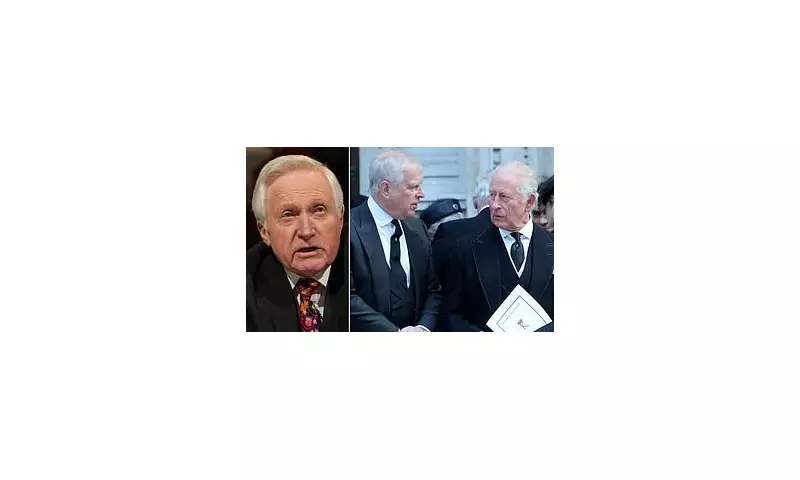
Veteran BBC broadcaster David Dimbleby has launched a pointed critique of the Royal Family, accusing it of moving at a 'snail's pace' in distancing itself from the disgraced Prince Andrew over his association with convicted sex offender Jeffrey Epstein.
A Palace 'Behind the Curve' on Public Mood
In an article for the Radio Times, the 87-year-old royal commentator argued that Buckingham Palace can often find itself 'behind the curve' when attempting to gauge public sentiment, a task he described as notoriously difficult. Dimbleby drew a direct parallel between the handling of Andrew and the widespread criticism the monarchy faced in 1997 for its perceived aloofness following the death of Princess Diana.
'The public mood is all-important to monarchy, for obvious reasons,' Dimbleby wrote. 'Once the monarchy had abandoned its executive role... it existed only with the consent of the public.' He added that keeping in step with public feeling is a pressing concern, but the institution's 'first response to the death of Diana and the snail's pace abandonment of Andrew' demonstrated its capacity to misjudge the national mood.

The Unravelling of a Prince's Status
The comments come as Prince Andrew faces the most severe consequences yet for his 'serious lapses of judgment' concerning his friendship with Epstein. His brother, King Charles III, has formally stripped him of his birthright to be a prince and an HRH, and removed his Duke of York title from the Roll of the Peerage.
This follows years of allegations that Andrew sexually assaulted a teenage Virginia Giuffre, who was trafficked by Epstein. Andrew, who strenuously denies any wrongdoing, stepped down from royal duties in 2019 after a disastrous Newsnight interview and paid millions to Ms Giuffre to settle a civil claim in 2022. Despite this, he clung to a diminished royal status until recent weeks, when the publication of Giuffre's memoirs and the release of Epstein-related US government papers brought renewed scrutiny.
In a further blow, the King has now directed that Andrew's prestigious honours—Knight Companion of the Order of the Garter and Knight Grand Cross of the Royal Victorian Order—be 'cancelled and annulled' and his name 'erased' from the historic registers. Andrew is also set to be moved from Royal Lodge in Windsor to the King's private Sandringham estate in Norfolk in the new year.
Dimbleby on Monarchy, Finance, and the Future
Dimbleby's analysis forms part of the promotion for his new BBC series, 'What's the Monarchy For?'. In his article, he also questioned the Crown Estate's decision to lease a property to Andrew on highly favourable terms, asking if it maximised profit 'for the good of the whole nation'.
Contrasting Andrew's fall, Dimbleby highlighted the work of the Prince and Princess of Wales in maintaining the monarchy's popularity. He suggested Prince William is adopting an 'ordinary Joe' persona to appeal to younger generations, citing examples like William using an e-scooter and the couple's relatable social media posts.
The broadcaster's remarks underscore the enduring challenge for the monarchy: balancing tradition with public expectation. The slow, then decisive, action over Prince Andrew serves as a stark modern example of this perpetual tension, echoing the institution's difficult learning process after the death of Diana nearly three decades ago.