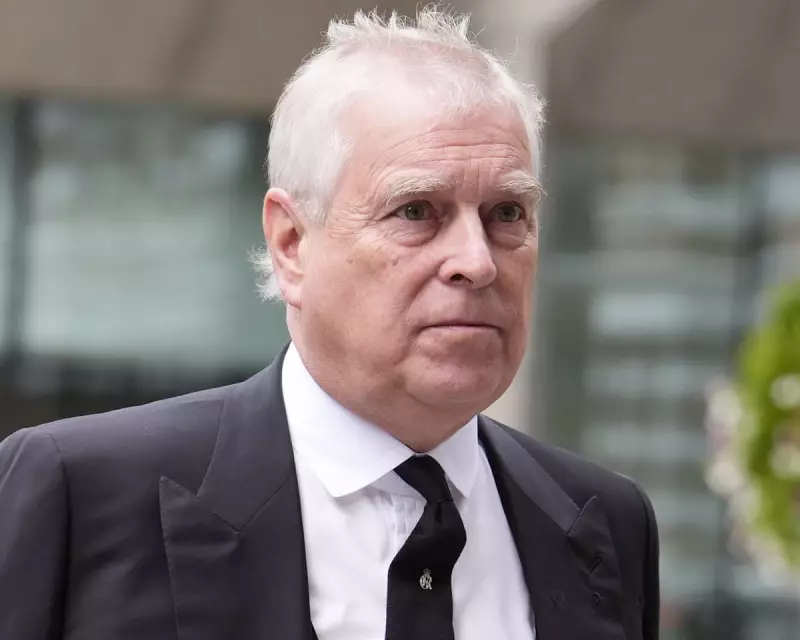
The Cabinet Office stands accused of orchestrating a cover-up to protect the royal family after it blocked the release of historical documents concerning Prince Andrew's official travels at the eleventh hour.
Last-Minute Withdrawal Sparks Transparency Row
Files scheduled for public release at the National Archives included sensitive minutes from 2004 and 2005 detailing royal visits. These were unexpectedly withdrawn, with officials citing an "administrative error" for their inclusion in the first place. Journalists who had previewed the material under embargo reported that the documents contained seemingly mundane details, including a note about funding rules for the then-Prince Andrew's role as a UK trade envoy.
The minutes indicated a change that would see costs for his overseas trips – including visits to China, Russia, Spain, and south-east Asia – transferred from the former Department of Trade and Industry to the Royal Travel Office. This shift was projected to add £90,000 to the royal travel budget.

A Pattern of Royal Secrecy Under the Public Records Act
This incident has highlighted the routine use of the Public Records Act to withhold files connected to the monarchy from public scrutiny. Graham Smith, CEO of the anti-monarchy campaign group Republic, stated there should be "no royal exemption at all." He suggested the likely reason for preventing disclosure was pressure from Buckingham Palace, aimed at protecting the institution rather than the individual.
Meanwhile, other released files offered glimpses into past controversies. They included previously disclosed details surrounding the death and funeral of Diana, Princess of Wales, featuring a vivid account from the then UK ambassador to France, Sir Michael Jay. However, the papers confirmed that Downing Street refused in 2005 to reveal details of a conversation between Tony Blair and French President Jacques Chirac after the Paris accident, deeming it confidential.
Historical Gaffes and Grovelling Apologies
The archive release also contained a separate diplomatic faux pas from John Major's era. In 1994, the Queen Mother's private secretary, Captain Sir Alastair Aird, complained to Number 10 after an official birthday telegram was "incorrectly addressed." A senior official, Roderic Lyne, issued a profuse apology, blaming British Telecom for the addressing error while defending Downing Street staff as "sticklers for the correct form."
Interestingly, the Queen Mother herself appeared unbothered, sending her own telegram to Major and his wife Norma to convey "warm thanks" for their good wishes. The specific nature of the addressing error was not detailed in the files.
This episode reinforces ongoing concerns about transparency and the extent to which the royal family's affairs are shielded from public view, raising fresh questions about accountability and the use of executive power to control historical narratives.