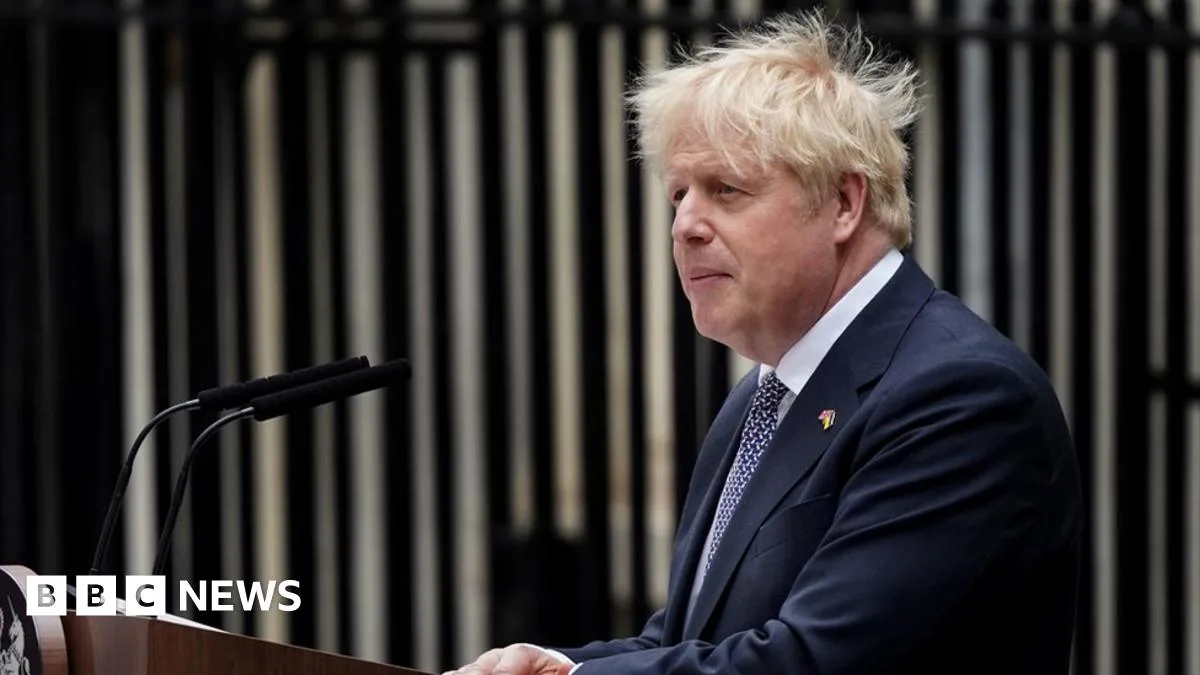
Just a week ago, Boris Johnson was insisting he would stay in power. The next day he announced he was quitting, and now the Conservatives are looking to elect a new party leader and prime minister.
It was no secret that Mr Johnson was in trouble as he welcomed colleagues to the weekly cabinet meeting. 'We are now able to introduce as of tomorrow the single biggest tax cut in a decade,' he told ministers. What he didn't realise was that two of the men at the table – Chancellor Rishi Sunak and Health Secretary Sajid Javid – were thinking about when to quit. 'On that Tuesday morning, I hadn't totally made up my mind, but I was really wrestling with it,' Mr Javid says.
The immediate crisis for the government to deal with was over the behaviour of Conservative MP Chris Pincher. He had resigned as deputy chief whip the previous week, despite denying allegations that he had groped two men at a private members' club. It took the intervention of Lord McDonald, a former permanent secretary at the Foreign Office, to force the government to tell the truth. Mr Johnson had been told of a similar complaint in 2019, before he had given Mr Pincher a job in his team. But that wasn't the story given by No 10 to ministers to tell the rest of us.

Mr Javid says he could sense a growing discontent among colleagues who were being sent out to defend the government on TV and radio. But once No 10's untruths about Mr Pincher emerged, it was time for some cabinet ministers to strike. Mr Javid resigned first, questioning the prime minister's integrity, followed minutes later by Mr Sunak, who said Mr Johnson was not competent or serious.
One of Mr Johnson's staunchest allies, Culture Secretary Nadine Dorries, was furious. 'I was quite stunned that there were people who thought that removing the prime minister who's won the biggest majority that we've had since Margaret Thatcher in less than three years [was acceptable],' she says. 'The anti-democratic nature of what they were doing was enough to alarm me. For me it was a coup.'
Then Mr Johnson's old frenemy, former Levelling Up Secretary Michael Gove, arrived with a message for the PM that it was all over and that he should quit to spare himself from the spectacle of being dragged down by backbenchers. Mr Johnson told him he would fight, and believed he could stay. By the time he arrived at the Commons to face Labour leader Sir Keir Starmer for Prime Minister's Questions at midday, four more ministers had resigned.