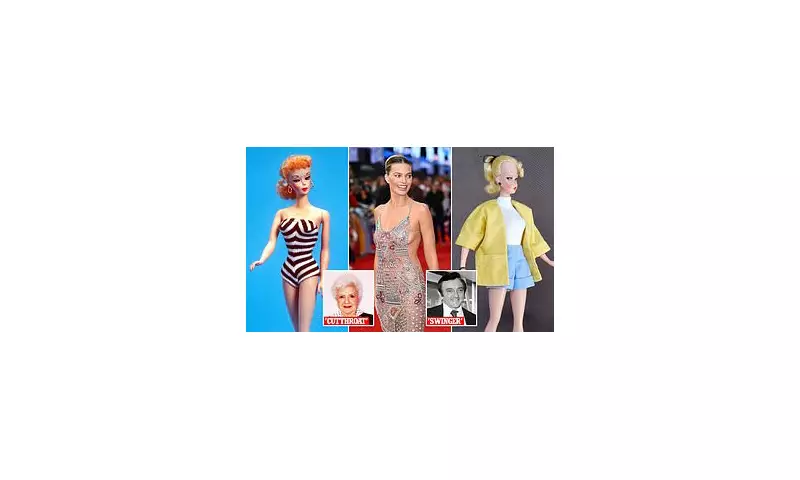
The 2023 blockbuster Barbie presented a poignant, feminist origin story for the world's most famous doll. In a tear-jerking scene, the character of creator Ruth Handler, played by Rhea Perlman, tells Margot Robbie's Barbie: "We mothers stand still so our daughters can look back to see how far they've come." However, a provocative new book dismantles this "woke rebrand," painting Handler as a cutthroat businesswoman who built an empire on borrowed ideas and aggressive litigation.
The Unauthorised History of a Global Icon
In Barbieland – The Unauthorised History, author Tarpley Hitt investigates the doll's seven-decade staying power. "I wanted to understand why this doll has so much staying power," Hitt told The Daily Mail. "And the answer is that there's a highly organized toy enterprise that has fought tooth and nail for seven decades trying to ensure that's the case." The book alleges that Handler, who co-founded Mattel with her husband Elliot, was far from the benevolent matriarch depicted on screen.
Hitt's research claims Handler "stole" the original idea for Barbie. The doll's true predecessor was Bild Lilli, a character created in 1955 to promote the German newspaper Bild. "She was basically the Mickey Mouse of post-war Germany," Hitt said of Lilli, who had actresses, tours, and even her own movie by 1958. When Barbie debuted at the New York Toy Fair in 1959, the resemblance was undeniable. "The two dolls were virtually identical," Hitt wrote.

For thirty years, Handler maintained Barbie was an entirely original invention. To secure its position, Mattel purchased the worldwide rights to Lilli from designer Rolf Hausser in 1964 for a mere $21,600—a pittance compared to the brand's $85 million in sales the previous nine months. Hausser reportedly regretted the deal until his death, later writing Handler bitter letters accusing Mattel of stealing "millions of dollars." His company filed for bankruptcy in 1983.
A Legacy of Lawsuits and Internal Strife
Protecting its valuable asset became a Mattel obsession. At the height of Barbie's popularity, with roughly 100 dolls sold every minute, the company "brought hundreds, maybe thousands, of lawsuits against Barbie infringers," Hitt claims. Targets ranged from global superstar Nicki Minaj, over her Barbie-Que potato chips, to a small Calgary leatherwear shop named Barbie's Shop, owned by a woman named Barbara.
The internal story was equally fraught. Hitt highlights the tragic figure of Jack Ryan, a missile designer hired from Raytheon. Tasked with finding a manufacturer for the doll, Ryan styled himself as Barbie's father. His hedonistic lifestyle—featuring orgiastic parties and a marriage to Zsa Zsa Gabor—clashed with the Handlers. After his contract ended, he sued Mattel for $24 million in unpaid royalties. The decade-long legal battle broke him financially and mentally, culminating in his suicide in 1991 at age 32.
Contradictions in Feminism and Fraud
Perhaps the most striking contradiction concerns Handler's relationship with women's rights. Despite the movie's feminist messaging, Hitt alleges Handler was "not a supporter of the sisterhood." In 1972, while on Nixon's committee for women in the economy, she reportedly used her influence to strike endorsements for maternity leave at private companies. "She was a woman making her way in the workplace, but she didn't do that much to help other people in," Hitt concluded.
Handler's world unravelled in 1975 when she and other executives were charged with fraud by the US Securities and Exchange Commission, in a scheme estimated to have cost shareholders $256 million. She pleaded no contest, was fined $57,000, and sentenced to community service. Forced to resign from Mattel, her self-esteem shattered. It was only after this fall, Hitt notes, that the woman who once found "girl talk stupid" began forging genuine friendships with other women, which inspired her post-Mattel venture: a breast prosthesis company called Nearly Me.

By 2023, the Barbie brand had been waning for decades, criticised for an anachronistic body image. Then, Greta Gerwig's film revived it spectacularly, boosting Mattel's coffers by an estimated $125 million. Hitt's book serves as a stark counter-narrative to that glossy revival. "She made a lot of immoral decisions, and a lot of innovative ones as well," Hitt said of Handler, presenting a founder as complex and contested as the doll she helped create. Mattel has declined to comment on the book's claims.