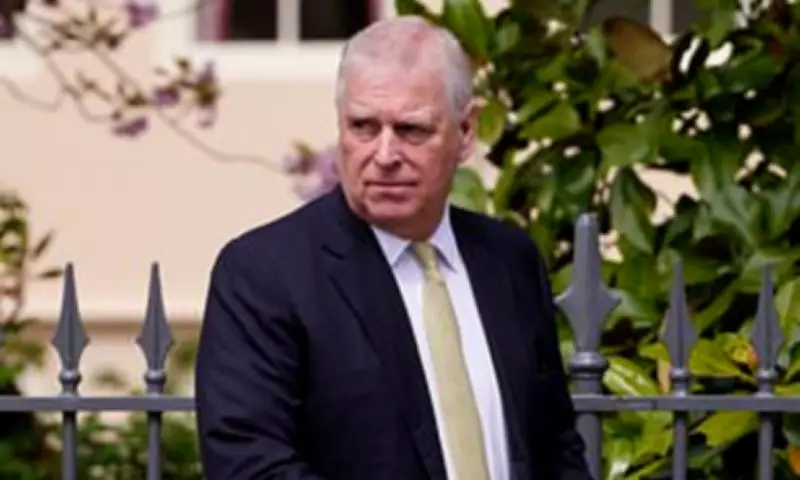
Explosive Allegations Against Former Prince Andrew
Treason represents an exceptionally grave accusation, yet how else might one characterise the conduct of Andrew Mountbatten-Windsor? Millions of documents recently disclosed by the US Department of Justice provide damning evidence that the disgraced former prince transmitted vital financial intelligence to his convicted paedophile associate, Jeffrey Epstein.
Critical Information Compromised During Financial Crisis
This sensitive information could have catastrophically undermined the British government's desperate £45 billion rescue package for the Royal Bank of Scotland during the most severe financial crisis witnessed in over fifty years. The released files indicate Andrew disclosed confidential details regarding Aston Martin's financial status to an American banker who possessed no legitimate right to such privileged information.
Furthermore, a senior Palace official reportedly leaked an official diplomatic cable concerning UK-China trade relations directly to one of Andrew's close business associates. It appears Britain's national interest held minimal significance when weighed against Andrew's determination to maintain cosy relationships with Epstein and his lucrative financial network connections.

Pattern of Questionable Information Sharing
While Epstein and other foreign financiers clearly sought access to such valuable intelligence, what exactly did Andrew receive in return? This incident forms part of a disturbing pattern of behaviour. In 2008, Andrew demanded a private briefing from the Serious Fraud Office regarding its investigation into BAE Systems' arms sales to Saudi Arabia.
On another occasion, he requested specific Treasury details about an ongoing banking crisis in Iceland, promptly forwarding this information to his banker friend, David Rowland. Andrew's extensive Middle Eastern connections, including his documented association with the Crown Prince of Bahrain, now face intensified scrutiny.
Mounting Calls for Full Investigation
With additional revelations anticipated, authorities must cease their hesitant approach and recognise the profound seriousness of Andrew's actions and the resulting damage inflicted. Hiding him behind Sandringham Estate's high walls proves entirely insufficient; he must face proper accountability.
A comprehensive, transparent investigation into Andrew's tenure as trade envoy and his questionable business dealings represents an urgent necessity. This should include full publication of all relevant government and Palace documents concerning his activities, alongside his appearance before a House of Commons select committee to provide evidence and answer questions directly.
Revelations of Diplomatic Misconduct
Previously dismissed as relatively harmless misbehaviour, the layers of Andrew's deceit have gradually peeled away like onion rings, each exposing increasingly repugnant conduct beneath. We now know his official flights frequently coincided with proximity to premier golf courses.
His clumsy, saloon-bar diplomatic style offended Britain's allies abroad, earning him the unfortunate nickname "His Buffoon Highness" among diplomatic circles. Andrew made a disproportionate number of visits to authoritarian regimes, particularly those known for generosity toward British Royal Family members.
Did he genuinely require nine visits to the United Arab Emirates, five to Qatar, and four each to Kuwait, Bahrain, and Egypt within just six-and-a-half years? Over time, it became evident Andrew exploited his trade position primarily to advance personal interests rather than Britain's national welfare.
Concerning Associations and National Security Implications
As detailed in Norman Baker's new publication, Royal Mint, National Debt, Andrew's circle included individuals convicted of child sexual exploitation, corruption, fraud, serious financial impropriety, and gun-running. He associated with men accused of torture and even espionage against the United Kingdom.
The closer examination reaches Andrew's inner circle, the more putrid the stench becomes. Compelling evidence now suggests he actively betrayed his own nation. Some dismiss these allegations with shoulder shrugs, claiming "Andrew is Andrew," but this represents dangerous complacency.

Just because uncovering this distressing saga required over two decades of persistent investigation does not diminish the shocking nature of his actions. We cannot permit such reprehensible behaviour—whether by royalty, former ministers like Peter Mandelson, or anyone else—to pass without firm response.
Systemic Protection and Democratic Consequences
Andrew has enjoyed a charmed existence, arrogantly assuming rules applicable to ordinary citizens didn't concern him. He relied on deference from Parliament, media, police who regularly turned blind eyes, and the general public. The Royal Family's virtual exemption from Freedom of Information Act requirements provided additional protection.
This situation demands immediate change. Andrew must face accountability for his actions without further delay. The stakes extend beyond monarchy alone, threatening fundamental democratic principles themselves.