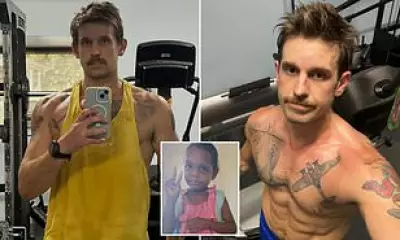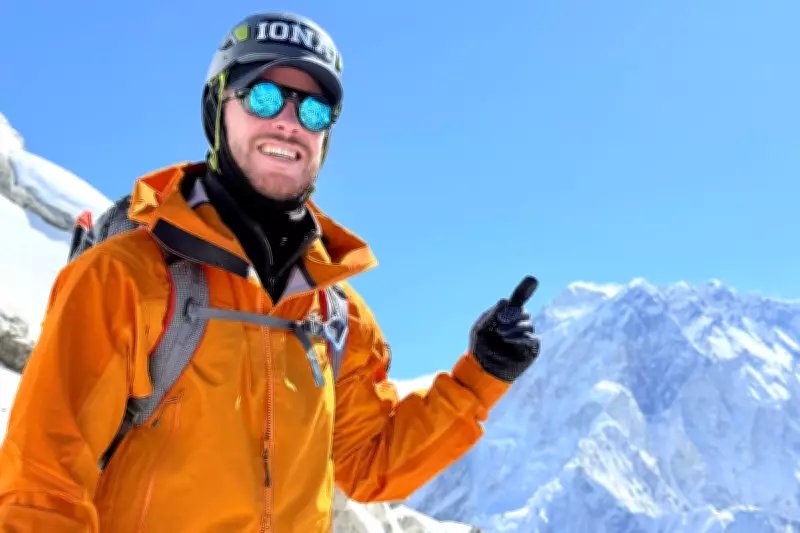
An Australian climber is taking two months to scale Mount Everest, aiming to break a speed record while honoring a deeply personal mission. Oliver Foran's 60-day sea-to-summit bid is driven by the loss of his mother and a desire to help young people access mental health support.
A Journey of Grief and Resilience
Foran was 16 when his mother died of brain cancer. Unable to process the grief, he internalized everything and did not cry for eight years. On the surface, he appeared fine, launching a successful real estate business. But inside, he felt empty. Now, he is channeling that pain into a monumental challenge.
Speaking from a cafe at 3,450 meters in Namche Bazaar, Nepal, Foran is midway through his attempt to break the sea-to-summit speed record for climbing Everest. To achieve a Guinness World Record, he must complete the feat without motorized transport, cycling over 1,000 kilometers from the seaside town of Digha on the Bay of Bengal in India, then trekking to Everest's 8,848.86-meter summit.

The previous record was set by South Korean Kim Chang-ho in 67 days in 2013. Foran aims to finish in just 60 days, reaching the summit before May 31.
More Than a Record
While the record is a goal, Foran's real mission is to raise funds for the youth mental health program YouTurn. He wants to ensure young people struggling with similar issues can get the help he wishes he had received.
Foran is relatively new to high-altitude climbing but has built experience over the past two years, summiting peaks like Island Peak and Ama Dablam in Nepal. This will be his first attempt at an 8,000-meter mountain.
At every stage, he has faced adversity. In India, he battled 42-degree Celsius heat while cycling up to 135 kilometers per day, often for 10 to 12 hours. To cope, he broke the days into fragments, stopping every 20 kilometers to reset.
Along the way, he built connections. One afternoon, a group of schoolchildren gathered around him as he rested. He bought fruit juice for them all, and soon more children appeared. "I ended up buying all of his juices," he recalls with a laugh.
The chaos of India's roads also posed a challenge. "I struggled at first with all the trucks and cows, but I got used to them," he says.
Mental Health Advocacy
On his Instagram page, Foran writes: "I struggled with my mental health. For a long time, I felt lost. Like I was searching for something, but didn't know what it was. I remember when I was that age... how much that would have helped me. I don't want people to get to that point."
The exact moment he decided to climb Everest came while standing on the summit of Ama Dablam. "I was looking at Mount Everest, and I was like, Yes, that's it. That's my goal."
The route through Nepal has not gone exactly to plan. While acclimatizing en route to Mera Peak, his blood oxygen levels dropped sharply overnight. "I checked it three times, and it was low every time. I remember starting to become a little bit delirious." His team made the difficult decision to turn back. "Safety was number one. We just went. There was no questions asked."
Foran sees this not as failure but as clarity. "What is the goal here? The goal is to get to Mount Everest. We'd figure everything else out once I was healthier." They have now planned a faster push along the usual Everest base camp trail, cutting a journey that normally takes over a week down to four days.
Mental Toughness
Foran knows the physical toll the expedition will take, but he believes mental toughness is key. "Through a lot of hardship, mental resilience is built in our lives. Personally, I faced a bunch of it at a very young age. I was very, very close with my mom, and to watch her decline so dramatically and then pass away right in front of me. It was brutal, and that's something that I definitely draw back on."
He will need that resilience for the most dangerous stage: the climb from Everest base camp to the summit, through icefalls and the notorious "death zone" above 8,000 meters.
"My mum has given me an opportunity here to keep going and hopefully inspire other people. It's okay to speak about it... it's okay to show emotion. The cause is the most important thing for me. What we're doing with YouTurn... I believe can save lives."