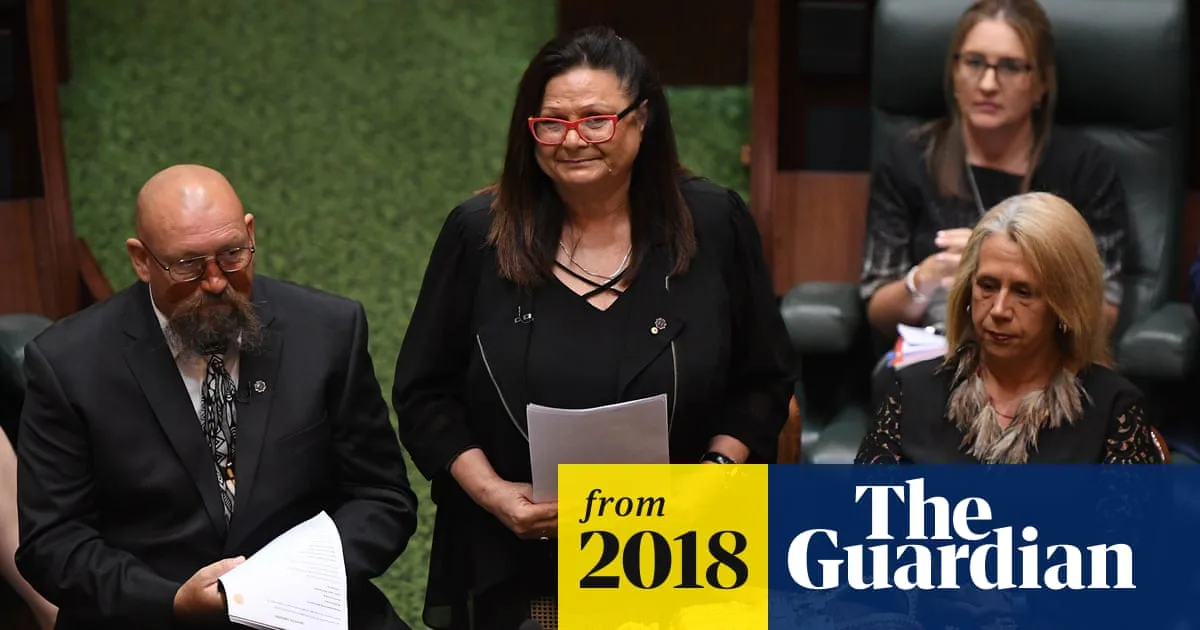
Victoria's treaty commissioner, Jill Gallagher, has expressed confidence that the state's historic treaty process will continue regardless of the outcome of the 24 November election, despite the Liberal-National Coalition's pledge to halt it. Gallagher, a Gunditjmara woman, cited the Advancing the Treaty Process with Aboriginal Victorians Act 2018, which she described as a strong piece of legislation that obliges any state government to progress the treaty process.
The Act, which came into effect on 3 July, requires the government to establish and engage with an Aboriginal representative body to develop a framework for negotiating a treaty. Gallagher believes the process is too far advanced to be reversed. However, opposition leader Matthew Guy has stated that a Coalition government would stop the treaty process at a state level, arguing that responsibility for a treaty with Indigenous Australians lies with the federal government.
Liberal MP Bernie Finn has suggested that a Coalition government might challenge future treaty legislation in court, calling the idea of a treaty between the government and one section of the community 'nonsensical'. In contrast, the current Labor government has committed $28.5 million to the treaty process, with an additional $1.5 million allocated to community engagement. Minister for Aboriginal Affairs Natalie Hutchins affirmed the government's commitment to 'true reconciliation'.
Despite the optimism, precedent from South Australia, where a Coalition government axed that state's treaty process after taking office in March, raises concerns. Victoria's shadow minister for Aboriginal affairs, Tim Bull, indicated that the Coalition believes treaty discussions are best handled at the federal level, in concert with South Australia and New South Wales. Gallagher has questioned whether Bull or Guy have communicated this position to their federal counterparts.
Marcus Stewart, chief executive of the Federation of Victorian Traditional Owner Corporations, said the peak body has had numerous conversations with the Coalition but has not received assurances about the treaty process's stability. Nevertheless, Stewart remains hopeful that the Coalition's position could change and said traditional owners will continue to work with whichever government is in power to advance the treaty process.