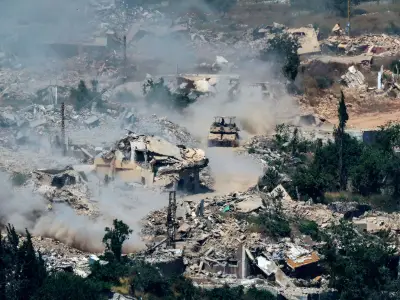
A new poll has found that the ongoing US war in Iran is as unpopular with Americans as the Vietnam War was in the 1970s, indicating that President Donald Trump's efforts to portray the military operation positively have not resonated with the public.
According to the Ipsos, Washington Post and ABC News survey of 2,560 people, 61 percent said the United States made a mistake in using military force against Iran, while only 36 percent said it was the right decision. This matches the 1971 Gallup figure for those who said sending troops to Vietnam was a mistake, and is similar to the 59 percent who said the US made a mistake in the Iraq War in 2006, according to the Washington Post.
Since the conflict began at the end of February, Americans have been sceptical of the president's motivations and the feasibility of his goals. Two months in, with more than a dozen US service members killed, rising petrol prices, disrupted global oil supplies and failed negotiations to prevent Iran from obtaining a nuclear weapon, public approval continues to dwindle.

The Vietnam War, which lasted roughly eight years, is considered one of the most unpopular wars in history. Only 29 percent of people say it was justified, according to a 2025 Emerson College poll. Despite the polling numbers, Trump and his administration continue to assert that the US mission has been a massive success, claiming that strikes have resulted in 'a new, and more reasonable, regime'. However, reports suggest the Islamic Revolutionary Guard Corps has become more aggressive and radicalised.
Gas prices have risen dramatically due to disruptions in the Strait of Hormuz, which transports about 25 percent of the world's oil. The US has blockaded Iranian ports, and Iran has retaliated by closing the strait. The administration insists prices will fall when the war ends, but there is no indication of when that might be. During a House Armed Services Committee hearing, Defence Secretary Pete Hegseth was accused of being in a 'quagmire', which he vehemently denied.