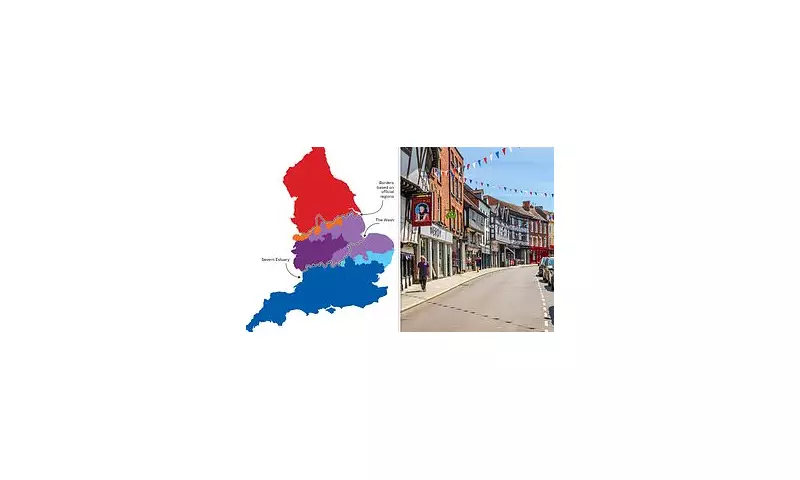
For generations, a simple question has sparked friendly rivalry and serious debate across England: where exactly does the North end and the South begin? Now, the nation's most comprehensive survey has delivered a definitive answer, drawing a clear cultural and psychological border across the country.
The Great Divide: A Line from Shrewsbury to Grimsby
The respected pollster YouGov conducted the largest survey of its kind, quizzing 46,000 adults from every corner of England on where they feel they truly belong. The results paint a detailed picture of regional identity, cutting through decades of assumption and humour.
According to the data, the perceived northern boundary stretches from Shrewsbury in the west to Grimsby on the east coast. Conversely, the southern realm is seen to extend from the River Severn to Great Yarmouth. This line slices through the Midlands, creating a fascinating patchwork of allegiance and ambivalence.

Midlands: The Contested Heartlands
The findings get particularly interesting in the central regions of England. In the West Midlands, a significant 78% of residents stated they feel they live in neither the North nor the South. This sentiment is echoed by 69% of those in the East Midlands.
However, digging into county-level data reveals a more nuanced story. In the northern-most areas of the Midlands, many people firmly identify as northerners. This feeling is strongest in the High Peak area of Derbyshire, where 94% of residents consider themselves to live in the North—a figure on par with traditional northern heartlands.
Similarly, 75% of those in Bassetlaw, Nottinghamshire, see themselves as northern, alongside 55-58% of residents in north Shropshire, the Newcastle-under-Lyme and Moorlands areas of Staffordshire, and parts of Derbyshire around Chesterfield and Bolsover.
Southern Identity and Pockets of 'Neither'
In contrast to northern identity stretching southwards, the survey suggests there is less desire in the Midlands to claim a southern identity. Beyond 21% of people in Northamptonshire and 12% in Herefordshire, few in the central regions see themselves as southern.
The data also shows that those living in the Anglian part of the East of England reject the idea of being in the South. While the South East and South West regions overwhelmingly accept the 'Southern' label (94% and 89% respectively), notable exceptions exist.
A quarter of Milton Keynes residents (25%) feel they are in neither region. This sense of 'neither-ness' continues further south, with 14% in Gloucestershire and 12% in Essex feeling disconnected from the classic north-south split. Perhaps most strikingly, 10% of people in Cornwall, England's southernmost county, do not consider themselves part of the South of England, hinting at its distinct cultural identity.
These findings could finally settle a debate some historians argue dates back to the Viking era. The north-south divide is more than a subject for light-hearted jokes about greetings ('hello' vs 'ey up') or chip condiments (ketchup vs curry sauce); it's a tangible line reflected in health outcomes, economic inequality, house prices, and political voting patterns. This survey proves that while the divide is real, the borderlands are filled with people who proudly defy easy categorisation.