

Winter Sports Britain Will Never Master: From Luge to Biathlon
The 2026 Winter Olympics have unfolded as a tale of fractions of points, marginal over-rotations, and steps out of twizzles for Great Britain. Agonising near misses have characterised the nation's performance so far, yet in certain disciplines, even achieving a near miss would represent a monumental leap forward. For some winter sports, the peaks—or even the foothills—remain utterly unconquerable for home nation athletes, regardless of heavily-funded performance programmes.
Luge: A Head-First Challenge
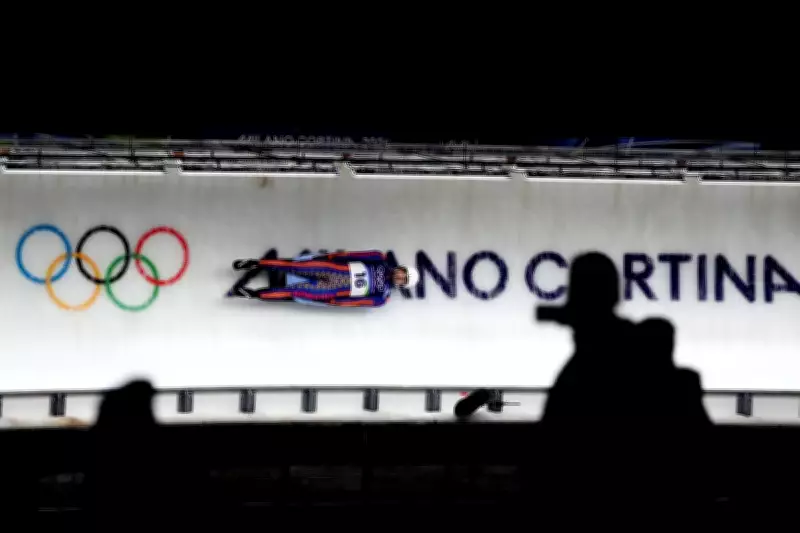
Shove a Briton down an ice chute head-first, and the world seems to be their oyster. However, ask them to lie back, and it becomes a different story entirely. Britain's first Olympic luger, Gordon Porteous, was disqualified from the 1964 Games for failing to cross the finish line feet-first. The nation's best ever luge result remains a modest 15th place, achieved by Jeremy Palmer-Tomkinson at Lake Placid in 1980. Despite advancements in training and technology, luge continues to elude British mastery.
Biathlon: A Struggle in the Snow
Over two dozen British competitors have strapped on smallbore rifles and skied off into the snowbound Olympic countryside since biathlon made its modern debut in 1960. Rooted in ancient hunter-gathering techniques, these athletes could not have fared much worse if they had paused en route to pick nuts and berries. The sport's unique blend of precision and endurance has proven a formidable barrier, with no British athlete ever nearing the podium.

Ski Jumping: The Eagle's Legacy
It was a case of what might have been for Eddie "The Eagle" Edwards, who blamed his pair of last-place finishes at the 1988 Calgary Games on a pair of misted-up glasses. Edwards' performances proved so embarrassing to the British Olympic Association that they introduced stringent new qualifying criteria designed to deter would-be imitators. Team GB's only subsequent ski-jumper, Glynn Pedersen, finished 43rd and 48th in his two events in 2002, underscoring the sport's enduring challenge.
Nordic Combined: The Ultimate Versatile Skier
Blending cross-country skiing and ski jumping, Nordic Combined evolved in Norway in the late 19th century as a means to identify the ultimate versatile skier. Clearly, an athlete from Cornwall, where the highest peak is the 420m Brown Willy, was always going to be at a disadvantage. Credit is due to Percy Legard, Britain's only ever competitor in the discipline, who panted home in 45th place in 1936, a testament to the sport's steep demands.
Speed Skating: Melting Hopes
Blame global warming for Britain's lack of long-track speed skaters. In the early Winter Olympics, multiple athletes, most of whom were Norfolk-based and honed their skills on East Anglia's frozen fens, represented the Union Jack. Since the Fens stopped freezing regularly, long track hopes have melted away. Dutch-born Cornelius Kersten and his partner, Ellia Smeding, ended a 30-year absence when they raced for GB in Beijing in 2022, but the sport remains a distant dream for British dominance.
As the 2026 Winter Olympics continue, Great Britain's athletes strive for glory in more familiar disciplines, but for luge, biathlon, ski jumping, Nordic combined, and speed skating, the podium remains a distant, unconquerable summit. The story of near misses may be frustrating, but in these sports, it is a narrative of perseverance against overwhelming odds.






