

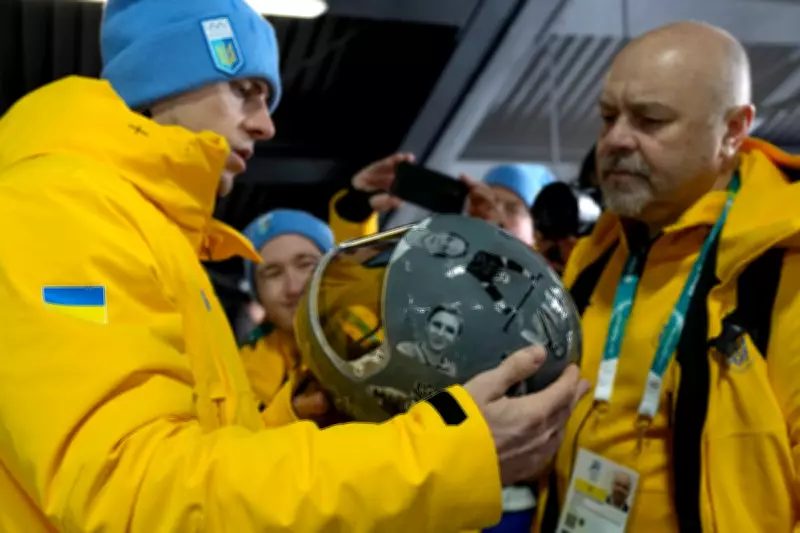
Ukrainian Athlete Tests Olympic Free Speech Limits and Faces Disqualification
Ukrainian skeleton racer Vladyslav Heraskevych has been disqualified from his event at the Winter Olympics after pushing the boundaries of the International Olympic Committee's regulations on freedom of expression. This incident has created a poignant and historic moment in Winter Games history, highlighting the ongoing tension between athlete activism and Olympic neutrality.
Defiance Leads to Disqualification
Heraskevych, 27, insisted on wearing a helmet adorned with images of Ukrainian athletes and coaches who lost their lives during Russia's nearly four-year-long full-scale invasion of Ukraine. Despite a last-minute plea from IOC President Kirsty Coventry, who was reportedly in tears after an early morning meeting at the sliding center in Cortina d'Ampezzo, Heraskevych refused to back down. As a result, he was disqualified from the competition on Thursday, though he was not expelled from the Olympics entirely, unlike some previous protesters.
Olympic Rules and Political Neutrality
The IOC's stance is rooted in the Olympic Charter, a 108-page document that serves as the constitution for the Olympic movement. Rule 50 explicitly prohibits "any kind of demonstration or political, religious or racial propaganda" in Olympic venues. Additionally, Rule 40 requires athletes to comply with conditions set by the IOC regarding where and how free expression can be displayed.

IOC spokesman Mark Adams emphasized that the issue was not about the message itself but about maintaining the sanctity of the competition field. "It is simply about the sanctity of the field of play," Adams stated during a news conference dominated by the helmet controversy.
Expert Criticism and Historical Context
Sports law expert Antoine Duval of the Asser Institute in the Netherlands criticized the IOC's decision, noting that citing Rule 40 on free expression rather than Rule 50 on political propaganda was "a huge move." He suggested this could set a precedent where future Olympians might face scrutiny over personal expressions like tattoos, demanding athletes become "absolute robots."
Heraskevych is no stranger to Olympic protests. At the Beijing Winter Games in 2022, he held a sign reading "No War in Ukraine" after his races, which the IOC deemed a general call for peace and took no action against. This year, with the war ongoing, he attempted to reiterate his views through his helmet, leading to his disqualification.
Broader Implications and Past Incidents
The IOC argues that its rules on athlete expression were developed in consultation with recognized athlete groups, including those from countries where political interference is a concern. Adams warned that allowing unrestricted political messaging could lead to chaos, especially at larger events like the 2028 Summer Games in Los Angeles, where over 200 teams are expected to participate.
This case draws parallels to other Olympic protests. For instance, at the Paris Olympics 18 months ago, Afghan refugee Manizha Talash was disqualified for wearing a cape with the slogan "Free Afghan Women." Historically, the 1968 Mexico City Games saw U.S. sprinters Tommie Smith and John Carlos expelled for their Black Power salute, though they retained their medals.
Russia's Potential Return and Ukrainian Concerns
The helmet controversy has brought Ukraine back into the Olympic spotlight at a time when Russia's return to the IOC fold is being considered. Russian athletes have faced restrictions due to doping scandals and the war, with the Russian Olympic Committee suspended in 2023 for incorporating Ukrainian regions. Ukrainian Sports Minister Matvii Bidnyi has urged the IOC not to make concessions before the war ends, highlighting the ongoing geopolitical tensions.
In summary, Heraskevych's disqualification underscores the delicate balance between athlete activism and Olympic neutrality, setting a precedent for future Games and raising questions about the limits of free speech in international sports.






