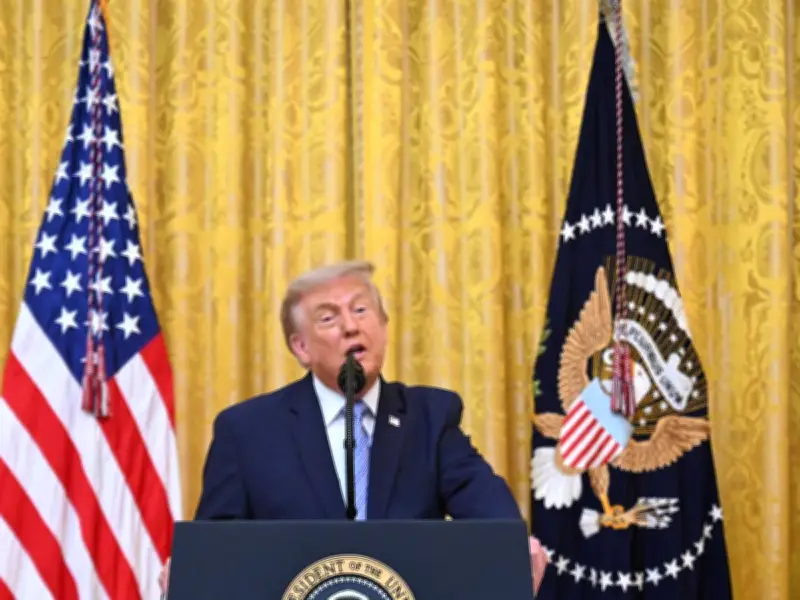
US President Donald Trump has alleged that China interfered in the 2020 presidential election, claiming the country unlawfully accessed voter data and that vital information was concealed from the public. In a primetime address from the White House on Thursday, July 16, Trump announced he was immediately declassifying and releasing what he described as critical intelligence exposing election infrastructure vulnerabilities.
Trump's Allegations and Declassification
Speaking during his address, Trump stated, "This evidence shows that the election system we have dangerously exposes and really exposes like levels never thought possible to hacking, exploitation, and foreign interference." He added, "Just as disturbingly, this vital information has for many years been covered up and hidden from you." Trump claimed China had obtained access to US voter data, including names, addresses, phone numbers, political party preferences, and other sensitive information needed for voter registration. He asserted that such data would be used for "nefarious activities."
However, it is worth noting that voter information is largely a matter of public record across most US states. Trump had previewed the address as containing "really big news" on election security, telling reporters on Tuesday: "It doesn't get bigger, because without free and fair elections, you don't have a country."

Context of the 2020 Election Results
Trump has repeatedly insisted since his defeat that the 2020 election was marred by widespread voter fraud. President Joe Biden won the election with 306 electoral votes and 51.3% of the national popular vote, while Trump secured 232 electoral votes and 46.8% of the popular vote. In January 2021, American intelligence agencies produced a report concluding there had been no foreign interference in the 2020 election. The findings were released publicly by the Biden administration in March 2021.
Intelligence Community's Previous Assessment
The report, issued under Trump's administration, stated: "We have no indications that any foreign actor attempted to alter any technical aspect of the voting process in the 2020 US elections, including voter registration, casting ballots, vote tabulation, or reporting results." It further assessed that "it would be difficult for a foreign actor to manipulate election processes at scale without detection by intelligence collection on the actors themselves, through physical and cyber security monitoring around voting systems across the country, or in post-election audits."
Trump's latest claims contradict this official assessment, reigniting debate over election security and foreign interference.