British holidaymakers face a summer of flight cancellations after the government introduced a temporary rule change allowing airlines to group passengers from different flights onto fewer planes to save jet fuel. Passengers could be moved from their original service to a similar one, reducing fuel wasted on flights that are not sold out and might have been cancelled.
How the Iran War Impacts Flights
The US-Israeli war on Iran since February has disrupted jet fuel supply via the Strait of Hormuz, through which about a fifth of the world's oil travels. Iran's effective closure of this critical shipping route has caused major cost pressures for airlines, leading to ticket price increases and flight cancellations since the conflict began on February 28.
Jet Fuel Price Surge
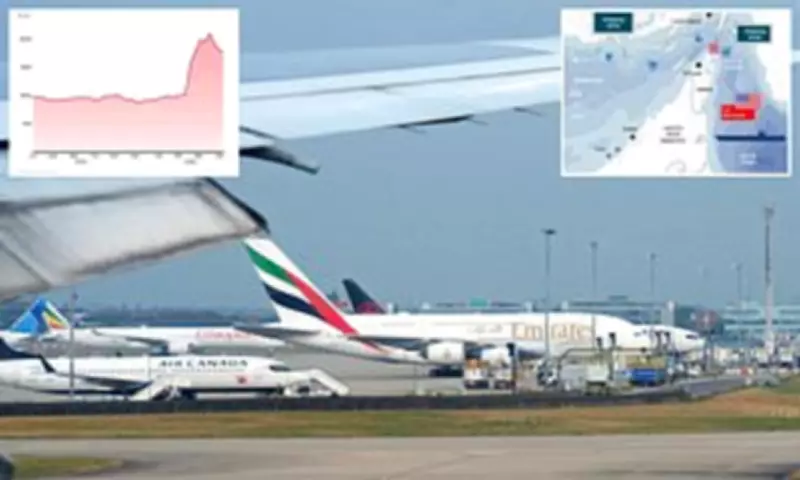
According to the International Air Transport Association, the average global jet fuel price increased from $99 (£73) per barrel at the end of February to as high as $209 (£155) at the start of April. The latest figure is $179 (£132) from the week ending April 24, a 3% fall on the previous week.

Current Jet Fuel Shortage
The government insists UK airlines are 'clear that they are not currently seeing a shortage of jet fuel'. The Department for Transport notes that jet fuel is 'typically bought in advance, with airports and their suppliers keeping stocks of bunkered fuel to support their resilience'. However, it continues to 'plan for a range of contingencies, while focusing on securing a long lasting and workable solution to get shipping flowing freely again through the Strait of Hormuz'.
Future Shortage Risks
Some experts fear jet fuel shortages within weeks, and consumers are holding off booking holidays or flights in case of cancellations. The International Energy Agency has called it the world's largest oil output disruption and warned on April 16 that Europe had six weeks of jet fuel left before shortages begin.
UK Government Action
The government introduced a temporary rule change allowing airlines to consolidate passengers onto fewer planes to save fuel. Passengers could be moved from their original booking to a similar service, reducing fuel waste. This means holidaymakers face potential flight cancellations amid warnings of a jet fuel shortage ahead of the peak season.
Passenger Rights
The government has reminded passengers of their rights, including during long delays or cancellations. The Department for Transport said passengers experiencing cancellations are entitled to a choice between a refund or being rerouted on another service, with airlines required to offer a comparable alternative. Passengers facing delays of at least two hours on short flights, three hours on medium-haul, or four hours on long flights have the right to care and assistance, including vouchers for food and drink, refunds for calls, accommodation, and transport.

How European Airlines Respond
- Aegean Airlines: Expects suspended Middle East flights and fuel price spikes to have a 'notable impact' on first-quarter results.
- Air France-KLM: Plans to increase long-haul ticket prices, with cabin fares rising by €50 (£43) per round trip. KLM will cancel 160 European flights in the coming month due to fuel costs.
- EasyJet: Warned of a bigger half-year pre-tax loss of £540-560 million, including £25 million in extra fuel costs in March.
- IAG (British Airways owner): Will raise ticket prices to reflect higher jet fuel costs, as it is 'not immune' to fuel cost volatility.
- Lufthansa: Introduced a new 'Economy Basic' fare limiting carry-on bags, and previously said 20,000 short-haul flights would be removed through October.
- Ryanair: CEO Michael O'Leary said the risk of a jet fuel supply shortage is receding, but fares were lowered to stimulate weaker demand.
- SAS: Will cancel 1,000 flights in April due to high jet fuel prices.
- TAP: Price hikes will partially mitigate fuel price impacts.
- TUI: Cut full-year profit outlook and suspended revenue guidance due to €40 million extra costs in March.
- SunExpress (Turkish Airlines/Lufthansa joint venture): Imposes a €10 fuel surcharge per passenger from May 1.
- Virgin Atlantic: Adds fuel surcharges but will struggle to return to profitability this year.
- Volotea: Introduced a pricing policy linking tickets to fuel costs, potentially adding up to €14 per passenger per flight.
Consumer and Political Reactions
Consumer group Which? criticised the plan, saying rules should not be 'bent in favour of airlines'. Editor Rory Boland stated existing rules already allow airlines to move customers to new flights with 14 days' notice, and compensation is only payable for cancellations within 14 days. He called for cast-iron assurances that passenger rights will not be weakened.
The Conservatives also criticised the plan. Shadow transport secretary Richard Holden said families could find themselves 'herded on to a different plane, at a time of the airline's choosing'. He added that Britain is exposed to fuel supply risks that a properly energy-secure country would not face.
Airline Industry View
Transport Secretary Heidi Alexander discussed plans with key industry figures on April 30, including Heathrow, Gatwick, British Airways, Virgin Atlantic, and easyJet. Tim Alderslade of Airlines UK said UK airlines continue to operate normally and are not experiencing jet fuel supply issues. He welcomed contingency planning, including slot alleviation, which enables airlines to adjust schedules responsibly.
Industry analyst John Strickland said the temporary rule change is a good idea that airlines have discussed for weeks. He noted that rather than waiting for a supply crisis, airlines want flexibility to cancel the weakest flights if needed. However, he acknowledged the need to weigh flexibility against passenger plans to avoid missed connections.