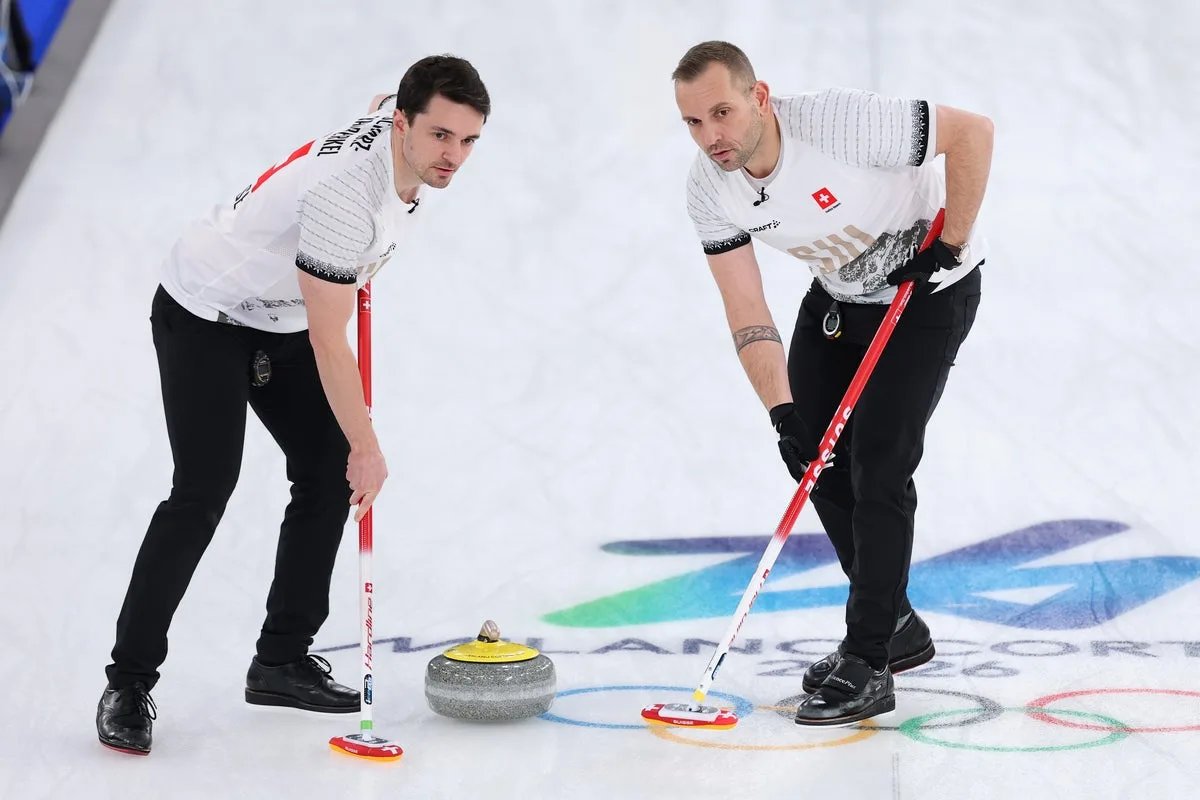
Curling remains one of the most popular Winter Olympic sports, with Great Britain seeking success at the Milano-Cortina Games in 2026. The competition demands skill, strategy, steady nerves and precision. Three medal events will be held, each featuring ten nations and a total of 112 competitors.
The mixed doubles format, introduced at Pyeongchang, joins the men's and women's team events. Great Britain's mixed doubles pair, Jennifer Dodds and Bruce Moat, finished fourth in Italy for the second consecutive Games. Each men's and women's team consists of four playing members and an alternate.
The 'hammer' refers to the last stone advantage, allowing a team to throw the final stone of an end. This is a significant advantage as all other stones have been thrown and the scoring situation is clear. The team that does not score in an end receives the hammer for the next end. Sometimes teams avoid scoring just one point to retain the hammer and aim for a higher score later. The hammer is retained if neither team scores.
Before a game, the hammer is decided by a draw to the button: two players from each team deliver a stone, one clockwise and one counter-clockwise, aiming for the centre of the house. The team with the stone closest to the centre wins the hammer. In men's and women's events, the skip typically throws the final two stones of each end, acting as captain and strategist.
In mixed doubles, five stones are played per end, with the same team member throwing the first and last stones. Their teammate throws the middle three. Each end begins with one stone pre-placed per team, making it possible to score six points in an end.