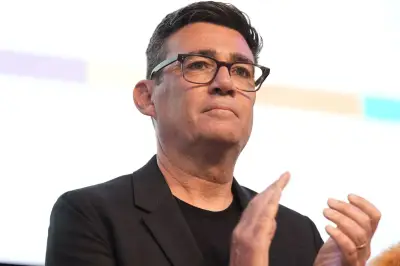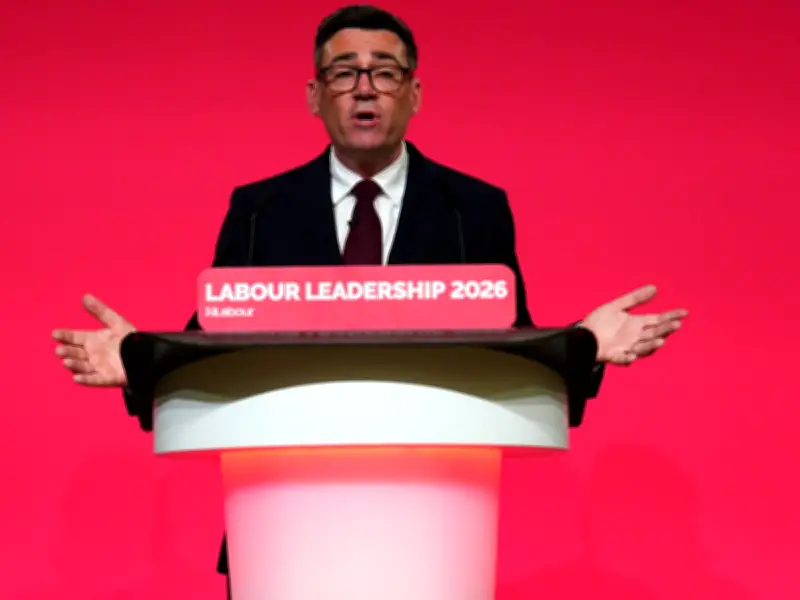
Incoming Prime Minister Andy Burnham has pledged to “build a new politics” after he was handed the Labour leadership crown on Friday. He is set to walk through Number 10's doors on Monday. According to the Mirror, there are roughly 12 key areas of policy that Brits can expect from Keir Starmer’s successor.
No10 North
Burnham has already revealed that a No10 North will be established in Manchester to “redistribute power and resources across the UK”. In a speech in June, he described the northern outpost as the “nerve centre of a rewired Britain”. He said: “No10 North will be the nerve centre of a rewired Britain. It will be the conduit through which we redistribute power and resources across the UK. It will co-ordinate all parts of government at national and local level to agree on a long term economic strategy and help all places set new growth ambitions.”
Bus Fares and Trains
Burnham has indicated he wants to examine ways of helping young people with the expense of bus tickets. In a social media clip last month, he said: “I think there's so much we need to do to support young people, recognising that it's harder growing up these days than it was for us in the 70s and 80s. One thing I did in Greater Manchester was introduce a free bus pass for 16 to 18 year olds, and I'm really proud of it because it helped young people get on in life and set high ambitions after school. So I'm going to look to see if there's anything we can do to support young people with the cost of bus travel going forward.”

Social Care
In his first address since becoming Labour leader, Burnham urged his Government to “have the courage to fix the big things that politics has neglected”, specifically adding: “Like social care.” During his time as Health Secretary, he put forward the establishment of a National Care Service in 2009, to guarantee elderly or disabled individuals can obtain care that is free at the point of delivery like the NHS. It was partly implemented in Wales, while the Casey review will examine how the UK government could establish and finance such a service going forward. He considers inheritance tax should be substituted with a “national care levy” to fund the system.
Social Media Ban
One of Starmer's final actions as Prime Minister was to declare a social media ban for under 16s, but it will fall to Mr Burnham to execute it. The Mirror disclosed earlier in July the PM-in-waiting will proceed with the ban as he views it as a “critical first step” to protecting children safe online. The former Greater Manchester mayor wants the measure to be implemented with “urgency”.
New AI Strategy
Burnham’s team reportedly wants British AI firms and workers to take priority over US tech companies. Sources told the Financial Times they want emphasis on AI serving the British public rather than US tech giants.
Education
He is reportedly considering extending the Greater Manchester Baccalaureate (MBacc) system across the country. The programme offers an alternative to university and champions technical education. In a July Instagram video, he criticised the excessive emphasis on university education. He called for the Government to “do more for young people who want technical qualifications” and expressed his desire for a guaranteed 45-day work placement for every young person seeking one. It's also been hinted that he wants to address the student loans crisis and alleviate the financial strain on young people.
Welfare
Burnham has been closely monitoring research by former Health Secretary Alan Milburn on the escalating number of young people categorised as 'Neets' - an acronym for 'not in education, employment, or training'. Meanwhile, changes to the primary disability benefit, personal independence payments (PIP), are also desperately required, with a report earlier this month by DWP minister Sir Stephen Timms cautioning the system is frequently “dehumanising”, “soul destroying”, and “degrading” to claimants.
Housing
In an address last month, Burnham declared he wished to supervise the largest council house construction programme since the Second World War.

Justice
Burnham is reportedly contemplating alterations to prison sentencing reforms so that child sex offenders are excluded. The prospective PM is reportedly concerned about plans that could make child groomers and rapists eligible for early release from September. Staff in Mr Burnham's team have been investigating how to exclude child sex offenders from the scheme and whether such changes would necessitate primary legislation.
Immigration
During his by-election campaign, Burnham's team said while he wants to reshape the debate around immigration, he will not deviate from Shabana Mahmood's stringent reforms. Proposals put forward by the Home Secretary - who is one of the names tipped as Burnham's Chancellor - include doubling the time migrants have to wait for indefinite leave to remain (ILR).
Wealth Tax
Last week Burnham declined to dismiss the idea of a wealth tax and called for a “greater sense of fairness.” He also acknowledged that people might be asked to contribute a “little more” in tax. The former Greater Manchester Mayor has previously shown interest in levying taxes on speculative landlords who persistently leave high street properties vacant, and taxing the warehouses of companies like Amazon.
Gaza
Earlier this month, Burnham said the UK needed to consider further sanctions on those responsible for the violence in Gaza and a potential ban on trading goods with illegal settlements. In a video shared on social media, he expressed regret for Labour's initial reaction to the Gaza conflict, indicating a change in the party's position on the Middle East. He said: “I have been absolutely appalled by what I've seen and read about the destruction of Gaza. There is increasing evidence that war crimes appear to have been committed. There must be accountability for the depth of the suffering the people have experienced. Ultimately however, it must be for the international courts to determine, rather than politicians.”