Congressional Republicans were largely silent on the fifth anniversary of the January 6 insurrection on Tuesday, even as Democrats sought to use the occasion to condemn Donald Trump and a small group of protesters convened on the grounds of the US Capitol in solidarity with those who carried out the attack.
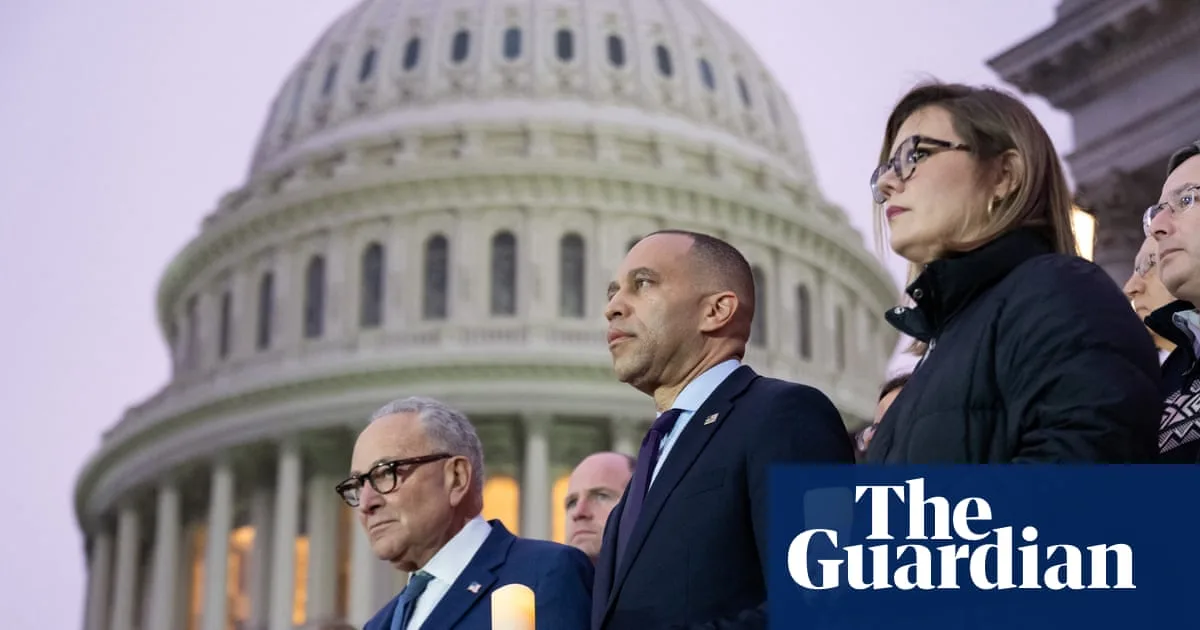
Democrats, who are in the minority in Congress, seized on the anniversary to decry the president as a threat to democracy and accuse Republicans of acting as his accomplices. House minority leader Hakeem Jeffries said at an unofficial hearing: 'Instead of holding those responsible for the attack accountable, Donald Trump and far-right extremists in Congress have repeatedly attempted to rewrite history and whitewash the horrific events of January 6. We will not let that happen.'
The anniversary was the first since Trump returned to office and pardoned almost everyone convicted or charged over the violence. Jeffries noted that some of the roughly 1,500 people pardoned were convicted of other serious offences, saying: 'It’s been a Trump-inspired crime spree. Why won’t Republicans in Congress condemn this dangerous behaviour and ongoing threat to public safety?'

Few Republicans noted the anniversary. Those who did downplayed its severity or sought to blame Democrats. Republican congressman Mike Collins wrote on X: 'On this day in history in 2021, thousands of peaceful grandmothers and others gathered in Washington DC to take a self-guided, albeit unauthorised, tour of the US Capitol building.' Trump made no public comments, and his officials pushed the message that he deserves no blame.
The insurrection has been linked to nine deaths and dozens of injuries. Former US Capitol police officer Winston Pingeon testified: 'Pardoning criminals who severely beat me and my fellow officers that day is completely unacceptable.' Pam Hemphill, a rioter who refused her pardon, said she had 'fallen for the president’s lies'.
The occasion also revived controversy over a plaque honouring officers who responded to the attack, which Republican House speaker Mike Johnson has yet to install despite a legal requirement.