WW2 Bomber Pilot Recalls Terrifying Night Raid Over Hanover at 105
Enemy searchlights sliced through the night sky, and shells exploded violently around our aircraft. The cockpit was flooded with blinding light, rendering me unable to see ahead, forcing me to rely solely on instruments. These adversaries were determined to destroy us. It was September 1944, and as a 23-year-old pilot, I was experiencing my first taste of war alongside navigator Doug Redmond. We had just completed a bombing run on Hanover, a major industrial city approximately 180 miles west of Berlin.
Initially, the mission seemed manageable with minimal anti-aircraft fire, leading my youthful optimism to believe the job might not be so perilous. However, I had not accounted for the terror that could provoke foolish errors, making a crew's initial raids exceptionally hazardous. Doug, arguably the finest navigator in our squadron, had inadvertently routed us over a German naval base, alerting the enemy to our presence.
A Desperate Dive and Narrow Escape
Our plane shuddered as a shell detonated nearby, and in a panic, I made a critical mistake. I slammed the throttle open and plunged us into a vertical dive. This maneuver extricated us from the searchlight's beam, restoring visibility, but the ground now rushed toward us at an alarming speed. Closing the throttle, I attempted to ease back on the control column, but it refused to budge. Our descent accelerated, and I pulled with all my might on the stick, to no avail.

The roar of the slipstream filled the cockpit as I faced the grim possibility of the plane disintegrating or crashing into the earth. Instinctively, I reached for the trim wheel to adjust the nose's position. Winding it back fully, I hauled on the stick once more. Slowly and gratefully, we returned to level flight. Doug's voice, icily calm, instructed, 'Turn 50 degrees starboard.' I echoed his command with equal composure, though inwardly terrified, as we banked right and climbed back to operational height in silence.
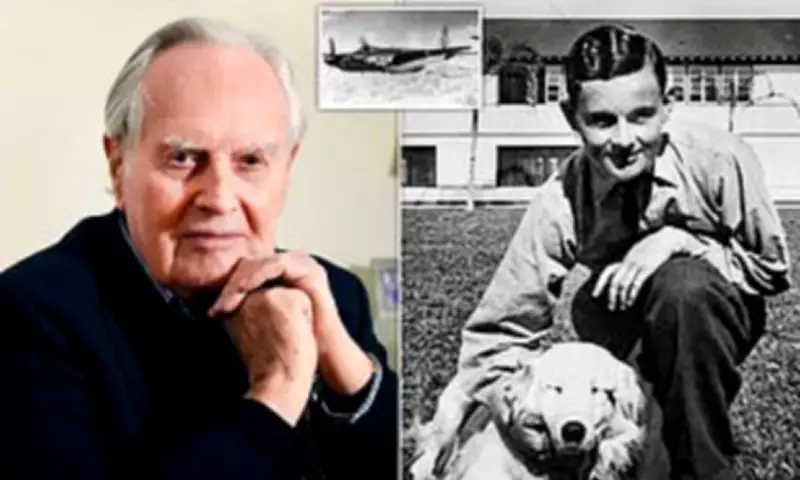
'You know what?' I remarked eventually. 'I'm beginning to think that this business might be a bit bloody dangerous after all.' The aircraft I was fortunate to pilot that night was the de Havilland DH98 Mosquito, dubbed the Wooden Wonder for its construction from wood and glue. It was the world's fastest operational aircraft at the time, powered by two Rolls-Royce Merlin engines each producing over 1,300 horsepower. Flying it felt akin to piloting a Ferrari, with a tremendous thrust during takeoff that I still recall vividly at 105 years old.
The Harsh Realities of War and Ethical Debates
As one of the few surviving Bomber Command veterans, I reflect on why I am only now documenting my wartime experiences. After a busy career as a chartered surveyor, retiring at 98, I believe it is crucial to remind ourselves of what we fought for during World War II. Standing up to bullies is essential, as despots target weak nations and democracies, and similar malevolent forces seem to reemerge today.
The Mosquitos of the Light Night Striking Force, our unit, carried four 500lb bombs, enabling a top speed of 420mph. The Messerschmitt Me 109, our frequent foe, was 40mph slower, and German pilots received double kills for downing a Mosquito, underscoring the enemy's respect for the aircraft. However, bombing raids were far from safe. During runs, we had to maintain a steady course for about three minutes under fire, an eternity when targeted.
Beyond enemy threats, we contended with operational risks. Our station commander refused to ground planes for six weeks to address a potential engine fault, stating, 'You die like an officer and a gentleman' if engines failed on takeoff. Tragically, a Canadian pilot perished this way. Of the 30 aircrew I served with in 608 Squadron, 13 were dead by my departure.
Personal Reflections and Lasting Impacts
My journey began at 18 when I volunteered for the RAF, inspired by witnessing Charles A. Lindbergh's arrival at Croydon Airport in 1927. After training in the US and serving as an instructor, I joined 608 Squadron in September 1944. We conducted frequent raids on Germany from RAF Downham Market in Norfolk, living in frigid Nissen huts and facing daily uncertainties.

I always flew with Doug, a skilled but solitary Canadian navigator. Night sorties typically launched around 9pm, preceded by a squadron leader's good luck wish. We carried minimal comforts, including a Smith & Wesson revolver as my mascot, intended for self-defense if captured, reflecting the brutal reality of war where downed airmen risked lynching.
Ethical debates about area bombing under Sir Arthur Harris persist, but I argue that losing the war would have meant living under Nazi oppression. While Dresden was horrific, so were the blitzes on British cities. The German people were not evil, but their rulers were, and Harris's strategy targeted both military and industrial contributors to the war effort.
Pilots could refuse missions for valid reasons, but frequent refusals led to accusations of 'lack of moral fibre,' with severe consequences. One pilot, consumed by fear, predicted his demise and tragically crashed on landing, killing himself and his navigator. Every sortie was unnerving; being shot at was neither exhilarating nor fun.
Close Calls and Final Missions
On our seventh raid over Berlin, anti-aircraft fire nearly knocked us from the sky, filling the cockpit with cordite stench and causing engine failure. After a tense moment, the engines restarted, and we escaped a searchlight beam. Later inspection revealed shrapnel embedded in my parachute cushion, perilously close to vital areas.
My wife Kath endured agonizing waits during my missions, peering from our flat window as planes returned. We married in 1943 and had a daughter in 1944, unaware we would share over 70 years together. My penultimate raid in March 1945 involved evading an Me 262 jet fighter, using low-level maneuvers to outlast its fuel. My final raid occurred on March 3, 1945; two days later, our Mosquito was shot down, killing both crew members.
These losses remind me daily of my immense luck. From the terror over Hanover to the ethical weight of bombing, war's brutality is undeniable. As I approach 105, sharing these memories underscores the importance of remembering history to confront present challenges.