
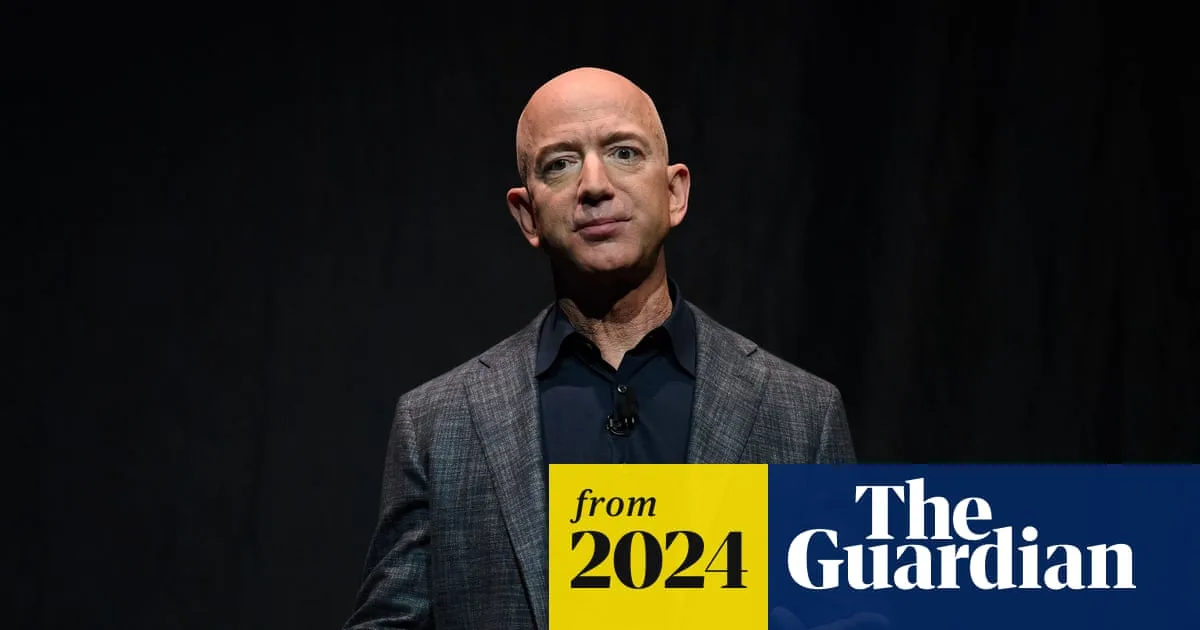
Jeff Bezos, the billionaire owner of the Washington Post, has defended his decision to end the newspaper's tradition of endorsing presidential candidates, a move that has sparked internal turmoil and a wave of subscriber cancellations. In a column published in his own paper, Bezos said the decision was driven by a concern that presidential endorsements create a “perception of bias” and contribute to public distrust in the media.
The announcement, which came just over a week before the US presidential election between Kamala Harris and Donald Trump, has led to the resignation of several editorial board members, including Pulitzer Prize winner David Hoffman, and the loss of approximately 200,000 subscribers. About 20 columnists signed a joint statement calling the move “an abandonment of the fundamental editorial convictions of the newspaper that we love”.
Bezos argued that endorsements do not influence voters and instead undermine the newspaper's credibility. “Most people believe the media is biased. Anyone who doesn't see this is paying scant attention to reality, and those who fight reality lose,” he wrote. He acknowledged that the timing was unfortunate, saying, “I wish we had made the change earlier than we did, in a moment further from the election and the emotions around it.”
The decision has drawn fierce criticism, with former Washington Post editor Marty Baron describing it as “cowardice, with democracy as its casualty”. Baron also noted that Bezos had previously stood by the paper's journalism despite pressure from Trump. Concerns were raised after a meeting between executives from Bezos's aerospace company and Trump on the same day, but Bezos denied any connection, insisting there was “no quid pro quo of any kind”.




