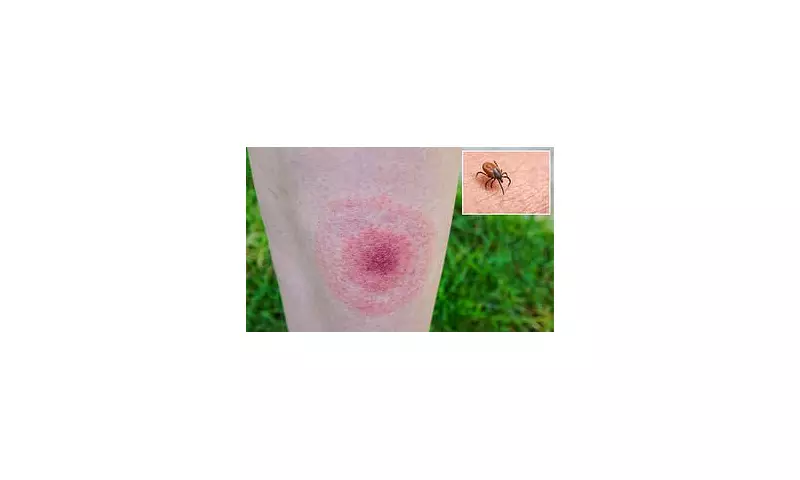
A chilling Cold War question is back in the spotlight as the United States Congress moves to demand official answers on whether the military ever experimented with weaponising ticks.
The Congressional Push for Answers
New Jersey Representative Chris Smith, who co-chairs the Congressional Lyme and Tick-Borne Disease Caucus, has authored a new legislative amendment. Filed on Friday, it directs the Government Accountability Office (GAO) to launch a formal investigation. The probe would examine whether federal agencies, including the Department of Defense, experimented with pathogen-laden ticks and other insects as potential tools of biological warfare between 1945 and 1972.
The amendment specifically calls for a review of projects involving Spirochaetales and Rickettsiales, two families of bacteria linked to debilitating tick-borne illnesses. Smith stated his effort is driven by New Jersey's unusually high infection rates and concerns for both civilians and military personnel at the state's Joint Base McGuire-Dix-Lakehurst.

"The hundreds of thousands of New Jerseyans suffering from Lyme disease deserve to know the truth about the origins of their illness," Smith said.
Theories, Allegations, and Scientific Skepticism
Smith is not the first to raise such questions. Health and Human Services Secretary Robert F Kennedy Jr has previously suggested Lyme disease may have emerged from a failed US bioweapons programme in the 1970s, allegedly involving research at Plum Island, New York. These claims gained traction from the 2019 book 'Bitten: The Secret History of Lyme Disease and Biological Weapons' and accounts involving the late scientist Willy Burgdorfer.
Burgdorfer, who identified the Lyme disease pathogen in 1981, previously worked as a US military bioweapons specialist. The book alleges he and other researchers injected ticks, fleas, and mosquitoes with pathogens like those causing Q fever and tularemia. It describes experiments where ticks were force-fed infectious agents and even discusses plans to disperse "weaponised" ticks from aircraft.
However, many scientists have repeatedly rejected these claims as a debunked conspiracy theory. They point to evidence that the bacteria causing Lyme disease, Borrelia burgdorferi, existed in North America long before the 20th century. Officially, the US Department of Homeland Security has stated the Plum Island Animal Disease Center "does not and has not performed research on Lyme disease."
A Long-Running Quest for Closure
This new amendment revives two similar efforts Smith introduced in 2019 and 2021, which passed the House of Representatives but later stalled in the Senate. It follows previous congressional directives that led the Department of Defense Inspector General to investigate whether the military experimented with ticks as bioweapons between 1950 and 1975.
The scale of Lyme disease adds urgency to the call for transparency. The Centers for Disease Control and Prevention reports 30,000 to 40,000 cases annually but estimates the real figure, including undiagnosed infections, could be as high as 476,000 each year.
Smith believes the GAO probe could finally provide definitive answers. "If the investigation finds that our bioweapons programme had nothing to do with it, we turn the page," he said. "But the American people deserve answers." The outcome could either substantiate long-held theories or finally lay them to rest, offering closure to many affected by the tick-borne epidemic.