Vice President's Comments Ignite Interfaith Marriage Discussion
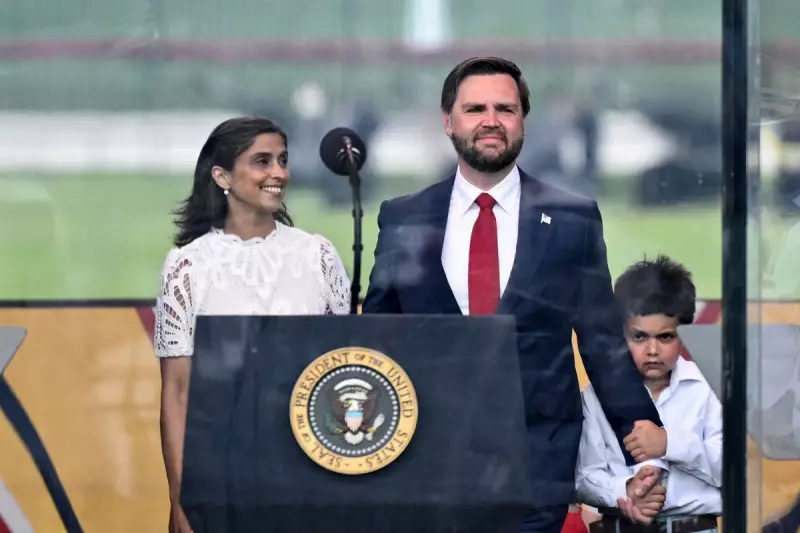
Vice President JD Vance has thrust the delicate challenges facing interfaith couples into the spotlight after publicly expressing his hope that his Hindu wife would eventually convert to Christianity. The comments, made during a Turning Point USA event at the University of Mississippi, have sparked widespread debate about religious respect within mixed-faith relationships.
Speaking to a packed college arena, Vance responded to a question about how he and his wife Usha Chilukuri Vance raise their children without giving them the sense that his religion supersedes her beliefs. "Do I hope that eventually she is somehow moved by what I was moved by in church? Yeah, honestly, I do wish that," the vice president stated candidly.
Experts Warn Against Conversion Pressure
Relationship specialists who have counselled hundreds of interfaith couples agree that pressuring or even hoping a partner would convert could prove damaging to a marriage. Susan Katz Miller, author of "Being Both: Embracing Two Religions in One Interfaith Family," emphasised that respect for each other's faith traditions and honest discussions about child-rearing are crucial for relationship success.
"To respect your partner and everything they bring to the marriage - every part of their identity - is integral to the kind of honesty that you need to have in a marriage," Miller explained. "Having secret agendas is not usually going to lead to success."
The Hindu American Foundation criticised Vance's remarks, citing a history of Christians attempting to convert Hindus and noting what it describes as rising anti-Hindu online rhetoric from Christian sources. The foundation's statement suggested Vance's comments reflected a belief that "there is only one true path to salvation - a concept that Hinduism simply doesn't have."
The Reality of Modern Interfaith Relationships
Interfaith marriage has become increasingly common in contemporary society. A 2015 Pew Research Center survey, the most recent asking Americans about interfaith marriage, found that 39 percent of Americans who had married since 2010 have a spouse from a different religious group. This represents a significant increase from the 19 percent reported by those who wed before 1960.
Miller, who comes from an interfaith background herself with a Christian mother and Jewish father, noted that modern couples have multiple options: "They can choose one or both religions. They could choose a new religion or choose no religion, which is a choice a lot of couples are now making."
Vance converted to Catholicism five years into his marriage with Usha, who grew up in a Hindu immigrant family. The couple met at Yale Law School where they were both atheist or agnolic. They incorporated Hindu rites into their 2014 wedding ceremony before Vance embraced Catholicism in 2019.
John Grabowski, a theology professor at The Catholic University of America, explained that the Catholic Church requires interfaith couples to raise their children Catholic, a commitment Catholics must make to receive permission to marry outside the faith. "If your faith is the most important thing in your life, you want to share that with your spouse," he said, while emphasising that "the Catholic Church does insist that spouses should not be coerced or pressured into the faith."
Vance and his wife have decided to raise their children as Christians, with their children attending a Christian school and participating in Catholic sacraments. Their eldest son received his First Communion a year ago.
Following criticism on social media, Vance defended his relationship, calling his wife "the most amazing blessing" in his life and noting that she encouraged him to reengage with his faith. "She is not a Christian and has no plans to convert," he clarified in an X post, while maintaining his hope that she might one day share his religious perspective.
The conversation around religious conversion in interfaith relationships has gained cultural relevance through Netflix's hit show "Nobody Wants This," which explores similar themes through the relationship between a Reform rabbi and an agnostic woman.
Dilip Amin, founder of InterfaithShaadi.org, cautioned that religious conversion for marriage should stem from authentic belief rather than pressure. "If you convert because you've had an authentic change of heart, that's fine," he said. "But if it occurs because of constant pressure and proselytising, that's wrong."
As interfaith marriages continue to increase, experts stress that successful relationships require mutual respect and open communication about religious differences, rather than hopes for conversion.