
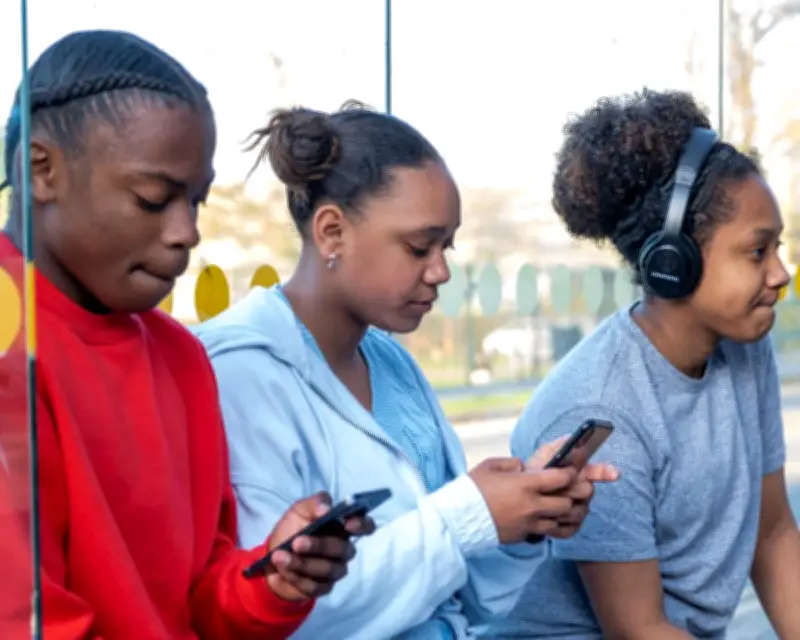
From next spring, 16- and 17-year-olds in Britain will be encouraged to observe a midnight to 6am social media curfew, but will be able to opt out by changing their account settings. The block will be switched on by default, but it is not mandatory and can be overridden. The government also wants to disable 'addictive' features such as autoplay and infinite scroll as part of its efforts to protect the next generation from online harms.
Teenagers Question the Effectiveness of the Opt-Out Curfew
Harvey, 16, from the south-east, thinks the opt-out nature undermines its effectiveness. 'I wasn't expecting [the curfew] to be opt-out, and having it as an opt-out renders the whole thing meaningless, because if someone is addicted to Instagram and there’s a curfew but they can turn it off, they will turn it off,' he said. He uses Instagram, X, YouTube, and Snapchat for one or two hours a day and has phone restrictions set with his parents. He also raised concerns about age verification, saying it 'removes this idea of an anonymous internet, which I know is both a good and a bad thing.'
Archie, 17, from Bedford, also questions the opt-out nature. 'In theory, I like the idea, but the fact that it is not obligatory, then it’s almost like, what’s the point?' he said. He already uses built-in settings on TikTok and Instagram to limit his usage to around three hours a day. He supports restrictions on infinite scrolling but believes they should apply to adults too.
Some Teens Dismiss the Curfew as Unnecessary
Alex, 16, from Scotland, calls the proposals 'ridiculous.' 'In Scotland, at 16, you can legally move out, get married, work full time, leave education, and enlist, but can’t be on your phone when you want. I’m sorry, but that’s stupid,' he said. He uses TikTok, Instagram, and Snapchat for a few hours a day and plans to opt out. 'Surely they know almost everyone is just going to turn the settings off,' he added.
Meliha, 16, from Coventry, disagrees with the curfew for her age group but supports it for under-16s. 'I disagree with it being for 16- and 17-year-olds as they are old enough to do so many things – for example, they can live independently, pay taxes and soon people will be able to vote from age 16. It’s silly to have a curfew,' she said. She uses Snapchat, TikTok, and Instagram for four or five hours daily and will opt out, noting that late-night social media does not affect her sleep and that some study sessions go past midnight.
Varied Opinions on the Government's Approach
Harvey noted that different circumstances demand different approaches, citing his GCSE exam season when he used YouTube tutorials late at night for studying. 'I don’t think these measures are inherently bad, or that they should be just disregarded completely, but it’s the fine details that are important because everyone uses social media differently,' he said.
Meliha supports the opt-out nature, saying it 'gives more of a choice rather than forcing a rule' and provides independence. 'Not every teenager uses social media the same way, so a flexible approach could be more appropriate than just one big rule,' she added.




