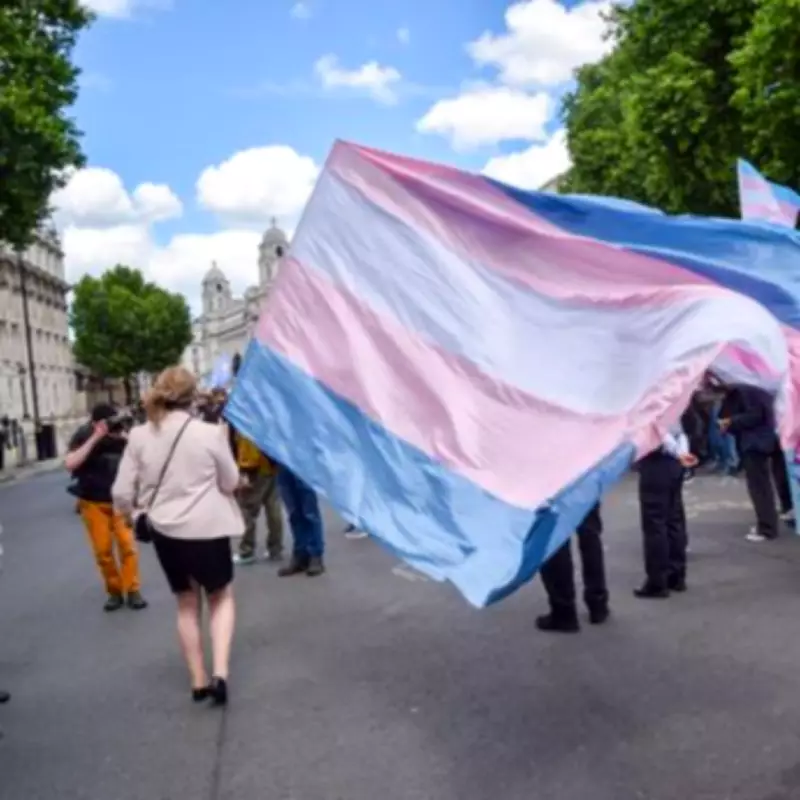
Trans Community Faces Ongoing Impact One Year After Supreme Court Equality Ruling
A full year has passed since the Supreme Court ruling on the Equality Act and the subsequent guidance issued by the Equality and Human Rights Commission (EHRC), yet trans individuals across the United Kingdom continue to report significant and pervasive effects on their everyday lives. These impacts span workplaces, public spaces, and mental well-being, creating a complex landscape of challenge and resilience.
A Personal and Professional Overnight Shift
Stephanie Lynnette, a 29-year-old trans activist and Events and Projects Manager at London Trans Pride, describes the ruling as an immediate and profound disruption. "Everything for me changed on a daily level," she explained to The Mirror. "Whether that was drafting statements regarding the Supreme Court ruling, whether that was consoling patients who were scared about whether or not they were going to be placed on a male or female ward."
She characterizes the decision as a "huge blow" to her community, affecting both practical logistics and emotional stability. "I was seeing members of my own friendship circle become withdrawn and quite suicidal in some cases," she reveals. "It just caused a huge wave of confusion for the general public because the guidance was so vague, and then a huge amount of discrimination for the community that it’s written about."

Real-World Consequences in Gendered Spaces
This widespread confusion has materialized into tangible, distressing consequences, particularly within gendered environments such as hospital wards, public toilets, workplaces, and various venues. Testimonies gathered from trans people nationwide indicate a troubling pattern of increased scrutiny, direct questioning, and outright exclusion.
- One trans man in England recounted being confronted in a public toilet shortly after the ruling, an experience that left him feeling "ashamed" and "unsure of my safety."
- A non-binary individual in Yorkshire reported security guards waiting outside their toilet stall, making them feel "like a criminal just for needing the bathroom."
Research figures suggest approximately 53% of trans respondents have experienced being stopped, questioned, or harassed in gendered spaces, a stark contrast to just 17% of cis respondents. For many, the response has been avoidance—altering daily routines, reducing time spent in public, or steering clear of certain locations entirely.
A Climate of Fear and a Potential Exodus
Helen Belcher, director at TransActual, highlighted the severe societal implications in a statement. "[The Supreme Court ruling] has led to trans and gender non-conforming people no longer feeling safe in British society or at work. One in four trans adults are reportedly planning to leave the UK, which is a real indictment on this government and our media," she said.
Stephanie Lynnette perceives the current period as one of regression. "We’re on the road of regression," she states. "We’ve seen the rise of the manosphere and extreme right-wing politics… people could find these echo chambers of tolerance for their own bigotry."
The Emergence of Resilience and Allyship
Yet, alongside these significant challenges, Stephanie has observed a notable shift in community and ally responses. "I think there’s been a huge shift in the way that we show up as a community," she notes. "There’s a huge amount of fear… but what that has done is it’s really opened the door to an age of allyship."
She points to community groups and organizations stepping forward, often out of necessity, to advocate for trans inclusion. "Groups who might have been quiet supporters have become some of our most vocal allies," she says. This support is increasingly intersectional, with various social movements uniting in solidarity.
Choosing Joy and Authenticity Amid Oppression
Despite the hardships, Stephanie is resolute in not allowing the narrative to be dominated solely by struggle. "One of the bravest things a trans person does every day is see the world for what it is and step outside in authenticity anyway," she asserts.

She stresses the critical importance of recognizing "trans joy" alongside the difficulties. "It’s not about willful ignorance. It’s seeing the world for what it is and choosing to highlight the trans joy instead of the oppression."
This resilience is vividly displayed in events like London Trans Pride, which attracted approximately 100,000 attendees last year. "I’m incredibly proud to be part of my trans community," Stephanie says. "We have demonstrated such a huge amount of resilience during these incredibly difficult times."
The Essential Nature of Meaningful Allyship
Looking to the future, Stephanie hopes this momentum continues, extending beyond the community to allies as well. For her, genuine allyship is defined by action rather than mere words. "Trans people are so often spoken for and not spoken with," she explains. "Allyship looks like someone giving up that seat… saying there’s someone who should be at this table who isn’t."
She adds that such allyship is vital not just for progress, but for survival. "We need allyship as a community group to be able to not only survive but thrive."
One year on from the landmark ruling, the situation presents a clear contradiction: heightened fear and restriction exist simultaneously with growing solidarity and visibility. For Stephanie Lynnette, these dual realities coexist. "In the face of oppression, we persist," she concludes. "In the face of oppression, we are joyful and we are celebrating. We are here."