
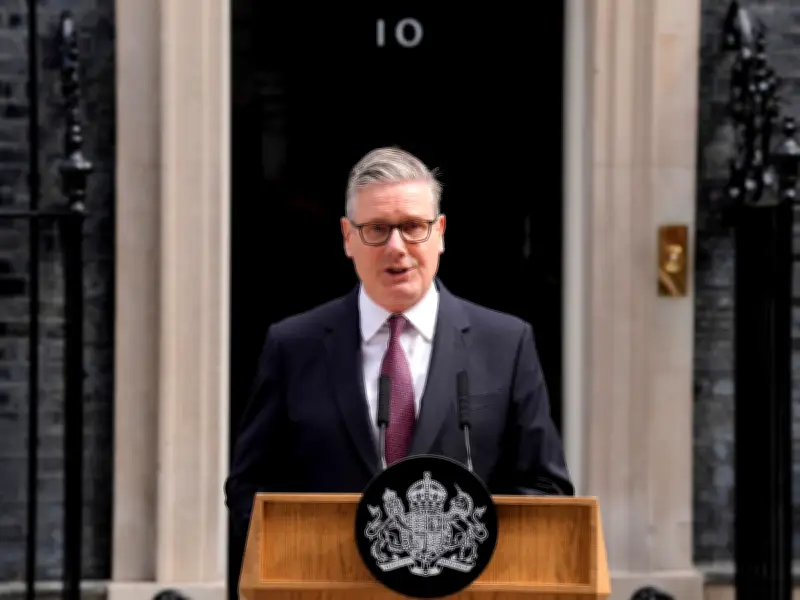
Keir Starmer has resigned as Prime Minister after admitting Labour MPs do not think he is 'best placed' to lead Labour into the next general election. He delivered an emotional resignation speech outside No10 Downing Street on 22 June 2026.
Emotional Farewell
The Prime Minister was visibly upset as he announced his resignation, saying he planned to spend more time being the 'best husband' and 'best dad' to his children. Accompanied by his wife Vic, he walked out of the No10 door to applause from staff and advisers.
Starmer said: 'Walking up this street two years ago was the proudest moment of my life. A new Labour government. The first in 14 years. A page in our country's history turned after years of disappointment and despair.'
Defending His Record
In his speech, Starmer defended his government's achievements, including an economy growing faster than peers, wages rising faster than inflation every month since taking power, the fastest fall in NHS waiting lists in 17 years, and half a million children lifted out of poverty.
He also highlighted the biggest uplift in defence spending since the Cold War, falling small boat crossings, closing asylum hotels, and protecting young people from social media.
Leadership Challenge
Starmer acknowledged that his parliamentary party questioned whether he was best placed to lead into the next election. He said: 'The question my party is asking now is whether I am best placed to lead us into the next general election. I have heard the answer of my parliamentary party to that question. And I accept that answer with good grace.'
He will remain as Prime Minister until a new leader is elected, with nominations opening on 9 July and the contest completed by the summer recess. He pledged his 'full and unequivocal support' to his successor.
Background
The resignation followed a weekend at Chequers, the Prime Minister's country residence, where he mulled his future with his family. Starmer became Labour leader in 2020 and led the party to a landslide victory in 2024, ending 14 years of Conservative rule.




