President's Assault Exposes Pervasive Misogyny
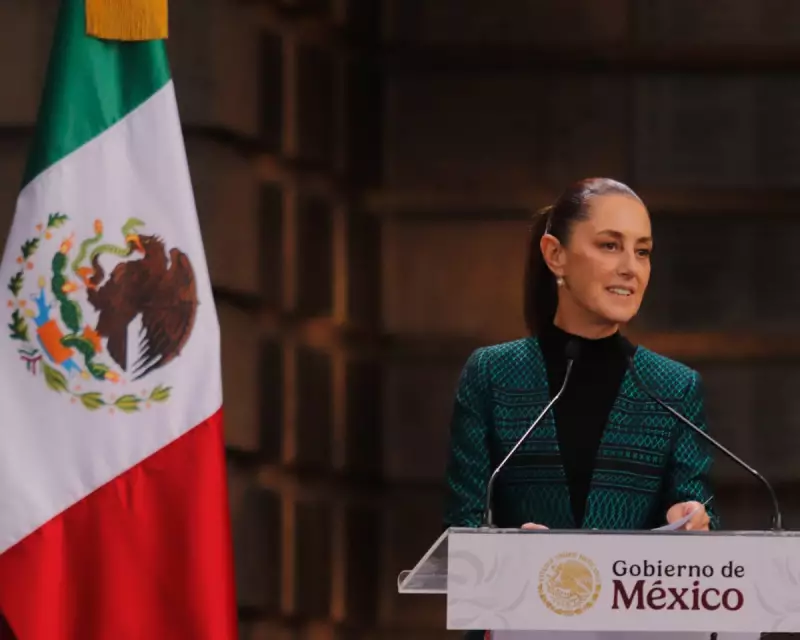
A shocking public assault on Mexico's President, Claudia Sheinbaum, has ignited waves of outrage both within the nation and across the globe. The incident, captured on camera, saw a drunken man approach the president as she was speaking with citizens on the streets of Mexico City. He attempted to kiss her neck and grabbed her chest, a brazen act that underscores a devastating truth about the prevalence of sexual violence against women.
This attack serves as stark proof that no woman is safe from such violations, regardless of her status or power. President Sheinbaum herself articulated the chilling implication for all women, stating, "If they do this to the president, then what will happen to all the young women in our country?" Her words highlight the terrifying normalisation of such behaviour and the entitlement some men feel over women's bodies.
A Symptom of a Wider Crisis
The assault on President Sheinbaum is not an isolated event but a reflection of a deep-seated, global crisis of misogyny and gender-based violence. In Mexico, the statistics are particularly harrowing. According to official figures from 2021, one in five girls and women reported experiencing sexual violence in their community within the previous year. Furthermore, a staggering ten women are killed each day in the country.
However, this problem extends far beyond Mexico's borders. In nations like the UK and the US, surveys indicate that approximately four out of five women have experienced some form of sexual harassment or assault. This demonstrates that the issue is a pervasive one, affecting women at every level of society, from the most vulnerable to the most powerful.
Female Leaders Under Fire
When women in leadership positions are targeted, it sends a deliberate and damaging message. Their accomplishments are often sidelined, and they are reduced to their physicality. This pattern is evident globally. Australia's first female prime minister, Julia Gillard, faced sexist taunts about being "deliberately barren." US Vice President Kamala Harris has long been subjected to explicitly sexualised rhetorical attacks.
In a notorious UK example, when former Prime Minister Theresa May met with Scotland's First Minister Nicola Sturgeon, the Daily Mail's front page infamously asked, "Never mind Brexit, who won Legs-it!" This focus on appearance over substance is a common thread in the sexism faced by women in politics. The Reykjavik Index for Leadership further confirms this bias, revealing that last year, in the US, less than half of respondents felt "very comfortable" with the idea of a female political leader.
President Sheinbaum has commendably pressed charges following the assault and has called for sexual harassment to be criminalised nationwide, a law still absent in many Mexican states. Yet, her record has been complex. As mayor of Mexico City, her administration was criticised when police cracked down on feminist protests, which she referred to as "provocations," and women's services faced cuts.
This does not diminish the importance of her stand against this personal violation. However, it illustrates that female leadership does not automatically translate into benefits for all women. To truly tackle this endemic issue, there is a powerful opportunity for President Sheinbaum to wholeheartedly embrace Mexico's energetic grassroots feminist movement. By working together to confront violence and misogyny, meaningful progress can be made in the interests of every woman.