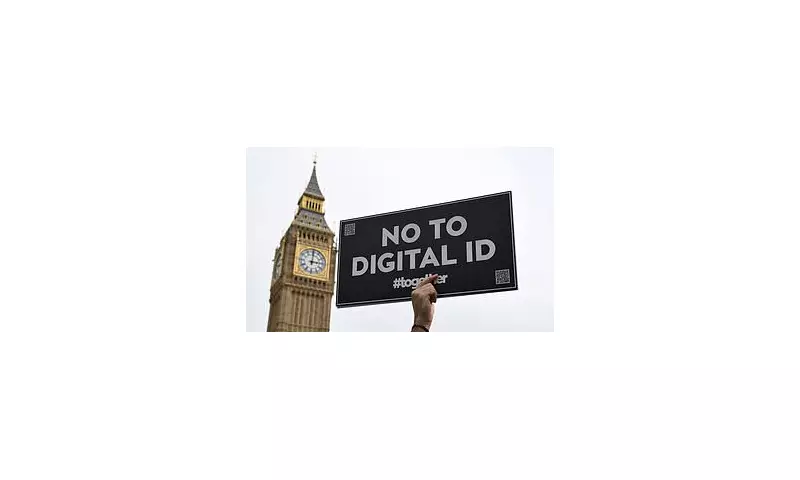
Prime Minister Sir Keir Starmer is under renewed pressure to abandon his flagship policy for a mandatory Digital ID system, following a dramatic collapse in public support revealed by a major survey.
Poll Shows Sharp Reversal in Public Opinion
A long-running YouGov poll has tracked a stunning reversal in sentiment towards national identity cards. In June last year, 57 per cent of the public supported the idea, with opposition at just 25 per cent, figures consistent with the previous five years.
However, when the same question was put to 1,700 Britons in December – two months after Sir Keir announced the policy as a tool to tackle illegal immigration – support had nosedived. Only 38 per cent were in favour, while opposition had surged to 47 per cent.

The intensity of feeling also shifted markedly. Among opponents, those stating they were ‘strongly opposed’ rocketed from 12 per cent to 31 per cent in just six months. Conversely, strong supporters of a nationwide ID system halved from 24 per cent to a mere 14 per cent.
Backlash Over Scope and Secrecy
The polling was conducted before the Daily Mail reported that ministers had secretly discussed issuing Digital ID to newborn babies, alongside their standard child health ‘red book’. This prospect has sparked further outrage.
The government has so far refused to detail the full scope of the scheme or its potential cost, beyond promising a public consultation in the new year. This lack of clarity has fuelled criticism from across the political spectrum.
Shadow Science Secretary Julia Lopez told the newspaper: ‘This is a gimmick, rushed out without answering the most basic questions about privacy, scope, or control.’ She argued that any Digital ID should be voluntary and built on consent, adding: ‘If Starmer wants to improve his dismal popularity, he should drop this idea now.’
Civil Liberties and Cost Warnings
Civil rights campaigners have issued stark warnings. Silkie Carlo, Director of Big Brother Watch, said: ‘The public didn’t vote for, don’t need and don’t want digital ID cards. If Starmer continues to force this mandatory scheme on an unwilling public it will be deeply undemocratic.’
She raised alarm over the potential price tag, stating: ‘We could be paying for IDs not only with an eye-watering £1.8bn of our taxes but with our freedoms too.’ Carlo suggested the use of immigration control as a ‘smokescreen’ for a far more expansive data collection programme.
Independent MP Rupert Lowe, reacting to the idea of extending the scheme to children, described it as ‘sick’ and ‘un-British’, vowing to fight it in Parliament.
A Government spokesman defended the plan, insisting: ‘Digital ID will make everyday life easier for people, ensuring public services are more personal, joined-up, and effective, while also remaining inclusive.’ However, with public trust evaporating and political opposition hardening, the Prime Minister’s policy faces a formidable battle ahead.