
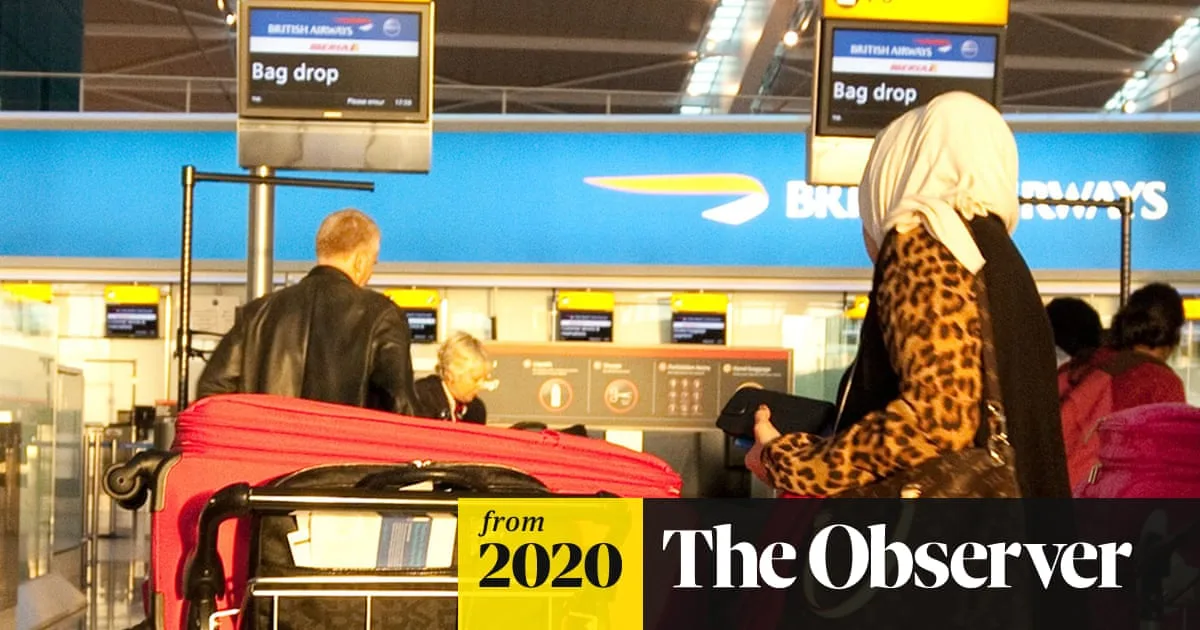
The Metropolitan Police has conceded that forcing a Muslim woman to remove her hijab at Heathrow Airport in 2018 was a breach of her human rights and violated her right to religious observance. The admission came as part of an out-of-court settlement, with the Met agreeing to pay £15,000 in damages to the woman, known as Asiyah.
Asiyah, then 25, was travelling with her family to Bahrain when she was stopped under Schedule 7 of the Terrorism Act 2000, a controversial counter-terrorism power that allows police to stop and search individuals at UK ports without suspicion. Officers told her they needed to photograph her without her hijab, threatening arrest if she refused. In a recorded interview, one officer said: 'You might end up being arrested because you wouldn’t let us take a photograph of your hair.'
Asiyah described the experience as being 'bullied and pressurised' and said being asked to remove her hijab by male officers was like being told to remove her top. 'For any woman who does not wear hijab, it would be the equivalent of two men telling a woman to remove her top so they can take pictures of her,' she said in a witness statement. She added that she feared the photographs might be widely circulated, saying: 'I felt my dignity had been taken.'
Human rights group Cage, which supported Asiyah, said it has seen multiple similar cases, suggesting a possible pattern of targeting Muslim women at UK airports. Cage’s managing director, Muhammad Rabbani, called for Schedule 7 to be scrapped, stating: 'It is clear the police knew they were discriminating against Muslim women and therefore opted to settle, in order to avoid Asiyah’s case setting a precedent.'
Anne McMurdie, a solicitor at Birnberg Peirce who represented Asiyah, said: 'Stopping people on a suspicionless basis and intruding on their religious observance and private life without any reason is an abuse of a power, which is already very draconian.' Despite the settlement, the Home Office has yet to issue fresh guidance on the issue.




