

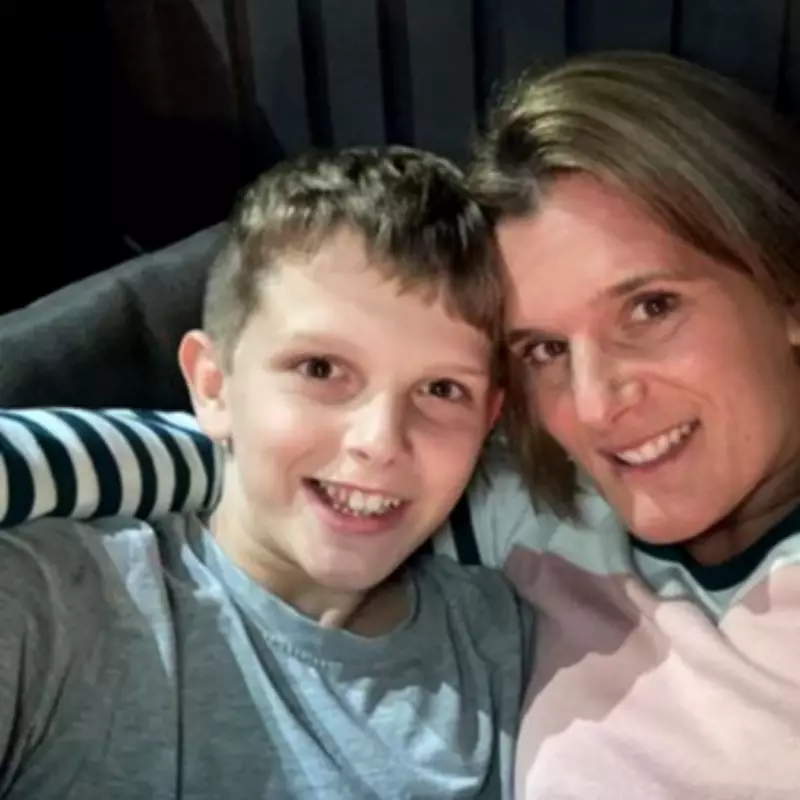
Bereaved Mother's Plea to MPs: Act Now to Protect Children from Online Harms
A grieving mother, whose teenage son died under circumstances she links to online dangers, has issued a stark warning to Members of Parliament. Ellen Roome, whose 14-year-old son Julian "Jools" Sweeney passed away in 2022, expressed profound disappointment after MPs rejected a proposal to ban social media access for children under 16.
The vote, which took place on Monday evening, saw the motion defeated by 307 votes to 173. Ms Roome told BBC Radio Gloucestershire that this is "not a theoretical debate" for families like hers, emphasising that more young people will "remain exposed to harm" during the government's planned three-month consultation period.
"This Isn't About Saving My Children"
In an emotional statement, Ms Roome explained her motivation: "I don't have any other children to save. This isn't about saving my children, this is about making a difference for other children and I am so determined that we are not going to fail, that we are going to change the law and we're going to protect more children."

The government has maintained that it will reach a decision on implementing a social media ban for under-16s following the conclusion of its consultation this summer. Notably, Labour veteran John McDonnell rebelled against his party's leadership to support the ban, while over 100 backbenchers chose to abstain from voting.
Legal Action and Open Letter to Keir Starmer
Ms Roome is currently involved in legal proceedings against TikTok alongside other British families who have lost children. She told The Mirror: "For families like mine, this is not a theoretical debate. My 14-year-old son Jools died in 2022, and since then I have met many other parents whose children have also been harmed through social media platforms."
She continued: "We know the risks are real, and we know the current protections are not enough. What we are asking for is simple: meaningful action that puts children's safety ahead of the interests of tech companies. A consultation is not the same as protection, and while we continue to delay, more children remain exposed to harm."
On Tuesday, Ms Roome organised an open letter signed by 23 bereaved parents, directly criticising Labour leader Keir Starmer for his absence during the Commons vote. The letter stated: "For all your talk of leadership, you remain firmly on the fence when it comes to protecting children and preventing more avoidable deaths online."
Education Union Backs Call for Immediate Action
The National Education Union, representing hundreds of thousands of school staff across the country, has voiced its "disappointment" over the parliamentary vote. NEU General Secretary Daniel Kebede declared: "MPs had the opportunity to put the wellbeing of children before the profits of Big Tech and vote to raise the age of social media access to 16."
He added: "If the Government is serious about protecting children, it will listen to the calls of teachers, bereaved parents, health professionals, charities and community groups. Only a ban for under-16s can provide the immediate safeguard needed to protect young people from dangerous, algorithmic platforms. All energy must now be on how to enforce it properly."
International Context and Expert Concerns
The debate over social media restrictions has intensified in the United Kingdom following Australia's implementation of a similar ban at the end of last year. Other European nations, including Spain, have also proposed comparable measures to protect young users from online dangers.
However, some experts have cautioned against rushing into a blanket ban. Organisations like the NSPCC and individuals such as Ian Russell, whose 14-year-old daughter Molly took her own life after encountering harmful content online, have warned that such measures might inadvertently push young people toward even darker corners of the internet where regulation is minimal.
Government Consultation and Broader Measures
The government's forthcoming consultation will examine multiple approaches to enhancing online safety for minors. Potential measures under consideration include:

- Implementing a social media ban specifically for children under 16
- Introducing overnight curfews for young users
- Restricting doom-scrolling behaviours through technical interventions
- Limiting the use of virtual private networks (VPNs) to bypass age restrictions
In a related development, Technology Secretary Liz Kendall has requested that Ofcom investigate which social media companies are failing to implement adequate protections for women and girls online. This move indicates broader governmental concerns about digital safety across different demographic groups.
The tragic case of Julian Sweeney and the determined advocacy of his mother Ellen Roome have brought renewed urgency to the national conversation about protecting vulnerable young people from the documented dangers of unregulated social media platforms. As the consultation period approaches, pressure continues to mount on policymakers to balance technological innovation with fundamental child protection responsibilities.





