
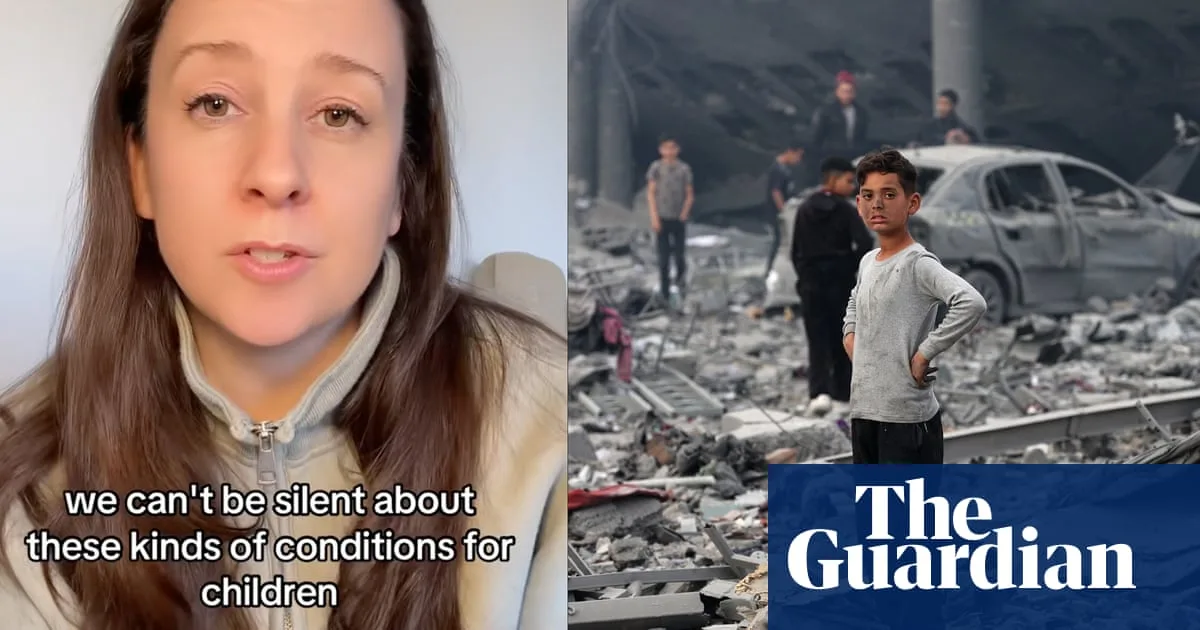
A pro-Israel organisation, StopAntisemitism, has called on US Attorney General Pam Bondi to investigate whether children's entertainer Ms Rachel is acting as a foreign agent after she shared content about children suffering in Gaza. The group sent a letter on Monday requesting the Department of Justice determine if Ms Rachel, whose real name is Rachel Griffin Accurso, is being paid to disseminate what it calls 'Hamas-aligned propaganda' to her millions of followers.
StopAntisemitism claims her social media posts about Palestinian children could constitute undisclosed work for foreign entities under the Foreign Agents Registration Act (Fara). The group's director, Liora Rez, wrote: 'Given the vast sums of foreign funds that have been directed toward propagandizing our young people on college campuses, we suspect there is a similar dynamic in the online influencer space.' Ms Rachel, known for her Songs for Littles YouTube channel which has amassed over 10 billion views since 2019, has been compared to Mister Rogers.
The group objects to posts in which Ms Rachel shared images of malnourished children in Gaza and cited casualty figures from Gaza's health ministry, which align with UN reports. StopAntisemitism claims she has ignored 'the suffering of Israeli victims, hostages, and Jewish children'. When asked for evidence of foreign payments, Rez pointed to paid collaborations common among influencers, noting a 'massive barrage of anti-Israel propaganda' after October 7.
Legal experts suggest the Fara request may be misplaced, as any support for Hamas, a US-designated terrorist group, would fall under anti-terrorism laws. The UN reports that thousands of children have been orphaned during the 15-month war in Gaza, with 13,319 of 40,717 identified bodies being children. Unicef estimates 25,000 children have been injured, and 650,000 are not attending school.
StopAntisemitism disputed one image of a malnourished child, claiming the child had cystic fibrosis, not starvation. However, the Washington Post reported the child's mother confirmed both conditions. Ms Rachel did not respond to requests for comment, but previously told the Independent her advocacy began after seeing a traumatised child in Gaza: 'The look in his eyes has stayed in my mind. No child should experience that kind of fear, shock and terror.' In May, she raised over $50,000 for Save the Children's emergency fund for children in conflict zones, including Gaza.




