




Mexico's Missing Persons Crisis: Families Accuse Government of Erasing Victims
In a powerful display of grief and determination, mothers gathered outside Banorte Stadium in Monterrey on March 28 before the Mexico versus Portugal football match. Holding photographs and banners, they demanded justice for their missing loved ones, their silent protest highlighting what has become Mexico's most severe human rights crisis.
The Search That Never Ends
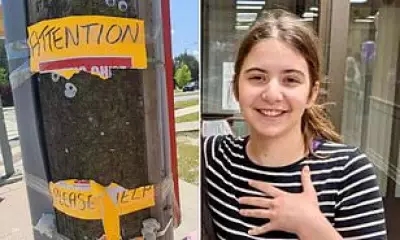
Across Mexico, desperate families scour scrublands, poking the earth for any sign of human remains. Social media platforms are flooded with anguished pleas for information, while tattered posters bearing faces of the disappeared flutter from lampposts and fences. Often, all that remains are scattered bones bleached by the relentless sun.
Since the Mexican government declared war on drug cartels over a decade ago, more than 130,000 people have vanished. Now, activists and human rights experts are raising alarming accusations that authorities are attempting to systematically erase these victims from official records.
Controversial Government Report Sparks Outrage
The recent uproar stems from a government report that has ignited fury among families who have spent years searching for their missing relatives. According to the document, approximately one-third of registered missing persons have shown signs of life in state databases, while another third lack sufficient data to be located.
"What the government is doing is illogical and outrageous," declared María Herrera Magdaleno, a prominent leader in the movement of mothers searching for missing children. Herrera's own four sons are among the disappeared. "Instead of looking for our disappeared, they're disappearing them."
Questionable Methodology and Political Implications
Last week, Mexican officials announced that by cross-referencing registered disappearances with documents including tax filings, marriage registries, and vaccination records, they identified 40,308 people – about 31% of total disappearances – who had shown some activity in state records, suggesting they might still be alive.
Through this method, authorities located 5,269 missing individuals. However, the government simultaneously declared that 46,742 records – approximately 36% – lacked basic information such as full names, dates, or places of disappearance, rendering searches impossible. A further 43,128 cases had complete records but showed no signs of life when cross-referenced with other state databases.
President Claudia Sheinbaum stated, "We reaffirm our commitment. We will continue searching for all missing persons until we find them."
Historical Context of Disappearances in Mexico
Forced disappearance in Mexico dates back to the 1960s and 1970s during the country's "dirty war," when the government detained activists, students, and guerrillas. Most were killed and buried in mass graves, while others were flown out to sea and dumped in the Pacific Ocean.
The practice surged again in 2006 when the government launched its war against drug cartels, fracturing conflicts between rival gangs. Disappearance became a tool to sow terror in communities and conceal evidence of homicides, with traffickers burying victims in mass graves, burning bodies, or dissolving them in vats of acid.
Official Statements and Activist Responses
In presenting the report, Marcela Figueroa, a top security official, claimed that unlike during the dirty war, recent disappearances had been "committed by individuals," not the state, and therefore could not be classified as forced disappearances. Interior Minister Rosa Icela Rodríguez added that the data included "voluntary absences."
However, human rights groups have strongly contested these assertions. The Centro Prodh human rights organization stated on social media platform X, "The idea that forced disappearances don't happen, or that most disappearances are related to voluntary absences, minimises the responsibility of the state. Limiting the number of missing persons to 43,128 minimises the magnitude of a crisis that has a human face."
Systemic Failures and Family Burdens
Regarding the 46,000 cases with insufficient data, advocates note that the government presented no concrete plan to fill information gaps or undertake searches for this subset of missing people. Instead, the burden appears to fall on families who, facing government inaction, often conduct searches themselves at great personal risk.
The government has placed renewed emphasis on encouraging relatives to open case files at local prosecutor's offices, despite widespread fear of reporting missing loved ones to authorities. Of the more than 43,000 missing people who could not be located through cross-referencing, less than 10% were under criminal investigation.
"We are reverting once again to the idea that only those with case files at the public prosecutor's office will be considered," said Rosalva Aída Hernández Castillo, an anthropologist specializing in disappearances in Mexico. "There is deep mistrust of the prosecutors' offices; there is significant collusion between these offices and criminal groups – that's common knowledge."
Broader Implications and International Concern
Security analyst Armando Vargas of the public policy thinktank México Evalúa warned, "The state is ultimately making the disappeared disappear all over again. The recount fails to deliver any form of justice to the victims and completely disregards recommendations from civil society. Under these circumstances, it will be extremely difficult to put an end to disappearances in this country."
This controversy represents the latest chapter in a longstanding battle between authorities who insist the number of disappeared is overstated, and search collectives and human rights groups who maintain the true number is far higher than officially reported. The emotional protests outside football stadiums and government buildings serve as stark reminders that behind every statistic lies a family living in anguish, refusing to let their loved ones be erased from memory or record.