Federal Officers Face Temporary Restrictions on Tear Gas Use at Portland ICE Protests
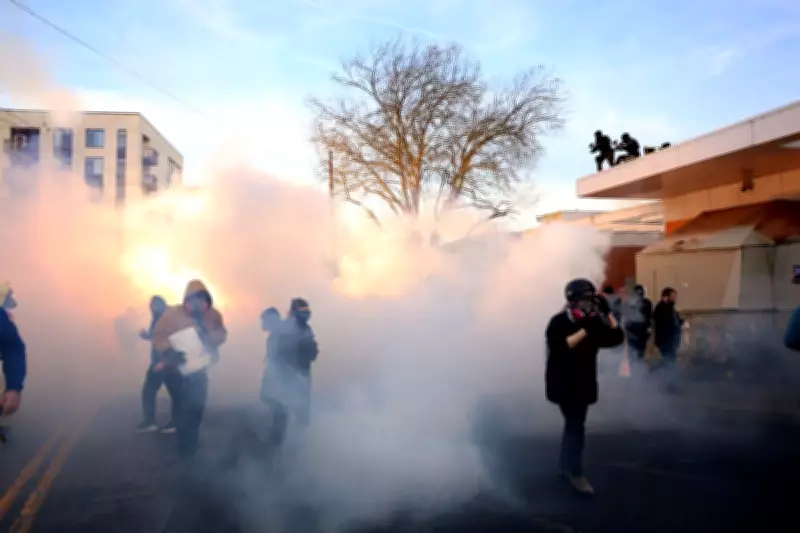
A federal judge in Oregon has issued a temporary restraining order that significantly restricts federal officers from deploying tear gas and other chemical munitions during protests at the U.S. Immigration and Customs Enforcement (ICE) building in Portland. The ruling, delivered by U.S. District Judge Michael Simon on Tuesday, comes in direct response to recent incidents where agents fired gas into crowds that local officials described as peaceful and included young children.
Specific Limitations Imposed by the Court
Judge Simon's order explicitly prohibits federal officers from using chemical or projectile munitions unless the targeted individual poses an imminent threat of physical harm. Furthermore, the ruling limits officers from firing such munitions at the head, neck, or torso of any person unless the officer is legally justified in using deadly force against that individual. This temporary restraining order will remain in effect for a period of 14 days, providing a crucial window for further legal examination of the contentious tactics employed.
Legal Action and Plaintiffs' Allegations
The judicial intervention follows a lawsuit filed by the ACLU of Oregon, representing protesters and freelance journalists covering the demonstrations at the flashpoint ICE facility. The legal complaint names the Department of Homeland Security, its head Kristi Noem, and President Donald Trump as defendants. It argues that the federal officers' use of chemical munitions and excessive force constitutes retaliation against protesters, thereby chilling their First Amendment rights to free speech, press, and peaceful assembly.

The Department of Homeland Security has not issued an immediate response to requests for comment regarding the ruling or the allegations contained within the lawsuit.
National Context of Protest Policing
This case in Oregon is not isolated, as courts across the United States have grappled with similar issues concerning federal agents' use of chemical munitions against demonstrators. Nationwide protests have erupted in response to the Trump administration's intensified immigration enforcement policies.
- Last month, a federal appeals court suspended a decision that had prohibited federal officers from using tear gas or pepper spray against peaceful protesters in Minnesota who were not obstructing law enforcement.
- An appeals court also halted a ruling from a federal judge in Chicago that restricted federal agents from deploying certain riot control weapons, such as tear gas and pepper balls, unless necessary to prevent an immediate threat. A similar state-led lawsuit is now pending before the same judge.
Detailed Accounts from Plaintiffs
The Oregon complaint provides harrowing, specific accounts from plaintiffs who allege they were targeted with chemical or "less-lethal" munitions while posing no threat. These plaintiffs include:

- Richard and Laurie Eckman: An 83-year-old Vietnam War veteran and his 84-year-old wife, who joined a peaceful rally marching to the ICE building in October. According to the complaint, federal officers launched chemical munitions at the crowd, striking Laurie Eckman in the head with a pepper ball, causing her to bleed. With bloody clothes and hair, she required hospital treatment and was given instructions for concussion care. A munition also struck her husband's walker.
- Jack Dickinson: A protester known for attending demonstrations in a chicken costume. The complaint states that federal officers have aimed munitions at him while he posed no threat, shooting at his face respirator and his back, and launching a tear-gas canister that sparked next to his leg, burning a hole in his costume.
- Hugo Rios and Mason Lake: Freelance journalists who were reportedly hit with pepper balls and tear-gassed while clearly marked as press.
The complaint powerfully argues: "Defendants must be enjoined from gassing, shooting, hitting and arresting peaceful Portlanders and journalists willing to document federal abuses as if they are enemy combatants... Defendants’ actions have caused and continue to cause Plaintiffs irreparable harm, including physical injury, fear of arrest, and a chilling of their willingness to exercise rights of speech, press, and assembly."
Local Official Condemnation
Portland Mayor Keith Wilson has been vocally critical of the federal tactics. Following an incident on Saturday where federal officers used chemical munitions at what he described as a "peaceful daytime protest where the vast majority of those present violated no laws, made no threat, and posed no danger to federal forces," Mayor Wilson demanded that ICE leave the city.
In a strongly worded statement issued Saturday night, Wilson declared: "To those who continue to work for ICE: Resign. To those who control this facility: Leave. To those who continue to make these sickening decisions, go home, look in a mirror, and ask yourselves why you have gassed children."
Broader National Demonstrations
The Portland protest is part of a wider wave of demonstrations across the country opposing the Trump administration's immigration crackdown. Similar actions have occurred in cities like Minneapolis, where, in recent weeks, federal agents were involved in incidents that resulted in the deaths of two residents, Alex Pretti and Renee Good.
This judicial ruling in Oregon represents a significant, albeit temporary, check on federal authority during these highly charged protests, setting a precedent that balances law enforcement needs with the protection of constitutional rights and public safety.