





Iran's Execution Surge Overshadowed by War, Rights Groups Warn
Iran's Execution Surge Hidden by War, Rights Groups Say

Iran's Execution Surge Overshadowed by War, Rights Groups Warn

Amid the ongoing US-Israeli war on Iran, human rights organisations are raising alarms that a dramatic increase in executions is being concealed by the conflict. The regime has long employed the death penalty to suppress dissent, but now appears to be withholding information on the killing of hundreds of prisoners, exacerbating fears for those detained after mass protests.

Brutal Treatment of Detainees

Peyvand Naimi, a 30-year-old arrested in connection with the January street protests that were brutally suppressed, exemplifies the harsh conditions faced by many. He has endured over a month in solitary confinement, televised forced confessions, two mock hangings, beatings, interrogation, psychological torture, and starvation. Accused of involvement in security agent deaths and celebrating the death of former supreme leader Ali Khamenei, his family insists he is innocent and that no formal charges have been filed. Denied access to a lawyer, his relatives fear imminent execution.

"My whole body was shaking when I heard about the torture he has endured," says Zahra Hosseini*, a close relative. "It's unbelievable. I am very worried."

Wide Pickt banner — collaborative shopping lists app for Telegram, phone mockup with grocery list

Confirmed and Unverified Executions

According to Iran Human Rights, at least 145 people have been confirmed executed in 2026 so far, with an additional 400-plus executions reported but not verified. The internet shutdown in Iran makes it impossible to determine exact numbers, as many death sentences are not officially announced and are only communicated to prisoners and their families. Authorities have warned families of tens of thousands still detained after the January protests not to contact anyone, with dozens facing the death penalty, as reported by Amnesty International.

Mahmood Amiry-Moghaddam, director of Iran Human Rights, states: "We are concerned that these executions and human rights violations are overshadowed by the war. Right now, everyone is thinking about oil prices, and because of that the political cost of these executions is very low."

Recent Executions and Charges

Earlier this month, three men—Saleh Mohammadi, Mehdi Ghasemi, and Saeed Davoudi—were hanged in public after being arrested over the January protests, convicted of moharebeh, or waging war against God. A day earlier, Kourosh Keyvani, a Swedish-Iranian dual national, was executed for spying for Israel. This week, Babak Alipour and Pouya Ghobadi were executed in Ghezel Hesar prison near Tehran for membership in an exiled opposition group, following months of interrogation and torture.

In Isfahan, Shervin Bagherian Jabali, 18, learned of his death sentence for moharebeh through a state television broadcast, where he asked in a trembling voice what the charge meant and was told "execution." He reportedly endured three mock executions to force a confession. Additionally, political prisoners Mohammad Taghavi and Akbar Daneshvarkar were executed for baghi, or armed rebellion, after unfair trials involving torture.

Weaponising the Death Penalty

Human rights groups assert that Iranian authorities deliberately use executions to instil fear and suppress dissent. Mansoureh Mills, Amnesty International's Iran researcher, explains: "Since the 2022 Woman, Life, Freedom uprising, Iranian authorities have deliberately weaponised the death penalty to instil fear among the population and suppress dissent." On 23 March, the judiciary announced that cases from the January protests had been reviewed, with final verdicts being carried out and no leniency granted.

Execution figures have surged, with at least 1,639 in 2025 compared to 975 in 2024, according to the UN special rapporteur, though civil society organisations estimate over 2,000 last year. Only 7% of executions were officially announced, with most for drugs or murder charges.

Overcrowding and Abuse in Prisons

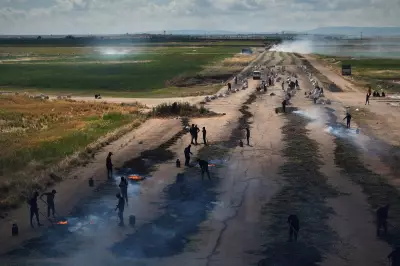
During the war, reports indicate severe overcrowding, denial of food, water, medicine, and sanitation, enforced disappearances, and torture in prisons. In Mahabad, security forces used teargas against protesting prisoners, while in Evin prison, detainees in section 209, many activists and dissidents, have been transferred to unidentified locations, leaving families without information.

Pickt after-article banner — collaborative shopping lists app with family illustration

Reza Younesi, a professor at Uppsala University, posted on X that his brother was among 22 prisoners forcibly removed from Ghezel Hesar prison, with families left in the dark. In northern Iran, Danial Niazi, an 18-year-old Kurdish minority member, faces charges including moharebeh and attempted murder, with his mother learning of his trial date through a Kurdish news agency amid internet blackouts.

Awin Mostafazadeh, a spokesperson for Kurdpa, reveals: "When his mother saw him in prison, his face was bruised and swollen. He had been beaten so badly he could not walk and relied on other prisoners to reach the visiting booth. They told him they would arrest his mother and rape her in front of him, and detain and torture his brother."

Families Speak Out

Despite the risks, families like Naimi's are determined to raise awareness. Hosseini adds: "The only thing that could possibly make a difference was to be his voice and to make sure everybody knows what's going on. When someone is committing a crime in a dark place, they feel comfortable, but as soon as you put the spotlight on them, they get scared." As the war diverts global attention, the plight of those facing execution in Iran remains critically urgent.