Protests across Iran have surged into a third consecutive week, with activists reporting at least 116 people killed and thousands detained as citizens mount a sustained challenge to the country's theocratic leadership.
Nationwide Unrest and Escalating Violence
The nationwide demonstrations, which began over two weeks ago, continued into Sunday with significant crowds reported in the capital, Tehran, and the second city, Mashhad. According to the US-based Human Rights Activists News Agency, the death toll has now reached at least 116, with a staggering 2,600 individuals detained by security forces.
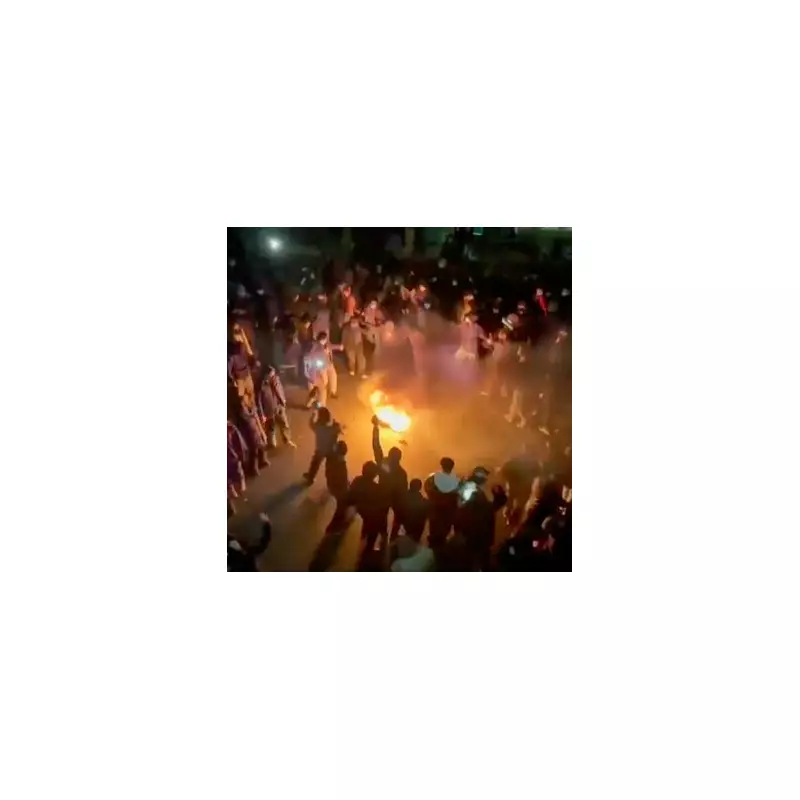
In a stark escalation, verified online footage emerging from the country showed protesters setting a police station ablaze in Tehran on Saturday night. Similarly, in Mashhad, a mosque was reported to have been set on fire, marking a significant turn in the tactics of some demonstrators.

Information Blackout and Security Crackdown
The Iranian regime has severely restricted internet access and cut phone lines, creating a near-total information blackout that makes verifying events from abroad extremely difficult. Rights groups fear this media vacuum is empowering hard-line elements within Iran's security apparatus to launch a more brutal suppression of dissent without international scrutiny.
"The pattern of protests in the capital has largely taken the form of scattered, short-lived, and fluid gatherings, an approach shaped in response to the heavy presence of security forces," the Human Rights Activists News Agency stated. The group also reported surveillance drones flying over protest sites and significant movements by security personnel.
Scenes of Defiance Across Major Cities
Despite the crackdown, videos likely transmitted via Starlink satellite systems show persistent defiance. In Tehran's Punak neighbourhood, protesters waved lit mobile phones after authorities cut electricity, creating a sea of light. Others were seen banging metal objects and setting off fireworks.
In Mashhad, located 450 miles northeast of Tehran, footage depicted flaming debris and dumpsters blocking roads as protesters confronted security forces. The city is home to the Imam Reza shrine, Shiite Islam's holiest site. Protests were also noted in Kerman, 500 miles southeast of the capital.
Iranian state television broadcast carefully curated segments from several cities on Sunday, aiming to project an image of calm. Notably, their reports did not include footage from Tehran or Mashhad.
Political Echoes and International Warnings
The protests have seen some demonstrators chanting in support of the former Shah's era, though it is unclear if this represents direct support for exiled Crown Prince Reza Pahlavi or a broader desire to revert to the pre-1979 revolution period. Pahlavi himself has called for continued demonstrations.
The situation has drawn sharp international concern. Former US President Donald Trump has issued warnings, stating a willingness to strike Iran to protect peaceful protesters, a move that prompted a severe WW3 threat from Iranian officials directed at both the US and Israel.
As the Iran protests cross the 14-day mark, the world watches to see if this movement for regime change can maintain its momentum against an increasingly violent and opaque state response.