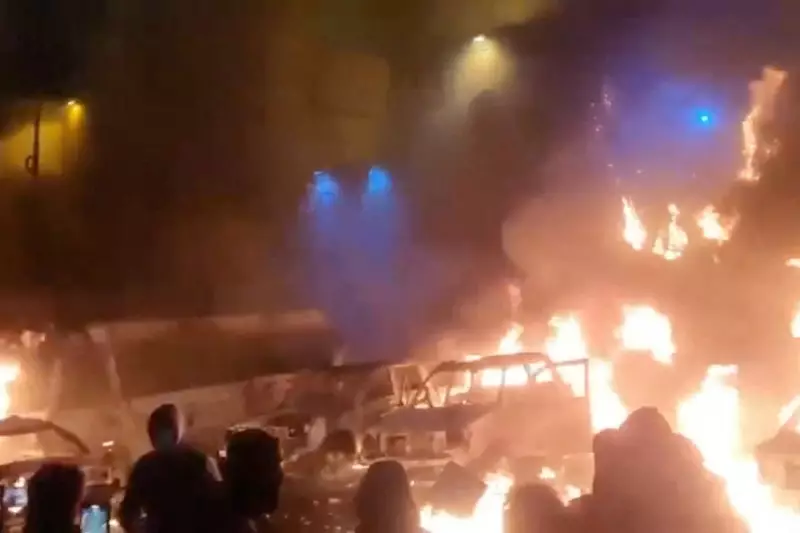
Iran has entered its thirteenth day of nationwide protests, with the country's supreme leader threatening a severe escalation of force as a near-total internet blackout continues to obscure events on the ground.
Supreme Leader's Defiant Stance and Rising Death Toll
In his first public address since demonstrations erupted on 28 December, Supreme Leader Ayatollah Ali Khamenei vowed the Islamic Republic would "not back down". He accused protesters of acting as agents for foreign powers and specifically blamed US President Donald Trump for unrest stemming from Iran's profound economic crisis.
According to the Human Rights Activist News Agency (HRANA), at least 62 people have been killed since the protests began. The agency reported the dead include 48 protesters and 14 security personnel. This figure comes amid a severe information vacuum caused by the state-imposed shutdown of internet and telephone services across the nation.

International Reactions and Digital Symbolism
The protests, initially sparked by economic hardship, have evolved into a direct challenge to clerical rule, with crowds chanting "death to Khamenei". The call to demonstrate was amplified by Reza Pahlavi, the son of Iran's deposed former Shah.
Internationally, US Secretary of State Marco Rubio voiced support for the protesters on social media platform X, stating "The United States supports the brave people of Iran." In a symbolic digital move, X appeared to change Iran's official flag emoji to the pre-revolutionary lion-and-sun design, a gesture embraced by many in the opposition diaspora.
Former President Trump issued a stark warning, stating the US would "start shooting" if Iranian government forces targeted demonstrators. This follows a period of heightened tension after US forces bombed Iranian nuclear facilities during a conflict with Israel in June of last year.
A Blackout Condemned and a Regime Under Pressure
Rights organisations have fiercely condemned the internet blackout. Amnesty International's Security Lab researcher, Rebecca White, stated the shutdown is a deliberate attempt "to hide the true extent of the grave human rights violations" and is itself a serious breach of rights. Reporters Without Borders (RSF) expressed deep concern for journalists, citing the blackout, threats, and the arrest of at least 24 reporters.
Analysts note the scale of the current unrest presents one of the most significant challenges to theocratic rule since 1979. Professor Maziyar Ghiabi of the University of Exeter commented that while protests may calm, the underlying social and economic anger means they are unlikely to be extinguished by state repression alone.
The regime has survived previous major protest waves, notably in 2009 and after the death of Mahsa Amini in 2022, which saw over 500 reported deaths. However, the current combination of widespread economic despair, explicit calls for regime change, and sustained defiance suggests a pivotal moment for the Islamic Republic.