





Iran Executes Teenage Protester as Regime Escalates Political Crackdown
Iran has executed an 18-year-old protester amid warnings from human rights organizations that the regime is preparing to carry out more killings of political detainees. The execution of Amirhossein Hatami comes as Tehran faces mounting international pressure and internal dissent, with authorities attempting to suppress any potential uprising through brutal measures.
Unfair Trials and Torture Allegations
Amnesty International has raised serious concerns about the treatment of Hatami and other detainees. The organization claims the teenager was subjected to torture and other ill-treatment while in detention before being convicted in what they describe as grossly unfair trials. These proceedings reportedly relied on forced confessions extracted under duress.
Hatami was found guilty of entering a restricted military site in Tehran, damaging and setting fire to the facility, and attempting to seize weapons and ammunition. His execution follows the secret hangings of four men earlier this week, signaling an alarming escalation in the regime's response to political dissent.
Imminent Execution Threats
Four other protesters sentenced in the same case – Mohammad Amin Biglari, Ali Fahim, Abolfazl Salehi Siavashani and Shahin Vahedparast Kolo – now face imminent execution, with Amnesty International warning they could be killed one each day. Two additional dissidents, Vahid Bani Amerian and Abolhassan Montazer, remain at high risk after being transferred to an undisclosed location on March 30.
The National Council of Resistance of Iran (NCRI), a political coalition formed by exiled dissidents, has warned of a potential massacre in the country's prisons as rattled leaders attempt to crush any notion of another mass uprising. This brutal new clampdown coincides with continued military pressure from the United States and Israel.
Recent Executions and Death Sentences
Hatami's execution occurred just days after four top anti-regime figures were put to death, while another 15 political prisoners have received death sentences in recent days. The hangings of political prisoners Pouya Ghobadi and Babak Alipour on Tuesday followed the deaths of Mohammad Taghavi Sangdehi and Ali Akbar Daneshvarkar on Monday.
All four were members of the People's Mojahedin Organisation of Iran (PMOI) and had been sentenced to death over two years ago. According to NGO Iran Human Rights, their executions were carried out in secret without their families being notified in advance.
Protest-Related Executions
Last month, Iran executed three men convicted of killing two police officers during January protests. Champion wrestler Saleh Mohammadi, 19, was reportedly killed in a public hanging along with Mehdi Ghasemi and Saeed Davoudi in the city of Qom. Mohammadi had been sentenced to death in February, less than three weeks after his arrest, for the alleged murder of a security agent during anti-regime protests on January 8.
Amnesty International reports that Mohammadi denied the accusation and claimed his earlier confessions had been extracted under torture, but the court dismissed his claims without investigation. These marked the first official executions related to protests that began last year.
Historical Context and International Response
Mohammad Mohaddessin, Chair of the NCRI's Foreign Affairs Committee, warned that the world is witnessing a prelude to a massacre of political prisoners, similar to 1988 when the regime executed approximately 30,000 political prisoners following its defeat in the war with Iraq. He stated that Tehran's executions reflect the regime's fear and desperation in the face of an enraged population and growing support for resistance movements.
Citing Iranian dissident politician Maryam Rajavi, Mohaddessin added that carrying out such executions amid external conflict represents a clear admission that the regime's principal enemy is the Iranian people and their resistance. He urged the international community to take effective measures to halt executions in Iran.
Protest Origins and Casualty Figures
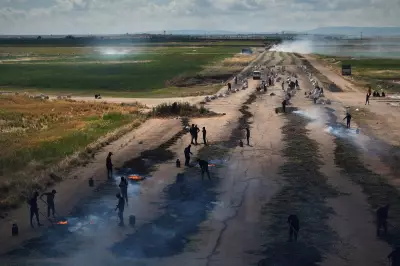
Protests initially broke out in Iran in late December against rising living costs before evolving into nationwide anti-government demonstrations that peaked on January 8 and 9. Iranian authorities launched a brutal crackdown, claiming the protests had turned into foreign-instigated riots involving killings and vandalism.
While Tehran has acknowledged more than 3,000 deaths during the unrest, the US-based Human Rights Activists News Agency (HRANA) has recorded over 7,000 killings, warning the actual toll could be far higher. The brutal crackdown also resulted in the deaths of more than 220 children according to HRANA, with other organizations estimating significantly higher figures.
Unprecedented Execution Rates
By late December, as protests began to take hold across Iran, the regime had already carried out more than 2,200 executions in 91 cities according to the NCRI. This represents the highest figure in decades, signifying an unprecedented peak in brutality during the final period of Supreme Leader Ali Khamenei's 36-year rule before his death.
In the aftermath of security forces' violent response to protesters on January 8-10, many Iranians describe a sea of blood separating civilians from the lethal government that rules them. Detainees arrested in the government crackdown have alleged severe abuse while in custody, including forced nudity, exposure to cold conditions, and injections with substances of unknown composition.