Indian Comedians and Influencers Defend Right to Mock Modi Amid Growing Crackdown
As parody accounts disappear and comedians' videos are blocked across India, a growing number of digital creators are pushing back against what they describe as an expanding government crackdown on online speech. They argue that satire is not a crime but a fundamental constitutional right protected under Indian law.
Viral Content Suddenly Restricted
The video begins with "Narendra Modi" enthusiastically shaking hands with a foreign leader before dissolving into bursts of laughter, exaggerated hugs, and candid looks to the camera. The English is deliberately garbled, the pauses theatrical, but the mannerisms unmistakable. As satire of India's prime minister, it is sharp, absurd, and instantly recognizable.
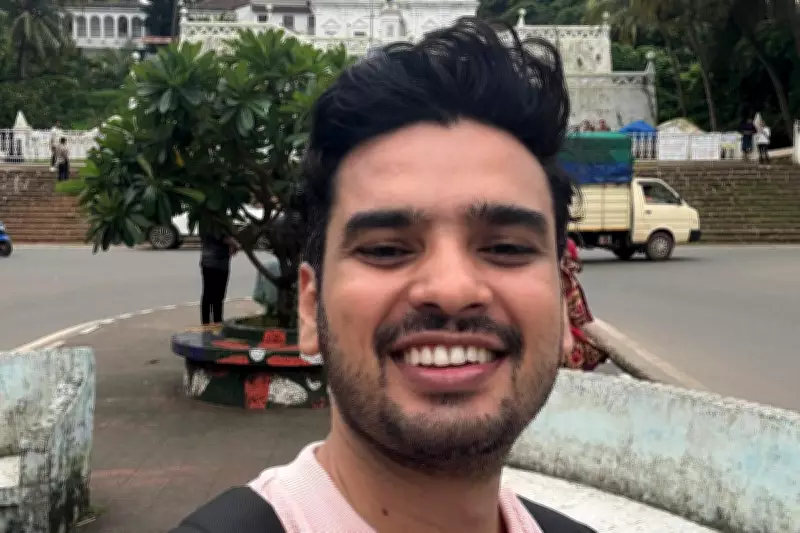
Posted on Instagram by comedian Pulkit Mani, the reel captioned "POV: How Moody Gee Greets Foreign Ministers" accumulated more than 16 million views before suddenly disappearing for users in India. In its place now sits a stark notice stating access has been restricted "pursuant to a legal request" from the government under the country's information technology laws.

Not an Isolated Incident
This case represents just one example of a broader pattern. In recent weeks, popular X accounts known for political satire and commentary have been taken down or restricted, only to be partially restored later following court intervention. Even then, some posts remain blocked pending review by government-appointed panels.
The takedowns have sparked significant concern among digital rights advocates and content creators, who warn of an escalating suppression of online criticism directed at the government and the ruling Bharatiya Janata Party (BJP).
Regulatory Expansion
These restrictions coincide with government efforts to widen its regulatory authority. Proposed amendments would extend rules governing traditional news publishers to ordinary users, including influencers, comedians, and independent journalists who post about "news and current affairs" on platforms like Facebook, YouTube, and X.
Critics contend this move could fundamentally reshape online freedom of speech in India, granting authorities greater control over what hundreds of millions of users can express and how far their voices can travel.
From Parody to Legal Battle
For Prateek Sharma, creator of the parody account Dr Nimo Yadav that posts satirical political content, the transition from amusing side-project to all-consuming legal battle occurred abruptly in the middle of the night.
"I received an email from X on 19 March at 12.23am," he recalls. "It said that we have blocked your account on order from MeitY," referring to the Ministry of Electronics, Information and Technology.
The message offered minimal clarity. "We don't have blocking orders, X's mail said. And they told me to get in touch with MeitY for account restoration." Sharma wrote to the ministry asking why his account had been withheld and which posts triggered the action. "I did not receive a response," he states.
Government Justification
In an email exchange between X and MeitY, the ministry stated flagged accounts fell under Section 69A of the IT Act. This provision permits the government or intermediaries to block content in the interest of sovereignty, integrity, defense and security of India, as well as to maintain relations with friendly states and prevent incitement to violence.
The ministry further alleged posts by the Dr Nimo Yadav account contained AI-altered content that defamed the government and prime minister, spread false narratives, and portrayed him as incompetent—content it claimed could harm public order and pose security risks.
Platform Pushback
X, owned by Elon Musk, resisted the 18 March directive, arguing the accounts did not meet the legal threshold under the IT Act and that the action was disproportionate. The platform also sought fair hearings for account holders, noting the order showed no clear attempt to contact them. X suggested withholding specific posts rather than entire accounts.

"We have to comply," says advocate Ankit Parhar, a lawyer for X. "There is some pushback. For instance, if the account is generally posting newsworthy content and in some posts there may be something that MeitY finds objectionable, then the pushback is to please block only the posts you think are objectionable. Don't block the entire account." He notes it is "rare" for the ministry to consider X's objections.
Systemic Concerns
"This concern is not speculative. It is empirical," asserts Apar Gupta, founder of the Internet Freedom Foundation. "Section 69A blocking orders have been issued for reasons like 'decency and morality,' which are not grounds permitted under the statute."
Gupta argues a pattern is already visible in the types of content being removed. "Accounts running political satire of the prime minister have been throttled or taken down. So when you ask whether this architecture could be used to curb dissent, it already is."
Part of the problem, he explains, lies in how the system is structured. Blocking orders are confidential by design, meaning users often only learn about them after the fact, if at all. Mechanisms like the government's Sahyog portal have streamlined the process, allowing multiple agencies to send takedown requests to all platforms quickly and in bulk.
Personal Consequences
For Sharma, the consequences have been both immediate and deeply personal. An engineer by profession, he had been running the account since 2018-19. What began as a joke gradually grew into a following of 1.3 million users drawn to its sharp political commentary.
The legal battle has stripped away the anonymity he once relied on. Forced to approach the courts, Sharma had to reveal his identity, something he had deliberately protected for years.
"I was hoping to stay anonymous. But it is not possible now," he said. "With my identity card they have all my details," he adds, referring to ID submission in court to the ministry. "It is easy for them to target me," he states, fearing harassment from right-wing supporters of the prime minister. He claims to have received threats online since revealing his identity.
Court Intervention
The Delhi High Court later directed that Sharma's account, along with another parody account called "Nehr_Who," be restored. However, individual posts flagged in the original order remain withheld pending further review.
The court also instructed that the matter be examined by a review committee within MeitY, which must determine whether the content falls within the scope of the law.
Continued Resistance
For Sharma, the fight continues. "If they continue to withhold the posts, then... we will file a fresh writ," he declares.
The government has described some flagged content as being in "bad taste" and potentially harmful to public order—an assessment Sharma strongly disputes.
"How are my tweets derogatory?" he questions. "We live in a democracy... we have the right to criticise our PM or any public figure. We are not living in North Korea."
Despite the risks, Sharma says he does not plan to change his approach. "I have never done anything that can disrupt public order. I don't intend to either," he affirms. "However, if I think there is something that should be criticised, then I will continue to do it."