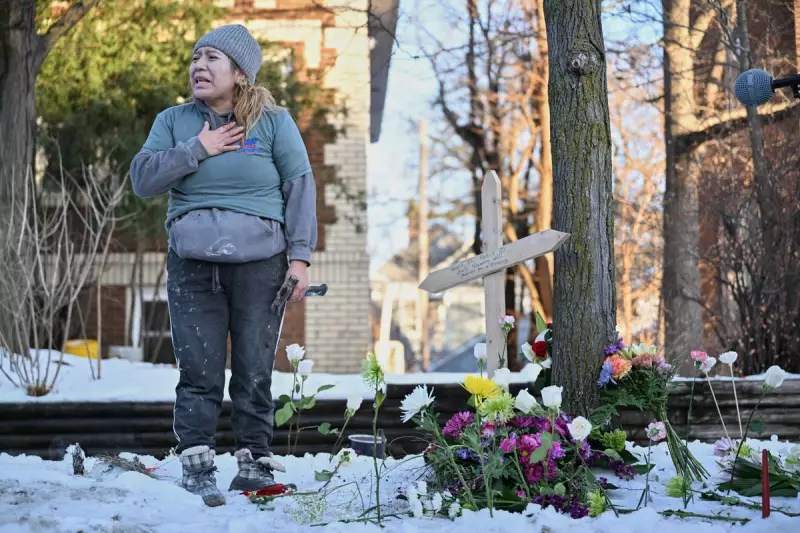
The fatal shooting of a woman by a US Immigration and Customs Enforcement (ICE) agent in Minneapolis has ignited a fierce political and legal battle, raising a critical question: could the federal officer face criminal charges?
The Incident and Conflicting Narratives
On Wednesday, 8 January 2026, ICE agents conducting an immigration operation in Minneapolis shot and killed 37-year-old Renee Nicole Macklin Good. The Department of Homeland Security (DHS) stated the officer fired "defensive shots" after a "violent rioter" attempted to run over officers, claiming the agent feared for his life.
However, this account has been vehemently rejected by local officials. Minneapolis Mayor Jacob Frey bluntly dismissed Homeland Security Secretary Kristi Noem's characterisation of the event as an "act of domestic terrorism," using explicit language to demand ICE leave the city.

Videos of the incident, verified by Reuters, appear to contradict the official federal narrative. The footage shows an officer approaching an SUV, ordering the driver out and grabbing the door handle. As the vehicle moves forward while turning away, a second officer in front of the car draws his weapon, steps back, and fires three shots. It remains unclear if the car made contact, and at least one shot was fired after the vehicle had passed the officer.
The Legal Hurdle: Federal Immunity
The central legal barrier to state prosecution is the doctrine of federal immunity. Federal agents are generally immune from state prosecution for actions taken as part of their official duties. This protection applies only if the officer's actions were authorised under federal law and were deemed necessary and proper.
If Minnesota authorities decided to charge the agent, he could petition to move the case to federal court and claim immunity. To overcome this, state prosecutors would bear the heavy burden of proving his actions fell outside his official duties or were "objectively unreasonable" and "clearly unlawful." A successful immunity claim would result in the case's dismissal, barring any future state charges.
Use-of-Force Standards
Both Minnesota state and federal law set a high bar for justifying deadly force. The action is permitted only if a reasonable officer would believe it necessary to protect themselves or others from death or serious harm. The video evidence will likely be scrutinised against this "reasonable officer" standard.
Potential Avenues for Accountability
Federal Prosecution: While possible, federal charges against law enforcement for fatal shootings are exceedingly rare. Prosecutors would need to prove the officer knew his conduct was unlawful or acted with "reckless disregard" for constitutional limits—a notoriously difficult task in court. The Trump administration has already defended the officer's actions.
Civil Lawsuit: The driver's family could pursue a civil damages case, but another legal shield stands in the way: qualified immunity. This doctrine protects federal officers from lawsuits unless their conduct clearly violated a well-established constitutional right. A 2020 Reuters investigation found qualified immunity has become a highly effective tool for shielding officers accused of excessive force.
The agent's potential defences are multifaceted, including not just immunity but also arguments that his actions were constitutionally reasonable, taken in self-defence, and without intent to harm.
The case now sits at a volatile intersection of immigration enforcement, police accountability, and federalism, with the legal path to any criminal charges facing formidable obstacles.