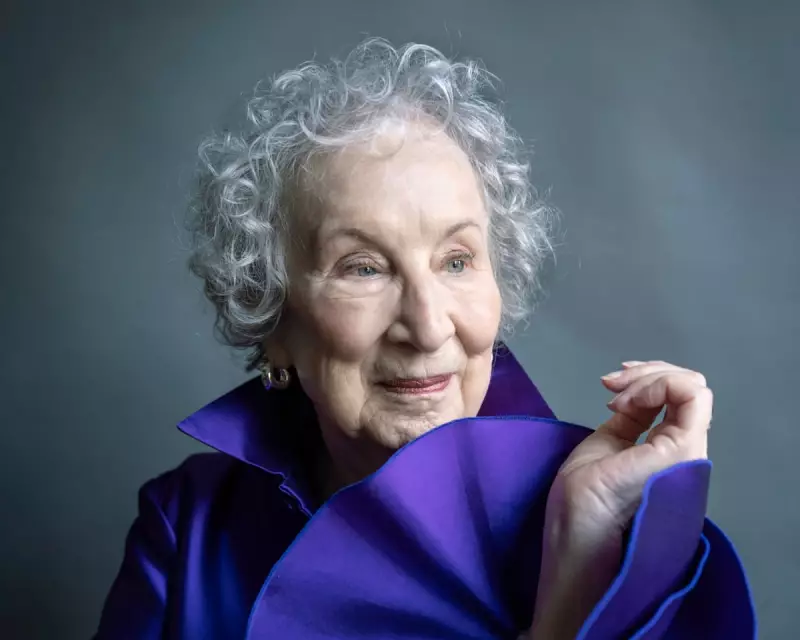
Renowned author Margaret Atwood has declared the chilling premise of her seminal dystopian novel, The Handmaid's Tale, to be increasingly believable in today's political climate.
A Warning from the Past
Speaking on BBC Radio 4's Desert Island Discs, the Canadian literary icon reflected that when she first conceived the book in the 1980s, its plot of a theocratic authoritarian regime seizing the United States and enslaving women for reproduction seemed "bonkers." At the time, she noted, America was widely viewed as the "democratic ideal" and a "land of freedom."
"People in Europe just didn't believe that it could ever go like that," Atwood told host Lauren Laverne. However, she added a crucial caveat: "I've always been somebody who has never believed it can't happen here. It can happen anywhere, given the circumstances."

2016: A Turning Point for Dystopia
Atwood pinpointed 2016 as a pivotal moment when perceptions shifted. "Then in 2016 everything changed again, and we are now in that period where The Handmaid's Tale has become much closer," she stated. While she joked that the iconic red cloaks and white bonnets were unlikely to catch on, she emphasised that "the rest of it seems more and more plausible."
Published in 1985, the novel's themes have found renewed resonance, with the handmaids' costumes becoming a potent symbol of protest against Donald Trump's presidency and the subsequent Supreme Court decision to overturn Roe v. Wade, which had protected abortion rights across the US.
American Resilience and the Limits of Control
Despite her stark warnings, Atwood expressed a measure of faith in American character and diversity to resist a full descent into Gilead. She argued that such regimes often fail because they become "unsustainable" and "chaotic."
"Also, let us not count America out," she urged. "Americans are quite ornery. They do not like people telling them all to line up and do what they're told." This inherent resistance to being "bossed around," she suggested, is a bulwark against total control.
This sentiment was echoed in a Guardian interview from November, where Atwood pointed to the ongoing adaptation of her sequel, The Testaments—a joint Booker Prize winner in 2019—as proof the US was not yet a "full totalitarianism." She starkly concluded that if it were, those involved in the production "would be in jail, in exile, or dead."
Ultimately, Atwood frames The Handmaid's Tale not as a prophecy, but as a stark reminder of a "perennial possibility." Her commentary serves as a powerful lens through which to view contemporary struggles for civil liberties and democratic norms on both sides of the Atlantic.