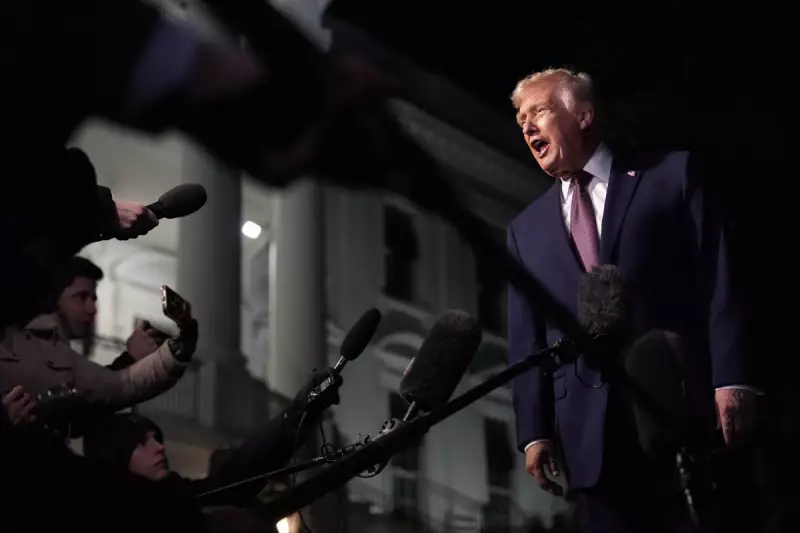
By almost every metric, the year 2025 has represented one of the most perilous and challenging periods in modern times for press freedom and those who work in journalism.
A Global Crisis: Record Killings and Widespread Impunity
The starkest statistic comes from the Committee to Protect Journalists (CPJ). By early December, the number of media workers killed worldwide in 2025 had already reached 126, matching the total for the entirety of the record-setting previous year. The conflict in Gaza was a major factor, with 85 of those deaths occurring there, 82 of whom were Palestinian journalists.
Jodie Ginsberg, CEO of the CPJ, highlighted the corrosive effect of impunity. "What we know from decades of doing this work is that impunity breeds impunity," she stated. "A failure to tackle journalists' killings creates an environment where those killings continue." The committee also estimates at least 323 journalists are currently imprisoned around the world.

The American Front: Assaults, Intimidation and Government Action
While no US journalists were killed abroad, the domestic environment grew markedly more hostile. The U.S. Press Freedom Tracker recorded 170 assaults on reporters within the United States, a figure nearly equalling the combined total of the previous three years. Notably, 160 of these assaults were perpetrated by law enforcement officers, often during coverage of immigration operations.
The antagonistic rhetoric and policies of President Donald Trump have significantly shaped this climate. Tim Richardson, a former Washington Post reporter now with PEN America, observed, "Trump has always attacked the press. But during the second term, he's turned that into government action to restrict and punish and intimidate journalists."
This has manifested in several concrete ways:
- Legal actions against major outlets like The Associated Press, ABC, CBS News, The New York Times, and The Wall Street Journal.
- The successful defunding of public broadcasting (PBS and NPR) by Trump and congressional allies.
- The evisceration of global news services like Radio Free Europe and Voice of America.
- The creation of a government portal for complaining about "unfair" journalists.
Defence Secretary Pete Hegseth's restrictive new rules for Pentagon coverage, justified by portraying journalists as security threats, prompted a major fightback. Most mainstream news organisations relinquished their Pentagon credentials rather than comply, choosing to report from outside while The New York Times launched a legal challenge.
A Barren Landscape with Shoots of Hope
The structural decline of the news industry continues unabated, driven by the advertising collapse. A report by Muck Rack and Rebuild Local News found a devastating drop from 40 journalists per 100,000 people in the US in 2002 to just over 8 in 2025. Public sympathy remains low, with only 36% of Americans reportedly aware of the Trump administration's strained press relations, down from 72% during his first term.
Yet, sources of resilience and optimism persist. Both Ginsberg and Richardson point to the rise of new, independent local news organisations such as the Baltimore Banner, Charlottesville Tomorrow in Virginia, and Outlier Media in Michigan. Furthermore, as Axios CEO Jim VandeHei noted, mainstream reporters continue to work diligently and set the national agenda.
"Over time, people will hopefully come to their senses," VandeHei told the AP, "and say, 'Hey, the media like anything else is imperfect but, man, it's a nice thing to have a free press.'"
David Bauder covers media and entertainment for The Associated Press.