Newly released government documents have exposed a critical flaw in efforts to quell sectarian violence in Belfast over two decades ago: peace-building mobile phone networks failed because users switched off their devices during the worst riots.
Violence Erupts in East Belfast
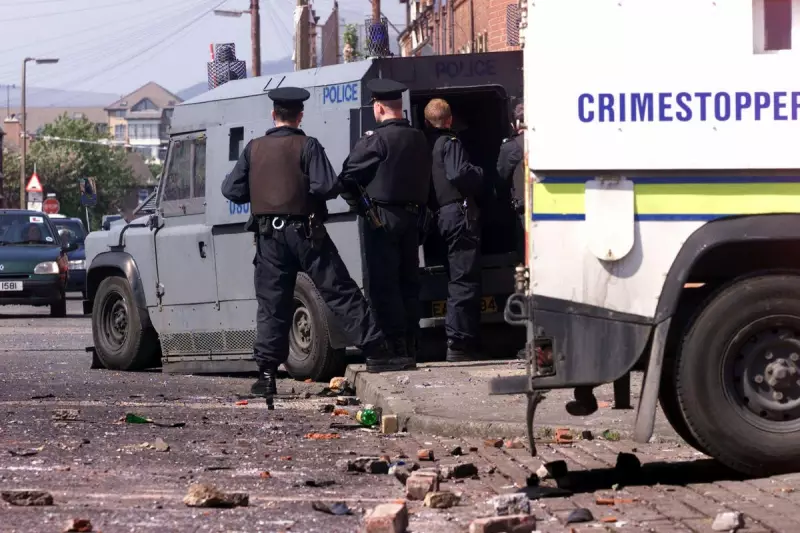
The declassified files, from 2002, detail a period of sustained sectarian clashes around the Short Strand area in east Belfast. This violence occurred while the Stormont political institutions were suspended, prompting urgent political engagement to restore calm.
In response to the turmoil, a proposal emerged, reportedly highlighted by the News of the World, to establish shared mobile telephone networks. The aim was to improve communication between communities at flashpoint interfaces to prevent or de-escalate tensions.

The Mobile Network Initiative and Its Limitations
A confidential note to the then new Secretary of State, Paul Murphy, advised that such networks were already operating in parts of Belfast, including the east. An evaluation had confirmed their value in managing spontaneous outbreaks of violence.
However, the official's note outlined two major shortcomings. Firstly, the networks were powerless against violence orchestrated by paramilitary groups. Secondly, and more critically, the system broke down at the very moment it was needed most.
"A further problem is that when tensions/the level of violence are particularly high, users tend to switch off telephones," the file stated.
Political Hesitation and Development of New Proposals
The files also show that junior minister Des Browne was working with the Northern Ireland Committee of the Irish Congress of Trades Unions (NICICTU) on plans for a new, more robust city-wide network. This proposal aimed to include an agreed operational protocol and monitoring arrangements specifically designed to minimise the potential for this 'switch off' problem.
Progress was slow. Minutes from a 2002 "Tackling interface violence roundtable" hosted by Mr Browne reveal political parties were not ready to sign up. The Progressive Unionist Party's Billy Hutchinson said his party needed its operational concerns addressed first.
Interestingly, the minutes record that parties had warned it would be "the kiss of death" to have the Northern Ireland Office's fingerprints on the project's details, highlighting the sensitivity of government involvement.
Frustrated by the delay, Mr Browne cautioned on the need for speed. He also turned focus to a planned Community Action Group, stating government policy should "reward and support good behaviour in communities, not simply weigh-in in response to violence." The goal, he noted, was to build communities proactively, not just arrive with cash "when they were burning down."