White House Adjusts Rhetoric Following Minnesota ICE Shooting Controversy
The Trump administration has begun to subtly alter its public messaging in the wake of two fatal shootings involving Immigration and Customs Enforcement agents in Minneapolis. This rhetorical shift comes amidst growing public discontent and internal political pressure, yet analysts caution against interpreting it as a precursor to substantive policy changes.
A Tragic Turn of Events in Minnesota
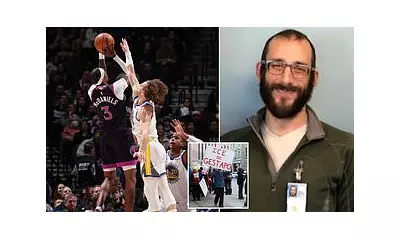
The recent deaths of Renee Good and Alex Pretti, occurring less than three weeks apart in Minneapolis, have ignited a fierce national debate about immigration enforcement tactics. Pretti, a registered nurse with a concealed carry permit, was fatally shot despite video evidence indicating he was holding a mobile phone, not a firearm. The government's initial response, characterised by senior officials like Stephen Miller labelling Pretti a "would-be assassin" and "domestic terrorist," only served to heighten tensions and public outrage.
Gregory Bovino, the senior US border patrol official who became the public face of the administration's immigration crackdowns, controversially asserted that border patrol agents were "the victims" in these incidents. Homeland Security Secretary Kristi Noem similarly accused Pretti of involvement in "domestic terrorism." These statements created a palpable atmosphere of menace and drew widespread condemnation.
A Measured Retreat in Language
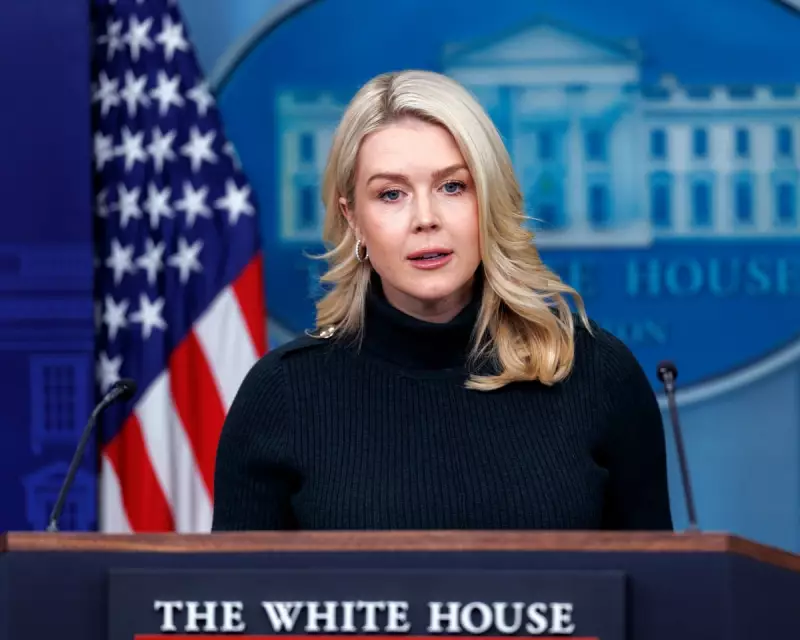
In a notable departure from this aggressive stance, White House Press Secretary Karoline Leavitt recently described Pretti's death as a "tragedy." President Donald Trump himself announced that his administration was reviewing the shooting and explicitly stated he did not believe Pretti was "acting as an assassin." This represents a clear, if limited, recalibration of the administration's public position on these sensitive events.
However, this softening in tone appears to be a tactical response rather than an ideological rethink. As Trump remarked, "With that being said, you can't have guns. You can't walk in with guns. You just can't... But it's a very unfortunate incident." This comment notably overlooks both US gun laws and the video evidence concerning Pretti's actions, highlighting the administration's continued hardline perspective.
Mounting Public and Political Pressure
The White House's adjusted rhetoric coincides with significant shifts in public opinion. A Reuters/Ipsos poll conducted after Pretti's death found that 58% of Americans believe ICE agents have "gone too far" in their enforcement actions. Earlier surveys by the New York Times, Wall Street Journal, and CNN revealed similar levels of dissatisfaction, with a majority deeming the shooting of Renee Good an "inappropriate use of force."
Even traditionally supportive media outlets have noted the changing climate. Fox News ran a headline stating, "Support slipping for Trump immigration push." Furthermore, rumblings of discontent have emerged within the Republican Party itself. Congressman James Comer of Kentucky has urged the president to withdraw ICE from Minnesota, while Senator Bill Cassidy of Louisiana has called for a joint investigation into the shooting.
Personnel Changes and Policy Continuity
Another visible change involved the replacement of Gregory Bovino, who had attracted controversy for his conduct in Minnesota, with Tom Homan as the administration's border czar. However, Homan's appointment is unlikely to herald a more moderate approach. A former ICE director, Homan has previously vowed to run "the biggest deportation force this country has ever seen" upon Trump's return to office and graphically described his confrontational approach to dealing with uncooperative local officials.
The fundamental takeaway remains clear: while the Trump administration's language may have been temporarily moderated in response to polling data and political pressure, there is no substantive evidence to suggest an impending shift in its core immigration policies. The underlying strategy of aggressive enforcement appears unchanged, with the recent rhetorical adjustments serving primarily as a public relations manoeuvre rather than a signal of genuine policy evolution.