
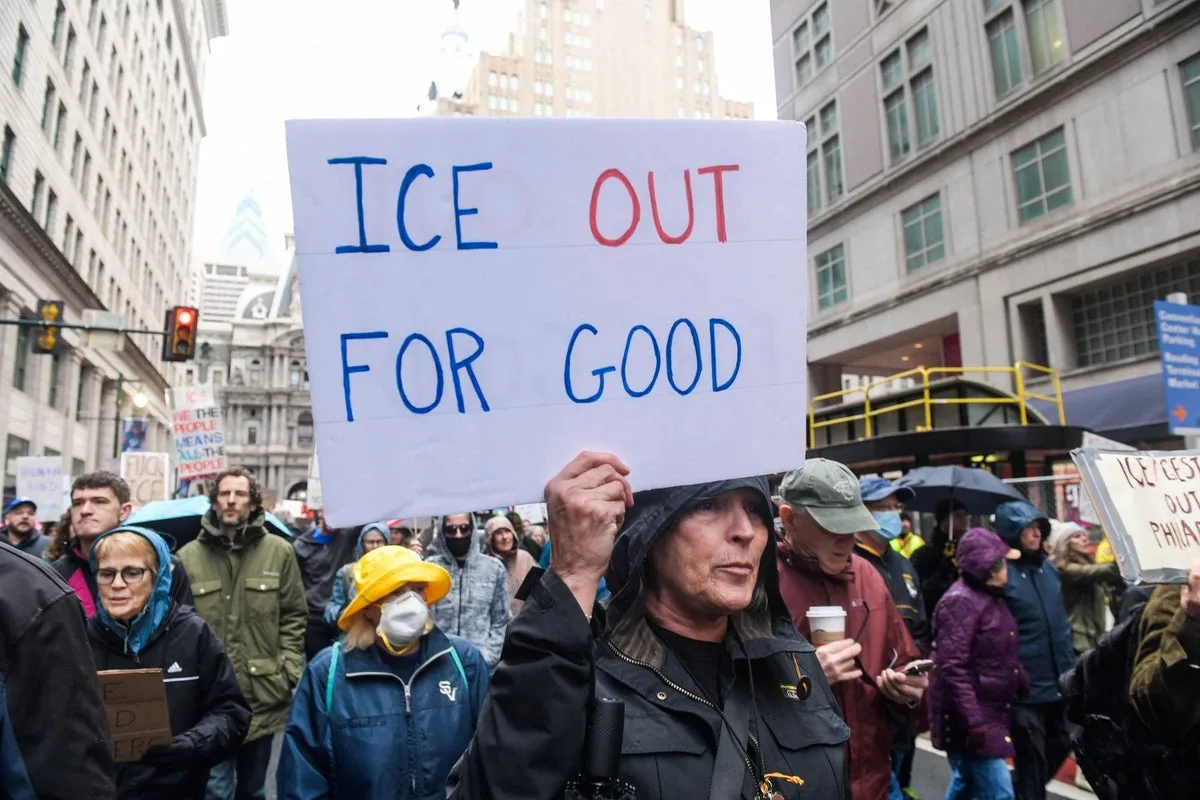
Thousands of people gathered in cities across the United States on Saturday to protest against aggressive immigration enforcement following the fatal shooting of Renee Good in Minneapolis and the injury of two others in Portland. Demonstrations took place in Washington, D.C., Boston, New York, Raleigh, Seattle and other cities, with marchers carrying signs honouring the 37-year-old mother and chanting anti-Immigration and Customs Enforcement (ICE) slogans.
The nonviolent protests, branded 'ICE Out for Good', were organised by the ACLU, Indivisible, the 50501 movement, the Workers’ Circle, Voto Latino and other groups. More than 1,000 protests were expected to take place over the weekend. The outrage stems from an incident days earlier in which an ICE officer fatally shot Good while she was manoeuvring her vehicle in the middle of the road. Trump administration officials claimed Good was trying to run over officers, calling it an act of domestic terrorism, but footage of the incident circulating on social media does not support that assertion.
Many, including top Minnesota lawmakers and Democratic politicians, have rejected the administration's narrative. They have demanded the officer be held accountable, yet federal law enforcement has refused to cooperate with Minnesota investigators. Public anger was further fuelled by a separate incident on Thursday in Portland, where Border Patrol agents shot and injured a man and a woman.
The protests have largely been peaceful, but some incidents led to law enforcement intervention. In Minneapolis, at least 29 people were arrested on Friday evening after some vandalised a hotel and threw ice at police. On Saturday, police deployed pepper balls when a small group began throwing snowballs at vehicles. Officials, including Minneapolis Mayor Jacob Frey, urged demonstrators to exercise their rights peacefully and not be provoked.
Frey and other lawmakers have called for the removal of federal officers, arguing their presence increases tension. Some Republicans, such as Representative Tom Emmer of Minnesota, criticised the protests, saying chants such as 'Save a life, kill ICE' are not peaceful. Frey responded by warning that unrest plays into President Trump's hands, stating: 'This is what Donald Trump wants. He wants us to take the bait.'




