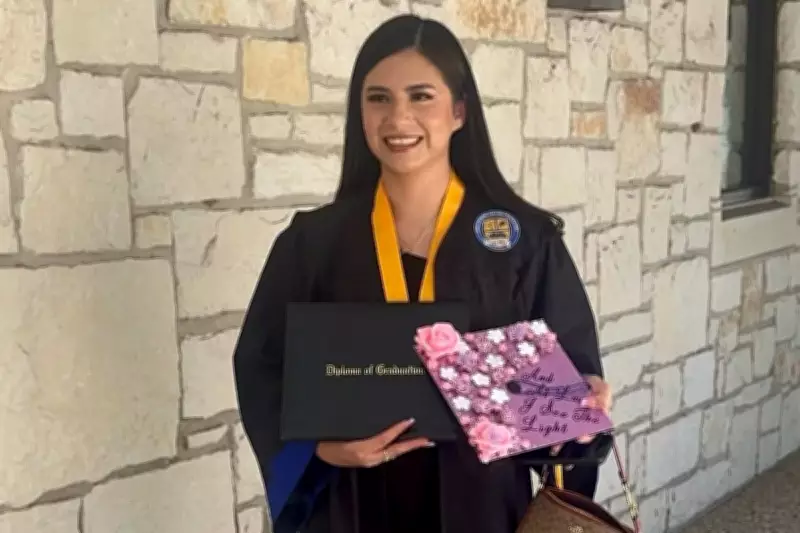
US Authorities Face Expired Deadline in Wrongful Deportation Case of College Student
The court-mandated deadline for United States immigration officials to arrange the return of a Babson College freshman who was erroneously deported to Honduras has officially expired. This development comes as her legal representatives have launched serious accusations that federal authorities are deliberately stalling the process, creating further uncertainty in a case that has drawn national attention.
Legal Battle Intensifies as Deadline Passes
Attorney Todd Pomerleau, representing 19-year-old Any Lucia Lopez Belloza, stated emphatically that his legal team remains prepared to pursue all available appeals in this contentious immigration case. Pomerleau vowed that his client "is not coming back in handcuffs," highlighting the ongoing tension between the judiciary and executive branches regarding immigration enforcement.
Lopez Belloza, who has been studying remotely from Honduras since her wrongful deportation, expressed profound frustration with her situation. "No one should have to feel this powerless," she declared during a Zoom press conference. "All I'm asking is for honesty and fairness. I'm asking to be treated like a human with rights."
Controversial Airport Detention and Swift Deportation
The case originated in November when Lopez Belloza was detained at Boston's Logan International Airport while attempting to travel to Texas to surprise her family for Thanksgiving. Despite a court order explicitly prohibiting her removal while her immigration case remained pending, she was deported to Honduras within forty-eight hours. Honduras represents a country she had left at the tender age of seven, making her return particularly traumatic.
Federal prosecutors have since acknowledged in court documents that immigration authorities committed a significant error by deporting Lopez Belloza. However, the Department of Homeland Security maintains in previous statements that she received "full due process" and that a final removal order had been issued years earlier by an immigration judge.
Systemic Failures and Conflicting Accounts
Lopez Belloza asserts she had no knowledge of any removal order against her, noting she was merely eleven years old when the original immigration case was decided. Her attorney Pomerleau revealed that when he initially examined her immigration records, he found no active removal order reflected in the official system.
Court filings from January disclosed that an Immigration and Customs Enforcement officer failed to properly activate an alert system that would have flagged the judge's order blocking her removal. While the administration has apologized for this technical error, government attorneys have argued that the mistake does not invalidate the prior removal order, creating a legal paradox.
Judicial Intervention and Government Resistance
Earlier this month, U.S. District Judge Richard Stearns issued a significant ruling ordering the government to facilitate Lopez Belloza's return within two weeks. Judge Stearns emphasized that the courts—not the executive branch—must ultimately determine her rights and the legality of her removal. Government attorneys have countered that the federal court in Boston lacks proper jurisdiction to undo her removal order, setting up a constitutional confrontation.
In the final twenty-four hours before the deadline expired, federal officials attempted to arrange a government-facilitated flight to bring Lopez Belloza back to the United States. However, her legal team reported that authorities refused to provide clear assurances about whether she would be released upon arrival. Pomerleau indicated that court filings suggest the government plans to detain her in Texas immediately and could potentially seek to deport her again within days.
Interpretation Disputes and Legal Strategy
"They're interpreting the judge's facilitation order to the extreme," Pomerleau argued. "The judge's order says to facilitate her return to the United States to maintain the status quo. And in their view, the status quo is that she was in handcuffs in a jail in Texas. So they're going to bring her back, put her in handcuffs and leave her in that same jail in Texas."
Immigration officials did not immediately respond to requests for comment regarding the expired deadline and the proposed return plan, leaving many questions unanswered about the next steps in this complex legal saga. The case continues to highlight broader concerns about immigration enforcement procedures, due process protections, and the intersection of judicial and executive authority in the United States immigration system.