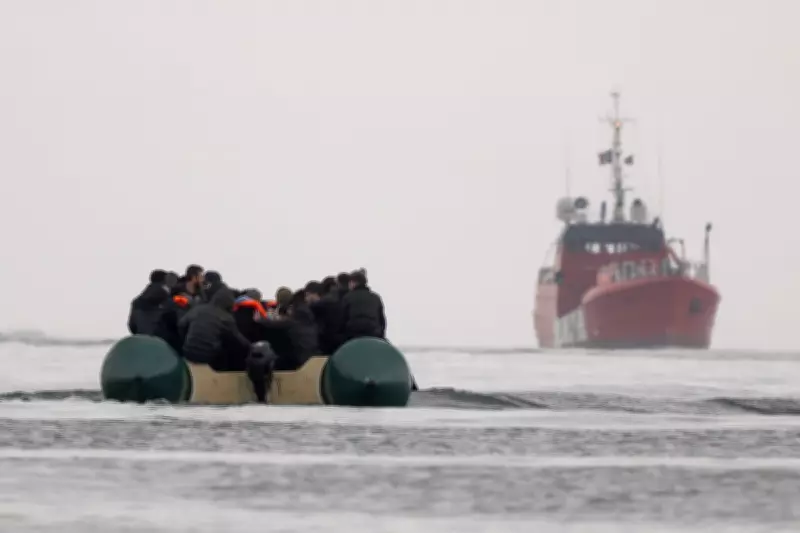
The United Kingdom has announced a new financial agreement with France aimed at curbing the flow of migrants attempting to cross the English Channel in small boats. Under this £662 million deal spanning the next three years, a significant portion of the funding will be contingent on the effectiveness of French efforts to halt these perilous journeys.
Conditional Cash Injection
Approximately £160 million of the total sum is earmarked for innovative tactics, such as policing operations to intercept "taxi boats" that pick up migrants offshore. Crucially, this allocation is conditional, meaning France must demonstrate success in key metrics before receiving the full amount. The Home Office has specified that performance will be measured based on the number of boats stopped, arrests of people smugglers, and migrants prevented from boarding dinghies, among other criteria.
Enhanced Enforcement Measures
In addition to the conditional funds, around £501 million will be allocated to bolster enforcement capabilities on the northern French beaches. This includes funding for more officers and advanced surveillance technology, despite previous increases in funding failing to reduce crossing numbers. The Home Office projects a 40 percent rise in law enforcement personnel in the region, increasing from 700 to nearly 1,100 officers.

Home Secretary Shabana Mahmood has publicly endorsed the deal, asserting that it will effectively stop illegal migrants from undertaking the dangerous journey and lead to the incarceration of people smugglers. Prime Minister Sir Keir Starmer has described the agreement as "historic," emphasizing its role in ramping up intelligence, surveillance, and ground personnel to protect British borders.
Rising Crossings and Fatalities
Despite similar past initiatives, Channel crossings have continued to climb. In 2025, approximately 41,472 individuals arrived in the UK via small boats, up from 36,816 in 2024 and 29,437 in 2023. The peak was recorded in 2022, with around 46,000 making the journey. Alarmingly, data from 2025 indicates that 41 percent of asylum seekers entered on small boats, while 11 percent used other irregular routes like lorries, and 39 percent had initially entered on valid visas before claiming asylum.
A recent report highlights a troubling trend: deaths in the Channel have increased following previous UK-France agreements. For instance, after former Prime Minister Rishi Sunak signed a £460 million pact with French President Emmanuel Macron in 2023, 17 people died or went missing in the final four months of that year. The following year, 2024, saw 83 fatalities or disappearances, marking the deadliest year on record, with another 29 in 2025.
Criticism from Charities
The Refugee Council has voiced strong criticism of the new deal. Imran Hussain, director of external affairs, argued that the government is merely treating the symptom rather than addressing the root cause. He emphasized that without safe and legal routes to the UK, desperate individuals, including men, women, and children, will continue to resort to dangerous small boat crossings. Hussain stated that policing alone cannot prevent these journeys if underlying issues remain unaddressed.
Shifts in Smuggling Tactics
Research from the University of Bristol and Border Forensics reveals that increased enforcement has led to dangerous adaptations by people smugglers. As French police have become more aggressive, partly to justify UK funding, smugglers have resorted to riskier methods, such as picking up migrants from the water and launching from more remote coastal points. Additionally, dinghies have become increasingly overcrowded, with some vessels carrying over 100 people, exacerbating the dangers of the crossings.
The figures from 2019 to 2025 suggest that while more people are attempting the journey, this does not necessarily correlate with a higher death toll, though the risks remain severe. Charities operating in northern France report a cultural shift within law enforcement, with police under pressure to act decisively, potentially compromising safety protocols.

In summary, the UK's latest financial commitment to France represents a renewed effort to tackle the small boat crisis, but it faces skepticism from humanitarian groups and is set against a backdrop of rising crossings and fatalities. The conditional nature of the funding underscores a strategic shift towards performance-based outcomes, yet the long-term effectiveness remains uncertain as underlying causes persist.