Afghan Asylum Approvals Plunge as UK Denies Women Fleeing Taliban
New analysis from Amnesty International UK reveals a dramatic decline in asylum approvals for Afghan nationals, with women facing particular barriers to sanctuary in the United Kingdom. The report indicates that Afghan refugees now have a smaller chance of securing protection in the UK than they did before the Taliban regained control of Afghanistan.
Sharp Decline in Grant Rates Under Labour Government
According to detailed examination of government data by the human rights charity, the grant rate for Afghan asylum claims has plummeted from 96 percent to just 34 percent since Labour assumed office. This represents a significant drop compared to pre-Taliban takeover approval rates, which historically ranged between 45 and 62 percent.
Home Office statistics show that in 2025 alone, 370 Afghan women were formally refused asylum in the United Kingdom. This troubling trend emerges despite overwhelming evidence of systematic oppression faced by women and girls under Taliban rule.

Political Criticism and Humanitarian Concerns
Wendy Chamberlain, Liberal Democrat MP and chair of the All Party Parliamentary Group for Afghan women and girls, condemned the situation as "indefensibly cruel." She emphasized that "women in Afghanistan are enduring one of the most oppressive regimes in the world, a regime that is systematically removing them from daily life."
The declining approval rates are not limited to Afghan applicants. Across all nationalities, the success rate for first-time asylum claims has been falling consistently since Labour came to power. In 2025, the overall grant rate stood at 42 percent, down from 47 percent in 2024 and 76 percent in 2022.
Backlog Crisis and Channel Crossings
The increasing number of initial refusals has created a growing backlog in the asylum appeals system. Ministry of Justice data indicates that this backlog doubled to just below 70,000 cases in the year ending September 2025.
Steve Smith, chief executive of refugee charity Care4Calais, suggested that the policy shift may be linked to migration patterns rather than changing conditions in Afghanistan. "Only a few short years ago, the significant risk the Taliban regime posed to individuals was duly recognised with an asylum grant rate for Afghans of almost 100 percent," he noted. "But the UK government has clearly changed their position, and I should suggest it has changed not because the Taliban's threat has reduced, but rather because Afghan nationals were the nationality most likely to cross the Channel in pursuit of sanctuary in the UK."
Women and Girls Forced to Take Dangerous Journeys
Gunes Kalkan, head of campaigns at Safe Passage International, described the government's approach as "unfathomable." He revealed that "over 110 Afghan girls and over 260 Afghan women had to cross the Channel last year to seek protection." Kalkan added that "abandoning persecuted women and girls to life-risking journeys, instead of offering them safe routes, and then denying them protection is an unforgivable failing of this government."
Policy Changes Exacerbating Vulnerabilities
Charities and medical professionals have raised additional concerns about Home Secretary Shabana Mahmood's proposed policy changes. Plans to reduce the period of settlement granted to refugees from five years to thirty months could significantly impact their ability to recover from traumatic experiences and integrate successfully into British society.
Amnesty International UK warned that these changes, combined with existing restrictions on refugee family reunion, would disproportionately affect women and girls. Karla McLaren, head of government affairs at the charity, stated: "As the Taliban tightens its grip, the proportion of women granted safety here is falling. That is indefensible. The fact that Afghan women are being denied refuge here, despite clear evidence of the brutality they face under the Taliban, shows the extent of the moral and practical collapse in the UK's asylum decision-making."

Deteriorating Conditions Under Taliban Rule
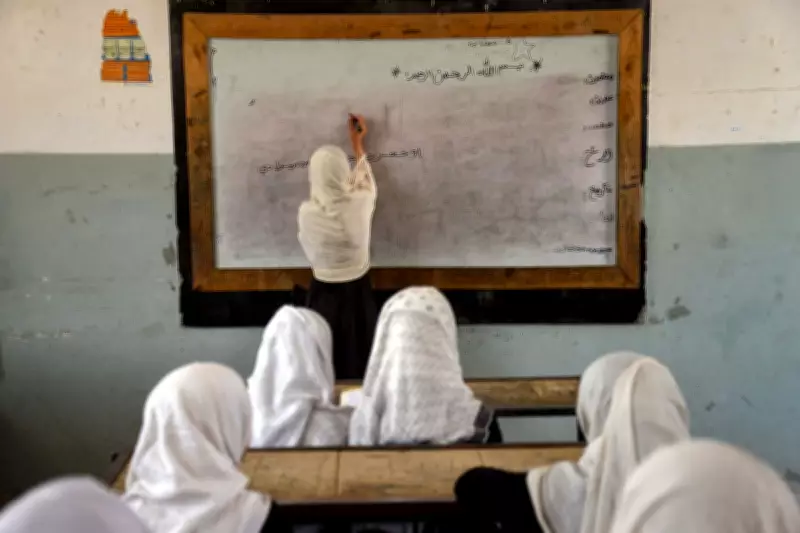
Since returning to power, the Taliban has implemented increasingly restrictive policies targeting women and girls. These include bans on women attending universities and working in most professions, alongside prohibitions on girls attending secondary schools. According to United Nations reports, maternal mortality rates are rising in Afghanistan, with high rates of adolescent births linked to child marriage practices.
Hasina Safi, former minister of women's affairs in Afghanistan who sought refuge in the UK in 2021, emphasized the human impact of these policies. She urged the UK government to do "much more" to protect Afghan women and girls, noting that "making it even harder to find protection and stability leaves them struggling for the way they want to live. This is not just a quote, it is a lived experience."
Government Response and Future Plans
A Home Office spokesperson defended the government's record, stating: "Since the Taliban takeover, the UK has resettled almost 38,000 Afghan men, women and children through humanitarian routes. Women and girls in Afghanistan have faced severe danger, so asylum decision makers continue to give close and careful consideration to claims involving gender-based persecution."
The spokesperson added that Home Secretary Shabana Mahmood has announced plans to establish new safe and legal routes once order has been restored to the asylum system. These proposed routes would "prioritise integration and reflect public expectations for people to build independent lives and contribute to their local communities."