Trump's Deportation Drive: The Key Officials and Agencies Leading the Anti-Immigration Campaign
Donald Trump's second-term administration has mobilised a comprehensive, government-wide campaign focused on mass deportations and severe restrictions on immigration. This ambitious agenda involves a network of loyalists, law enforcement veterans, and political appointees spread across multiple federal agencies, all coordinated to fulfil the president's mission.
The strategy aims to identify, arrest, and deport tens of thousands of individuals, deter new arrivals, and impose stringent limits on legal immigration. This has resulted in stranded refugees and forced many immigrants to leave the country. Furthermore, this immigration crackdown frequently intersects with what the president terms a campaign of "retribution" against political opponents, with federal officers and National Guard troops deployed to Democratic-led cities.
Stephen Miller: The Architect Returns
Stephen Miller, the White House deputy chief of policy, has returned as a central architect of the administration's immigration strategy. Having shaped the draconian policies of Trump's first term, Miller now exerts significant influence over mass deportation operations and efforts to unilaterally redefine citizenship.
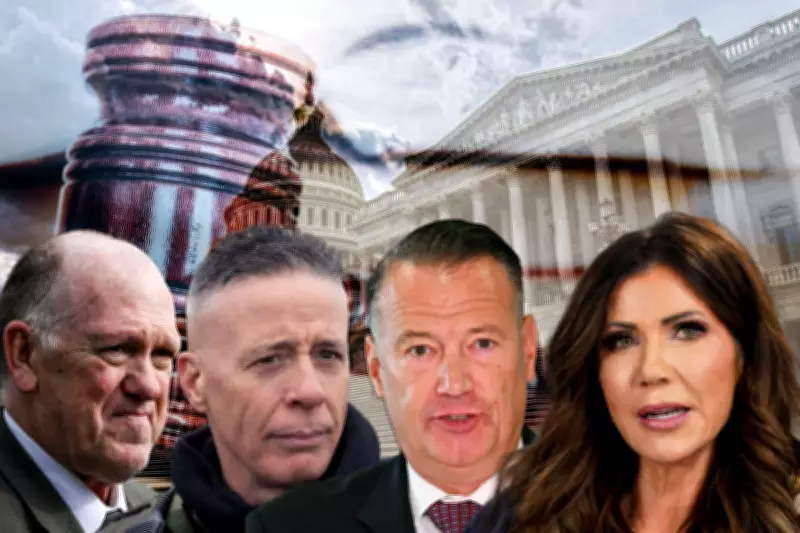
Months into the second term, the far-right adviser allegedly directed officials to conduct mass arrests targeting at least 3,000 people daily. This pace aligns with Trump's stated ambition to remove one million people from the country annually. Miller has long championed ending birthright citizenship—a issue now before the Supreme Court—and has even suggested suspending habeas corpus to expedite deportations without hearings.
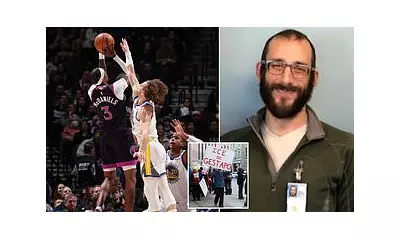
Following the fatal shooting of Alex Pretti by federal officers in Minnesota, Miller notably suggested for the first time that officers "may not have been following" protocol, a shift from his previous combative rhetoric where he baselessly labelled Pretti a "domestic terrorist."
Kristi Noem: Leading the Homeland Security Apparatus
Homeland Security Secretary Kristi Noem oversees the nation's third-largest Cabinet department, which includes the primary enforcement arms: Immigration and Customs Enforcement (ICE) and Customs and Border Protection (CBP). With an annual budget exceeding $103 billion, her department is channelling billions into recruiting new ICE agents and expanding a detention system that currently holds over 60,000 immigrants at any given time.
Noem works closely with special government employee Corey Lewandowski, a former Trump campaign adviser, while her deputy, Tricia McLaughlin, acts as a key spokesperson. However, Noem faces intense bipartisan backlash and calls for her resignation following fatal shootings by federal officers in Minneapolis. In a significant move, Trump recently sidelined her by removing her top official in Minnesota and replacing him with a White House adviser, effectively cutting Noem out of the direct chain of command.
Tom Homan: The Border Czar's Controversial Role
White House border czar Tom Homan, deployed to Minnesota in what appeared to be a rebuke of Noem's handling of the situation, brings a controversial history. He played a key role in immigration enforcement under President Obama, a period that saw a record 432,000 deportations in 2013, earning Obama the nickname "deporter in chief."
Homan's work during that era is widely viewed as laying the groundwork for the family separation policies that marred Trump's first term. He has signalled a return to such tactics, including family detentions. Homan tapped David Venturella, a former executive for private prison contractor GEO Group, to support the deportation agenda. Venturella now holds a top role at ICE managing detention centre contracts, with GEO Group operating at least 20 ICE facilities as the agency's largest provider.
Gregory Bovino: The Boots-on-the-Ground Commander
Gregory Bovino, CBP's "commander-at-large," gained public prominence by leading surges of federal officers into Democratic cities throughout 2025. These operations left a trail of lawsuits alleging brutality against immigrants and citizens. Bovino reported directly to Secretary Noem and often joined his heavily armed, masked officers on the streets, where violent clashes occurred during ICE operations.
Known for a clothing style some compare to World War II Nazi officials, Bovino was ordered to testify in federal court over his officers' use of force in Chicago, which a judge described as shocking the conscience. Following the Pretti shooting, even President Trump suggested Bovino might have "gone too far," indicating a potential sidelining of the commander.
Todd Lyons and Joseph Edlow: Overseeing Enforcement and Administration
Acting ICE Director Todd Lyons oversees an agency with over 27,400 personnel and a budget nearing $10 billion, supplemented by massive funding from recent domestic spending bills. Previously a top official in ICE's Enforcement and Removal Operations bureau, Lyons has shaped the logistics of moving thousands of detainees through a sprawling detention network. He has bluntly compared the operation to a business, stating the need to treat mass deportation "like Amazon trying to get your Prime delivery within 24 hours."
Joseph Edlow, director of U.S. Citizenship and Immigration Services (USCIS), has radically transformed the agency from an administrative body into a key law enforcement tool. Under his direction, immigrants attending routine check-ins or appointments now risk arrest. USCIS is even creating its own armed law enforcement arm with powers to investigate, arrest, and execute warrants, fundamentally altering its role in the immigration system.
Marco Rubio: The Secretary of State's Expanded Role
Secretary of State Marco Rubio has become central to the anti-immigration agenda, leveraging his position to overhaul refugee policies and target international students. He has fielded offers from countries like El Salvador to imprison immigrants, defied court orders, and revoked visas for hundreds of students involved in protests against Israel's war in Gaza.
Court documents reveal Rubio personally approved the arrest and removal of five international student activists for Palestinian advocacy. A federal judge determined that Rubio and Noem engaged in an "unconstitutional conspiracy" by violating the First Amendment rights of students and faculty. Rubio is also reshaping the State Department to align with Trump's "America First" approach, including plans for an Office of Remigration to track and facilitate the "voluntary return" of migrants.
This interconnected web of officials and agencies illustrates the extensive, coordinated effort behind Trump's second-term deportation campaign, blending immigration enforcement with political retribution and testing constitutional boundaries.