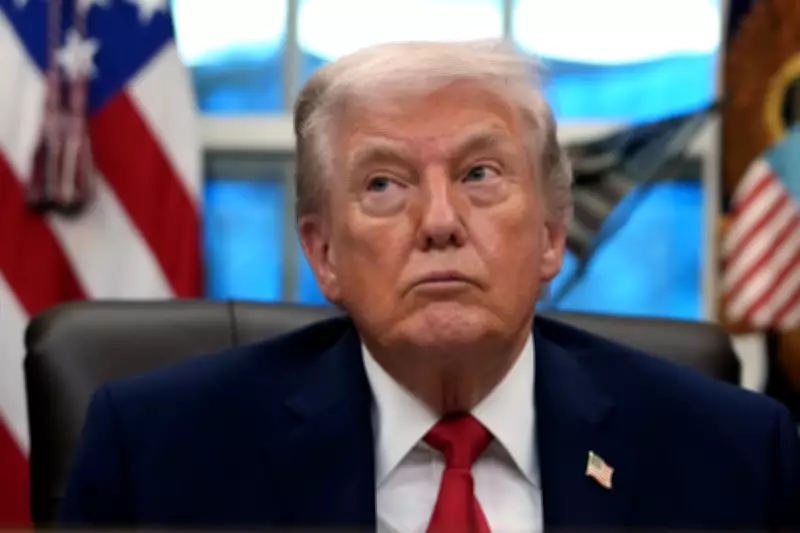
In a striking contradiction at the heart of the Trump administration's immigration policy, President Donald Trump has firmly insisted that federal immigration agents are not being withdrawn from Minnesota, even as his appointed border czar, Tom Homan, detailed a strategy to "draw down" their presence in the state. This conflict emerges amidst a backdrop of intense national scrutiny following the fatal shootings of two U.S. citizens by federal agents in Minneapolis earlier this month.
Conflicting Messages from the White House
During a press conference on Thursday, Tom Homan, who was dispatched to Minnesota to oversee immigration enforcement efforts after the deaths of Renee Good and Alex Pretti, argued that improved cooperation with local jails could lead to a reduction in the number of agents required on the streets. "This is common-sense cooperation that allows us to draw down on the number of people we have here. Yes, I said it: draw down the number of people here because we have the efficiency, the safety of the jails and the prisons," Homan stated, acknowledging that "no agency is perfect" in the wake of the shootings.
However, when President Trump was later questioned about whether Immigration and Customs Enforcement (ICE) agents were being pulled out of Minnesota, he responded unequivocally: "No, no. Not at all." This direct contradiction highlights the internal tensions within the administration as it navigates the fallout from the incidents, which have provoked widespread backlash and calls for accountability.
Political Repercussions and Calls for Resignation
The situation has escalated into a political firestorm, with Homeland Security Secretary Kristi Noem facing severe criticism for her handling of the crisis. In a televised interview on Fox News, Noem defended her earlier comments labelling Good and Pretti as "domestic terrorists," despite a lack of public evidence to support these claims. She shifted blame to the Biden administration, stating, "We got here because we had a Biden administration that allowed an invasion over our southern border."
In response, New York Governor Kathy Hochul has called for Noem's resignation, suggesting she is "delusional" and has "forfeited her right to lead." Hochul's press office publicly shared the definition of the word delusion in reaction to Noem's remarks, underscoring the deepening partisan divide over immigration enforcement and its consequences.
Protests and Legislative Standoff
The fatalities have galvanised protest movements in Minnesota, with another economic blackout planned for Friday to oppose Trump's immigration crackdown. Although turnout is expected to be smaller than previous demonstrations, the ongoing unrest reflects the community's anger and demand for justice.
Meanwhile, in Washington, the political fallout has spilled into legislative proceedings. Democrats have refused to fund the Department of Homeland Security in response to the shootings, leading to a temporary funding deal that averts a government shutdown but leaves DHS funding unresolved. The Senate will not vote on funding bills as previously anticipated, with negotiations continuing under the shadow of the Minnesota crisis.
Family and Legal Responses
Attorneys for the families of the deceased have vehemently contested the official narratives. Steve Schleicher, representing Alex Pretti's family, asserted that "nothing that happened a full week before could possibly have justified Alex's killing," referring to footage showing Pretti in a prior confrontation with agents. This legal pushback adds to the mounting pressure for a transparent investigation into the shootings.
As the situation unfolds, First Lady Melania Trump has entered the fray, defending her husband's immigration policies and expressing hope that the "pushback" against him would cease. In an interview promoting her new documentary, she emphasised Trump's role as a unifier, despite the evident divisions exacerbated by the Minnesota incidents.
The convergence of these events—contradictory statements from administration officials, political infighting, public protests, and legislative gridlock—paints a complex picture of a nation grappling with the harsh realities of immigration enforcement and its human costs. With Tom Homan pledging to stay in Minnesota "'til the problem's gone," and President Trump reaffirming his commitment to aggressive immigration policies, the path forward remains fraught with uncertainty and tension.