Police Chief Condemns ITV True Crime Documentary as 'Harmful' to Grieving Families
A senior police chief has taken the highly unusual step of publicly criticising a true crime documentary, branding it "harmful" and based on "spurious claims" that have caused unnecessary distress to families of deceased elderly couples. Chief Constable Mark Roberts of Cheshire Police has spoken out forcefully against ITV's documentary 'Hunting the Silver Killer', which airs this evening and re-examines the deaths of two couples in the affluent town of Wilmslow.
Documentary Revisits Historic Cases
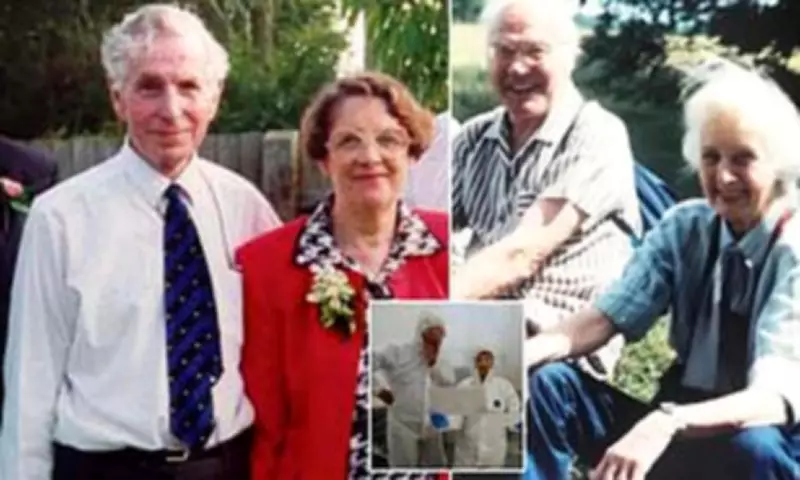
The ITV programme focuses on the deaths of Howard and Beatrice Ainsworth in 1996 and Donald and Auriel Ward in 1999, both cases originally treated as murder-suicides by police. The documentary re-assesses claims first made in 2013 by former coroner's officer Stephanie Davies, who suggested similarities between the deaths might indicate a serial killer was responsible for both couples' deaths.
Davies wrote a 179-page report outlining her theory and repeatedly presented her views to police. The ITV documentary features analysis from prominent forensic experts including pathologist Dr Dick Shepherd and forensic scientist Dr Angela Gallop, who re-examine the evidence presented in Davies' report.

Police Force Strongly Rejects Claims
However, Cheshire Police have issued a robust rebuttal of the documentary's premise. Chief Constable Roberts stated unequivocally: "From the outset we have been clear that there is absolutely no evidence that the Ainsworth and Ward cases were double murders, and that there is no serial killer at large in connection with these historic deaths."
The police force revealed that following Davies' original claims, both cases were "meticulously investigated" by experienced detectives working alongside specialist forensic scientists and officers from the National Crime Agency. All investigators concluded there was no evidence to support further investigation into the matters.
Families' Opposition and Distress
Chief Constable Roberts expressed particular concern about the impact on the families involved, stating: "My heart goes out to both the Ainsworth and Ward families who have been deeply impacted by these harmful claims, and both have stated throughout that they were against any documentary and did not wish to have any involvement in the show."
He further revealed that despite the families' clear opposition, they felt "harassed by the production company over the past two years." Roberts suggested the production company should have focused more on "conducting due diligence on the credibility of the sources they relied on" rather than pursuing families who wished to be left in peace.
Source Credibility Questioned
Cheshire Police highlighted significant concerns about the credibility of Stephanie Davies, whose theories form the basis of the documentary. The force noted that Davies was later found guilty of seven counts of gross misconduct and would have been dismissed from her position had she not already resigned. She has since been added to the College of Policing barred list, prohibiting her from working in policing roles.
Roberts emphasised: "The person who wrote the original report was not a doctor or a lawyer, and their actions have had a deep and long-lasting impact on both families." He added that while police staff have the right to raise concerns, this must be done through "correct channels," which Davies failed to follow in this instance.
Case Details Re-examined
The documentary re-examines specific details of both cases that Davies found questionable. Howard and Beatrice Ainsworth were found dead at their Wilmslow home on April 28, 1996. The official finding suggested 79-year-old Howard had bludgeoned 78-year-old Beatrice with a hammer before stabbing her with a breadknife, then suffocating himself with a plastic bag.
However, Davies noted discrepancies including a suicide note mentioning sleeping tablets when no sedatives were found in toxicology tests, and unexplained bruises on Howard Ainsworth's lips possibly indicating forcible suffocation.

Donald and Auriel Ward died on November 26, 1999, also at their Wilmslow home. The official finding suggested 73-year-old Donald had killed 68-year-old Auriel by hitting her with a ceramic hot water bottle and stabbing her with the shards, before slitting his own throat and stabbing himself.
Davies and former coroner's officer Christine Hurst questioned how Donald Ward could have inflicted such wounds on himself without signs of heavy bleeding at the scene.
Broader Pattern Claims
The former coroner's officer identified three additional cases from 2000, 2008 and 2011 that she believed showed similar patterns of blunt and sharp force trauma, marking them for further investigation as potentially connected. This broader pattern forms part of the documentary's exploration of whether a serial killer might have been active in northwest England between 1996 and 2011.
ITV's Position
ITV has promoted the documentary as "a brand new true crime documentary that fans of the genre do not want to miss." The broadcaster's synopsis asks: "Both crime scenes bore startling similarities. Police concluded that in both cases the husbands had killed their wives and then taken their own lives. But were these cases of murder-suicide or could they in fact be double murders? Is a serial killer still at large and could they have killed again?"
The programme features additional perspectives from former police constable Jennifer Eastman and Sunday Times investigative journalist David Collins, who has written a book on the same subject titled 'The Hunt for the Silver Killer.'
Chief Constable Roberts concluded his statement by expressing hope that the families "are able to start to move forward with their lives in peace" after years of "unnecessary pain and suffering" caused by renewed interest in these historic cases.