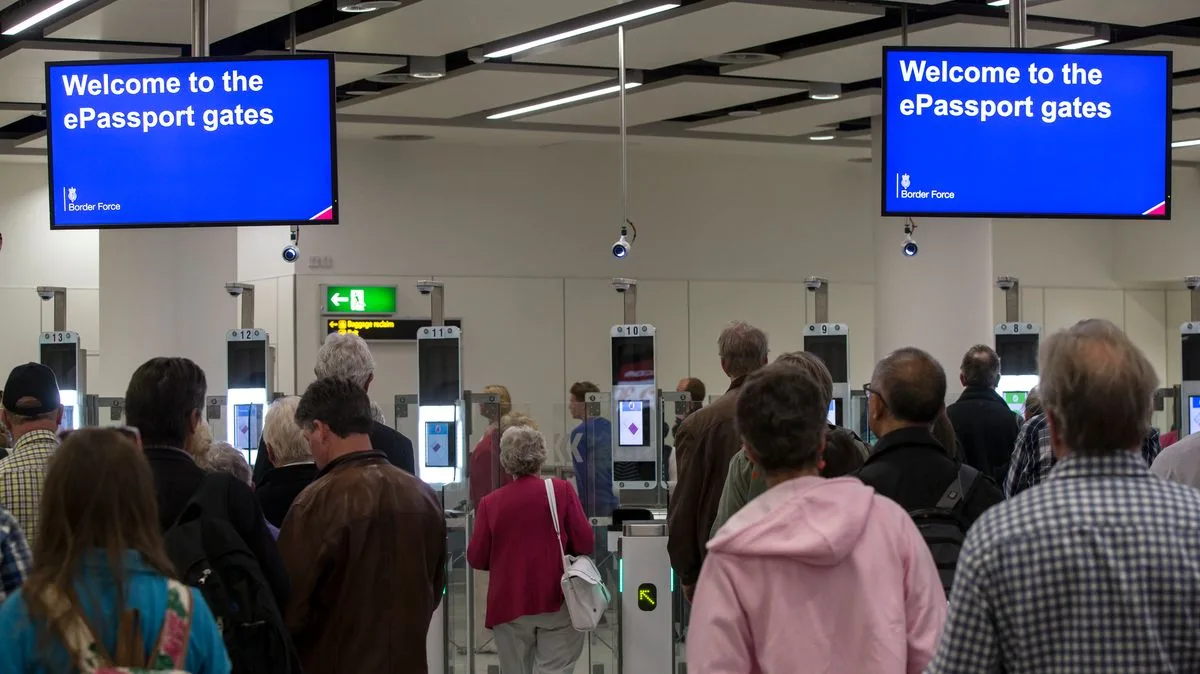
Brits heading to Europe this summer may benefit from a little-known clause in the EU's Entry/Exit System (EES) rules that allows for temporary suspension of the system in cases of excessive waiting times. The EES, which requires biometric data registration for non-EU travellers, has raised concerns about potential delays and long queues at airports.
According to a parliamentary briefing, the European Commission has indicated that member states could suspend EES operations for up to 150 days after the 10 April implementation date. The suspension can be applied for periods of up to six hours in “exceptional circumstances where there are excessive waiting times”. This means that until 9 July, some borders could pause the system for up to six hours a day.
The legislation states that member states should use this possibility only when strictly necessary and for the shortest period possible. In the case of partial suspension, the registration of biometric data would be halted; in full suspension, no data would be recorded.
Greece has already reverted to manual passport stamping to ease entry, while reports that Italy and Portugal might follow have been denied by Brussels. Meanwhile, the European Travel Information and Authorisation System (ETIAS) is set to launch later this year, requiring Brits to obtain pre-travel authorisation at a cost of €20 (about £17.37), nearly three times the originally quoted fee.